
Highlights:
- Lebanese army reports violations and urges caution as traffic builds
- US involvement linked to wider Iran talks; Trump says deal “very close”
- Displaced residents return amid uncertainty over homes and security
A 10-DAY ceasefire between Israel and Lebanon came into effect on Friday, with displaced residents heading back towards southern Lebanon despite warnings from the Lebanese army about violations and ongoing risks.
The truce began at midnight local time (2100 GMT). Soon after, the Lebanese army urged residents of the south not to return, citing “a number of violations” and “several Israeli acts of aggression” in the area.
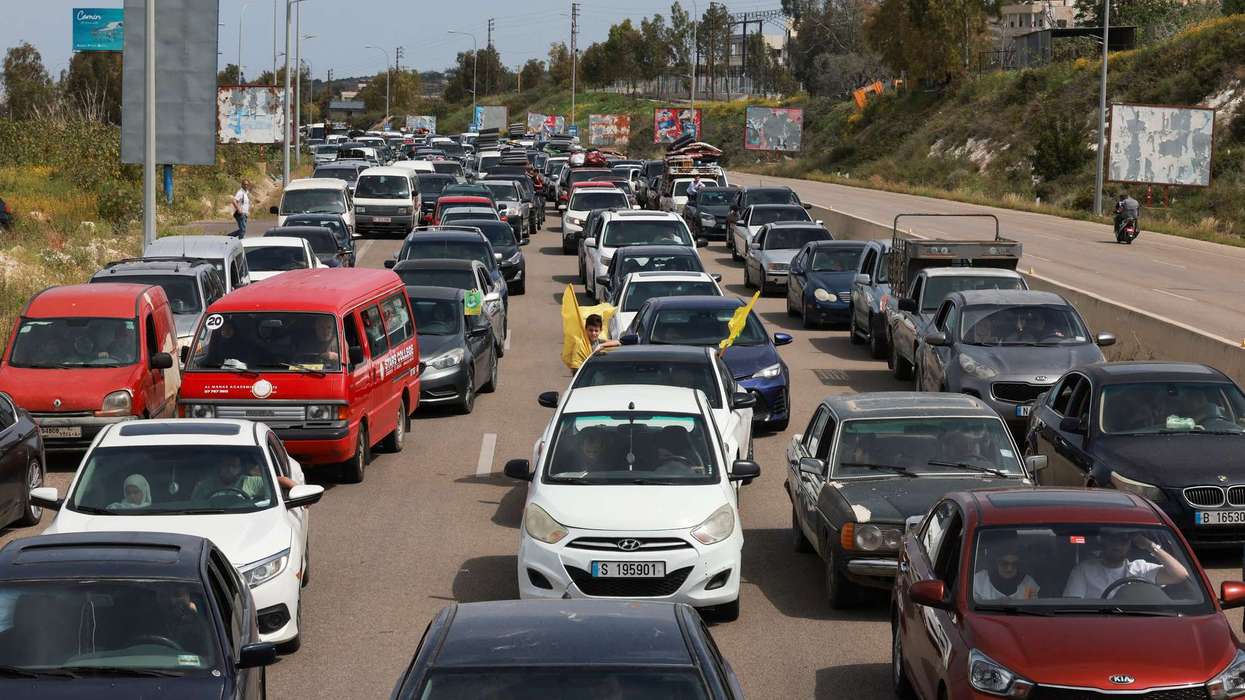
Despite the warnings, traffic built up along roads leading south, with cars moving towards villages and towns. AFP images showed vehicles crossing damaged routes, including a bridge hit during the conflict.
Displaced resident Alaa Damash said people were aware of the warnings “to wait a bit” but chose to return.
ALSO READ: Talks likely as US and Iran narrow differences but key issues unresolved
“The people's love for their lands and houses, and their attachment to them, pushed them to go back there despite the fire threats,” she said.
Gunfire was heard overnight in Beirut’s southern suburbs as the ceasefire came into effect, though it could not be confirmed whether it was linked to celebrations.
Israel’s military said it had struck more than 380 “Hezbollah terror organization targets in southern Lebanon” and remained on “high alert” to resume strikes.
US president Donald Trump said he had spoken to Israeli prime minister Benjamin Netanyahu and Lebanese president Joseph Aoun before the truce, adding they agreed to it “in order to achieve PEACE between their Countries”.
He later said he expected Netanyahu and Aoun to visit the White House “over the next four or five days”.
ALSO READ: Efforts step up for US-Iran talks as truce holds and blockade begins
The ceasefire comes as part of broader efforts linked to talks involving Iran. Tehran has said a Lebanon truce must be included in any agreement related to the wider conflict. Mediator Pakistan has been leading efforts to restart talks between Tehran and Washington, with Trump saying they were “very close” to a deal.
The conflict in Lebanon began on March 2, when Hezbollah fired rockets at Israel in response to the killing of Iran’s supreme leader Ali Khamenei during early US-Israeli strikes. Israel responded with air strikes and a ground operation in southern Lebanon.
Lebanese prime minister Nawaf Salam said a truce was a “key Lebanese demand that we have pursued since the very first day of the war”.
In Beirut, 61-year-old Jamal Shehab welcomed the ceasefire.
“We are very happy that a ceasefire has been reached in Lebanon because we are tired of war and we want safety and peace,” she said.
ALSO READ: US, Iran fail to reach deal after 21-hour talks in Pakistan
Trump described the development as “very exciting”, adding, “Today they're going to be having a ceasefire, and that'll include Hezbollah.”
A Hezbollah lawmaker told AFP the group would “cautiously adhere” to the truce if Israel stopped attacks. Lawmaker Ibrahim al-Moussawi said “the ceasefire would not have happened without Iran considering the ceasefire as equal to closing the Strait of Hormuz”.
Netanyahu said the truce created an opportunity for a “historic peace agreement” but insisted Hezbollah must be disarmed. Israel also said it would maintain a 10-kilometre (six-mile) “security zone” along the border.
Violence continued until shortly before the ceasefire. Lebanon’s health ministry said at least seven people were killed and more than 30 wounded in an Israeli strike on Ghazieh on Thursday. An Israeli hospital spokesman said three people were injured the same day.
Hours after the ceasefire began, efforts were underway to reopen access routes to southern Lebanon. At the Qasmiyeh bridge over the Litani River, bulldozers worked to clear damage caused by Israeli strikes shortly before the truce.
Amani Atrash, 37, was among those waiting to cross.
ALSO READ: Iran threatens further attacks after Trump warning
“We set off an hour before the ceasefire took effect so we could reach the bridge once it opens, allowing us to return to our town,” she said.
“The wait is very difficult because we want to get there as quickly as possible.”
As the bridge became passable, vehicles began crossing, and by morning, traffic stretched for kilometres along the highway between Sidon and Tyre.
Many returning residents said they did not know the condition of their homes after weeks of fighting that displaced more than a million people and killed over 2,100, according to Lebanese authorities.
Ghufran Hamzeh said, “When we fled, it took 16 hours on the road, and today it's the same thing,” adding, “but that's not important. What's important is that we're returning to our village and our land.”
“I don't know if my house is destroyed or not,” she said. “If it's destroyed, it changes nothing, I will pitch a tent in front of it and stay there.”
She added, “They said the truce is for 10 days, but if the situation allows, we will stay and we will not leave our land again.”
Mohamad Abu Raya said, “Thank God we are returning to our homes victorious despite the shelling.”
“Nothing compares to the joy of returning, even if we don't find our homes. The important thing is that we are back on our land. We will sit on the rubble.”
Tamer Abdellatif Hamza, 77, described his displacement.
“We slept on the beach for 10 days. No one even looked at us, no one helped us,” he said. “All our houses were destroyed, we have nothing left.”
“We were displaced 50 days ago, and today we feel that we don't want to be enemies of Israel. We are paying a price that isn't ours.”
(With inputs from agencies)