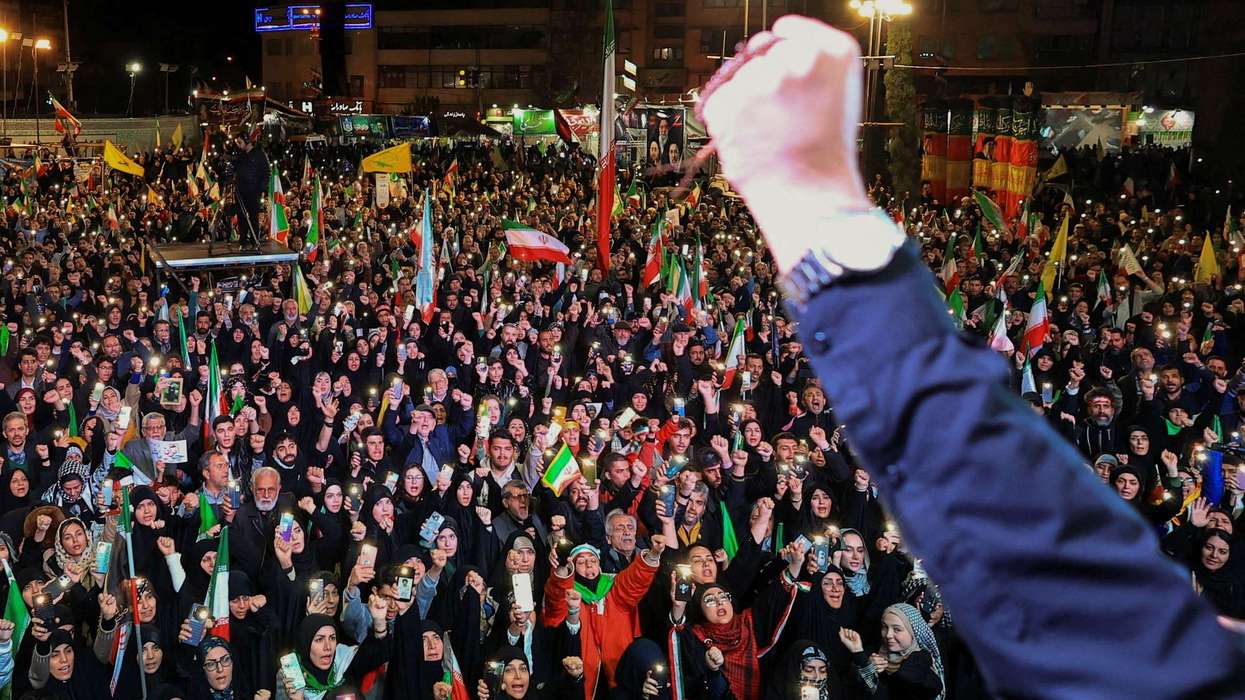

Highlights:
- US and Iran signal possible second round of talks amid ongoing tensions
- Differences remain over nuclear programme and uranium enrichment limits
- Naval blockade and Strait of Hormuz situation continue to drive concerns
- Global economic risks rise as conflict impacts oil and food security
THE US is discussing a possible second round of talks with Iran and said it is optimistic about reaching a deal, officials said, as tensions continued over a naval blockade and nuclear issues.
A Pakistani delegation arrived in Tehran with a message from Washington after US president Donald Trump indicated negotiations could resume this week following last weekend's failed talks in Islamabad.
White House press secretary Karoline Leavitt said further talks "would very likely" take place in the Pakistani capital. "Those discussions are being had," Leavitt said, adding "we feel good about the prospects of a deal."
A senior Iranian official said Tehran and Washington have made some progress but major differences remain, including over Iran's nuclear programme, even as a two-week truce continues.
Pakistan's army chief Field Marshal Asim Munir visited Tehran on Wednesday, with the Iranian official saying the visit helped reduce differences in some areas and raised hopes for renewed talks and a possible extension of the ceasefire.
ALSO READ: Efforts step up for US-Iran talks as truce holds and blockade begins
US vice president JD Vance said Iran is being offered a "grand bargain" to end the six-week war with Israel and the United States and address the dispute over its nuclear programme.
Trump has said any deal must permanently bar Iran from acquiring a nuclear weapon. Washington has reportedly sought a 20-year suspension of Iran's uranium enrichment, while Tehran has proposed a five-year suspension, which US officials rejected.
Iran says its nuclear programme is for civilian purposes. Its foreign ministry said its right to enrich uranium is "indisputable", though the level of enrichment is "negotiable".
Israeli prime minister Benjamin Netanyahu said Israel and the US have "identical" goals, including removing enriched material from Iran, eliminating enrichment capability and reopening the Strait of Hormuz.
The strait, a key route for global oil flows, has been affected since the conflict began and remains central to the situation.
The United States has imposed a naval blockade on Iran's ports. US Central Command said it had "completely halted economic trade going into and out of Iran by sea" and that "zero ships have broken through".
ALSO READ: US, Iran fail to reach deal after 21-hour talks in Pakistan
Iranian media reported shipping has continued from southern ports. Iranian military officials warned that failure to lift the blockade could lead to escalation.
Ali Abdollahi said Iran's forces "will not allow any exports or imports to continue in the Persian Gulf, the Sea of Oman and the Red Sea" if the blockade remains.
Mohsen Rezaei said: "These ships of yours will be sunk by our first missiles," and also warned Iran would take US troops hostage if there were a ground invasion, saying it would be "great" as "we would take thousands of hostages, and then for each hostage we would get a billion dollars".
The United States also announced new sanctions targeting Iran's oil sector. Treasury secretary Scott Bessent said they targeted "regime elites" and added, "Treasury is moving aggressively with 'Economic Fury' by targeting regime elites like the Shamkhani family that attempt to profit at the expense of the Iranian people."
The conflict has raised concerns about the global economy. IMF chief Kristalina Georgieva said there could be "tough times ahead" if the war continues and oil prices remain high.
ALSO READ: Iran threatens further attacks after Trump warning
World Bank chief economist Indermit Gill said: "You have about 300 million people who suffer from acute food insecurity already," adding, "That'll go up by about 20 per cent very, very quickly".
Financial markets reacted to signs of possible progress. Major Wall Street indices closed at record highs, and Japanese stocks also reached record levels, while crude prices fell.
Elsewhere, Trump said leaders of Israel and Lebanon would speak on Thursday, but a Lebanese official said: "We are not aware of any planned contact with the Israeli side, and we have not been informed of any through official channels."
Netanyahu said talks with Lebanon would focus on "First, the dismantling of Hezbollah; second, a sustainable peace... achieved through strength."
The US administration said it would "welcome" an end to the conflict between Israel and Hezbollah but clarified that such a deal is separate from talks with Iran.
Other developments included Iran arresting four suspected spies linked to Israel's Mossad, according to state media, and Australia securing about 100 million litres of diesel from Brunei and South Korea to boost reserves.
Taiwan chipmaker TSMC said it does not expect the conflict to affect supplies of helium and hydrogen in the near term.
Pakistan's prime minister Shehbaz Sharif said he met Saudi crown prince Mohammed bin Salman and posted: "I reiterated Pakistan's firm commitment to advancing its efforts to encourage both the US and Iran towards an agreement aimed at lasting peace and stability in the region."
(With inputs from agencies)

 Sir Anthony Seldon Atlantic Books
 The cover of his book Atlantic Books