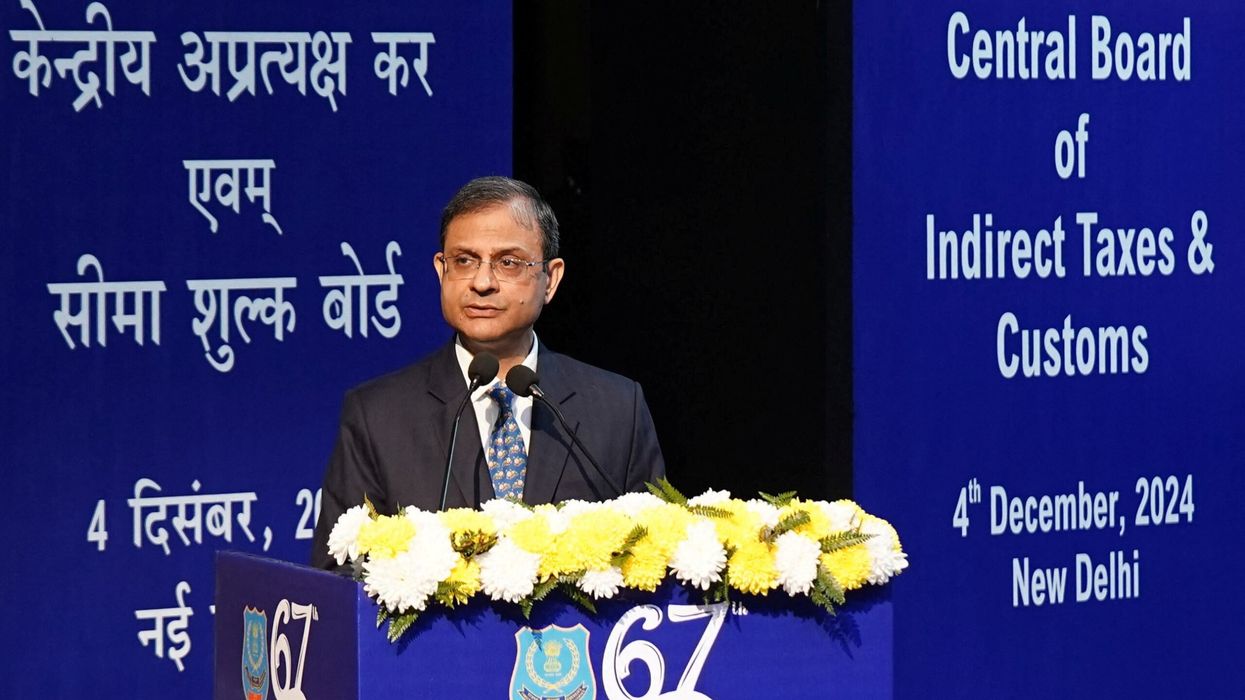
International Air Transport Association (IATA) Chief Alexandre de Juniac said levying Goods and Service Tax (GST) on international air tickets violates international airline norms and weaken the competitiveness of airlines. He was speaking at an International Aviation Summit in New Delhi on Tuesday (04).
Speaking at the conference, de Juniac said GST on international air tickets violates norms setup by global aviation body, International Civil Aviation Organization (ICAO) and also weakens the competitiveness of airlines.
GST rate is at five per cent for economy class whereas it is 12 per cent for business class tickets.
“Global standard approaches can also play a role in guiding the government to reduce India’s costly operating environment. We have long made our case that applying GST to international tickets violates ICAO principles and India’s international obligations. These deviations from global standards may have a short-term revenue benefit for the government. But it weakens India’s competitiveness by raising the cost of connectivity. And, in its current form, airlines continue to face many compliance challenges. We need to resolve these issues soon - aligning with global standards and shoring-up India’s competitiveness,” said IATA Chief.
“Today, I would like to spend some time on fuel which accounts for about 24.2 per cent of an average airline’s cost structure. In India it is 34 per cent, making India’s carriers particularly sensitive in this area. All airlines are already suffering from the rise in fuel prices. And India’s regulatory and tax framework around fuel hits airlines serving this market even harder,” he added.
To start with, there is no real competition for fuel suppliers at airports, so there is little commercial incentive to keep fuel prices competitive. Then the airport takes fuel throughput fees. And, adding insult to injury, GST is then applied to the throughput fee, the infrastructure fee and the into-plane service fee, said IATA chief.
“Then, on domestic flights, fuel is subject to excise duties and state taxes of up to 30 per cent. We understand that the government needs tax revenue. But the economy needs financially sustainable air connectivity. The lack of competition in fuel and lack of true open-access to on-airport fuel infrastructure is strangling the lifeblood from the airlines,” he pointed out.
IATA chief has also raised his concerns over the issues being faced by India’s aviation sector, such as a rise in jet fuel prices, infrastructure issues, privatisation of airports, and others.