
As Poonam Sinha fought for her life, her distraught son found himself fending off black marketeers for coronavirus drugs after the Indian hospital treating her ran out of supplies.
Dire medicine and oxygen shortages as India battles a ferocious new Covid-19 wave mean boom times for profit gougers, although some young volunteers are doing their best to help people on Twitter and Instagram.
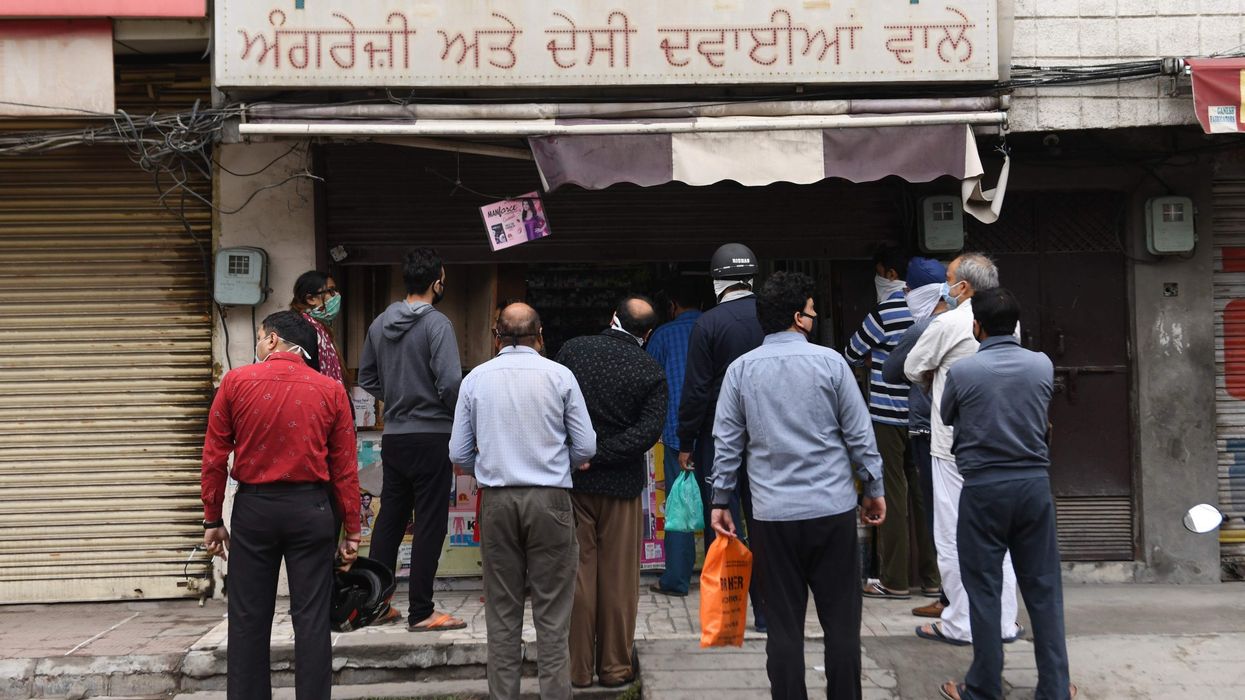
In the eastern city of Patna, Pranay Punj ran from one pharmacy to another in a frantic search for the antiviral medication remdesivir for his seriously ill mum.
He finally located a pharmacist who said the drug could only be found on the black market, and offered to source it for an eye-popping 100,000 rupees ($1,340), over 30 times its usual price and three times the average monthly salary for an Indian white-collar worker.
Punj instead got the medicine from a distant relative whose wife had just died from the virus.
But the nightmare was only beginning.
In the middle of the night, he got a call informing him that the hospital had now exhausted its stock of oxygen, making his mother's condition even more precarious.
"Several hours later, we managed to procure one bed at (a) very high price in a private hospital and moved her there," he told AFP.
- Oxygen supplies -
Similar heart-rending scenes are unfolding across the country, with desperate people taking to social media to beg for beds, oxygen or medication.
Despite India's status as the "pharmacy of the world", the biggest producer of generic drugs has been unable to meet the demand for antiviral medication such as remdesivir and favipiravir.
In the northern city of Lucknow, Ahmed Abbas was charged 45,000 rupees for a 46-litre oxygen cylinder, nine times its normal price.
"They asked me to pay in advance and pick it (up) from them the next day," the 34-year-old told AFP.
The crisis has added to criticism of Prime Minister Narendra Modi, already under fire for allowing huge religious gatherings and addressing crowded political rallies himself.
Commerce minister Piyush Goyal last weekend hit out at "doctors giving patients unnecessary oxygen".
"Patients should only be given as much oxygen as they need," Goyal told reporters.
New Delhi is now planning to import 50,000 tonnes of oxygen and has set up a special train service called the "Oxygen Express" to transport cylinders to hard-hit states.
Modi said in an address to the nation on Tuesday night that "all efforts are being made" to boost supplies.
"One solution to this crisis was to create a stockpile of antiviral drugs when cases were low, but that did not happen," said Raman Gaikwad, an infectious diseases specialist at Sahyadri Hospital in the western city of Pune.
Instead, remdesivir manufacturers told the Indian Express this week that government officials had ordered them to cease production in January because of a fall in infections.
- Real-time desperation -
With requests for beds and supplies reaching fever pitch on social media platforms, a network of activists and influencers has sprung into action to help those in trouble.
Climate activist Disha Ravi and YouTuber Kusha Kapila are among the dozens of young Indians who have sourced, compiled and shared information detailing the real-time availability of hospital beds, local helplines, pharmacy numbers and even food delivery services.
Content creator Srishti Dixit, 28, told AFP she received a new request for help every 30 seconds, creating a huge backlog.
Unpaid, she works late into the night, editing and verifying details of where to get what and amplifying requests for help.
But the lists she shares with her 684,000 Instagram followers become obsolete almost immediately as beds fill up and pharmacies sell out.
"I am not always successful, I am sure there are lapses... but hopefully it is helping people at least on an individual level", she said.
With cases rising at a record pace, India's government is leaving its healthcare workers and anxious citizens to pick up the pieces.
"My friend is desperate... we have been trying for all the government helplines but none of them are responding (and) most of the oxygen suppliers have switched off their phones", said Zain Zaidi, sales manager at a Lucknow hotel.
"I just managed to find one supplier but he is charging 20,000 rupees. I have to buy it at any cost", the 34-year-old told AFP in a panicked voice, disconnecting the call.