
India's space agency on Monday (21) released images its spacecraft took of the far side of the moon as it headed for an attempted landing on the lunar south pole, just days after the failure of a Russian lander.
The Indian Space Research Organisation's (Isro) Chandrayaan-3 spacecraft had been in a race with Russia to be the first to land on the lunar south pole, a region whose shadowed craters are thought to contain water ice that could support a future moon settlement.
As news of the failure of Russia's Luna-25 mission broke on Sunday, Isro said that Chandrayaan-3 was on course to land on Aug. 23.
The mission - Chandrayaan means "moon vehicle" in Hindi and Sanskrit - is India's second attempt to land on the south pole of the moon. In 2019, Isro's Chandrayaan-2 mission successfully deployed an orbiter but its lander crashed.
Rough terrain makes a south pole landing difficult, but making a first landing would be historic. The region's water ice could supply fuel, oxygen and drinking water for future missions.
Images released on Monday showed craters on the moon's surface captured by the Isro craft's Lander Hazard Detection and Avoidance Camera, which is designed to help find a safe landing location for the spacecraft.
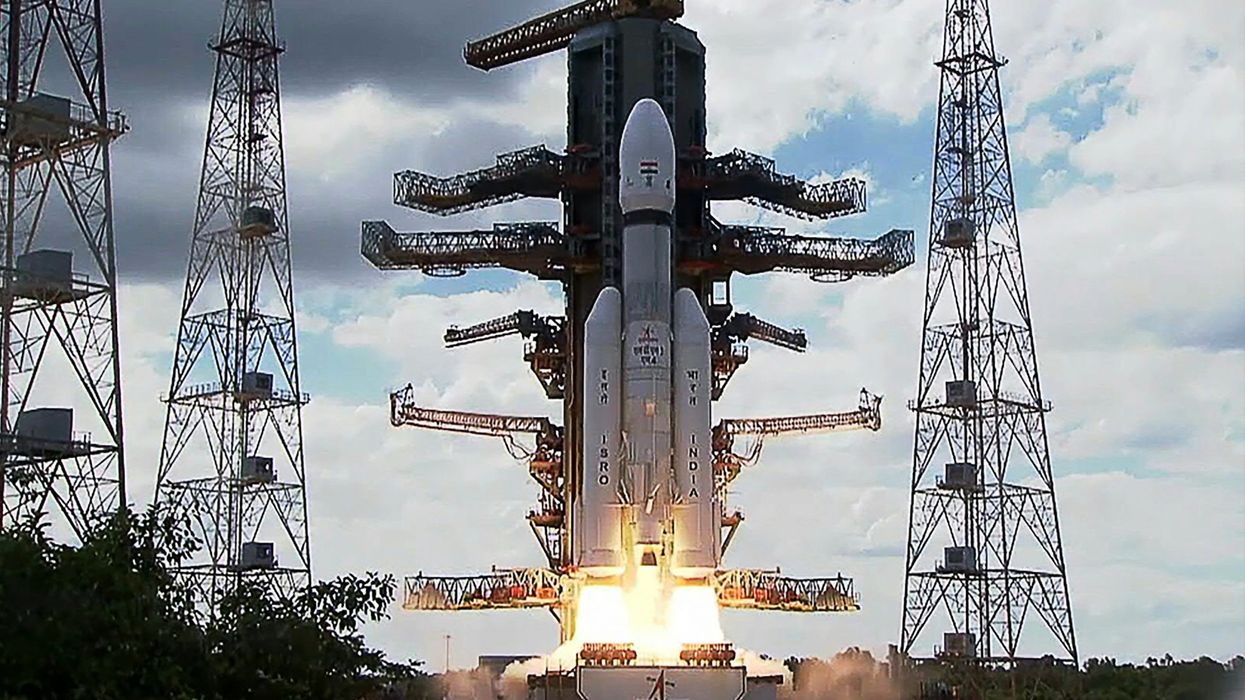
India's moon mission blasted off on 14 July, and the lander module of Chandrayaan-3 separated from the propulsion module last week.
For India, a successful moon landing would mark its emergence as a space power as Prime Minister Narendra Modi's government looks to spur investment in private space launches and related satellite-based businesses.
"If Chandrayaan-3 succeeds, it will boost India's space agency's reputation worldwide. It will show that India is becoming a key player in space exploration," said Manish Purohit, a former Isro scientist.
It would also boost India's reputation for cost-competitive space engineering. The Chandrayaan-3 was launched with a budget of about 6.15 billion rupees ($74 million), less than the cost to produce the 2013 Hollywood space thriller "Gravity".
A successful mission would make India only the fourth country to successfully land on the moon, after the former USSR, the United States and China.
"India is going to acquire a new technology with a successful landing, which is a big thing," K Sivan, former chief of the country's space agency, said after the Chandrayaan-3 launched.
Scientists at Isro have said they learned from the earlier moon mission's failure and made changes to Chandrayaan-3 that would make a successful landing more likely, including making it possible to touch down safely anywhere within an expanded landing zone in adverse conditions. It has also been equipped with more fuel, more solar panels and sturdier legs.
Executives in India's nascent space industry also expect a boost. The number of space startups in India has more than doubled since 2020, when India opened to private launches.
"The next 3 days will be nothing less than 'terrific'! Eagerly looking forward to the landing!", Pawan Chandana, co-founder of Skyroot, which launched India's first privately built rocket last year, posted on X, formerly called Twitter.