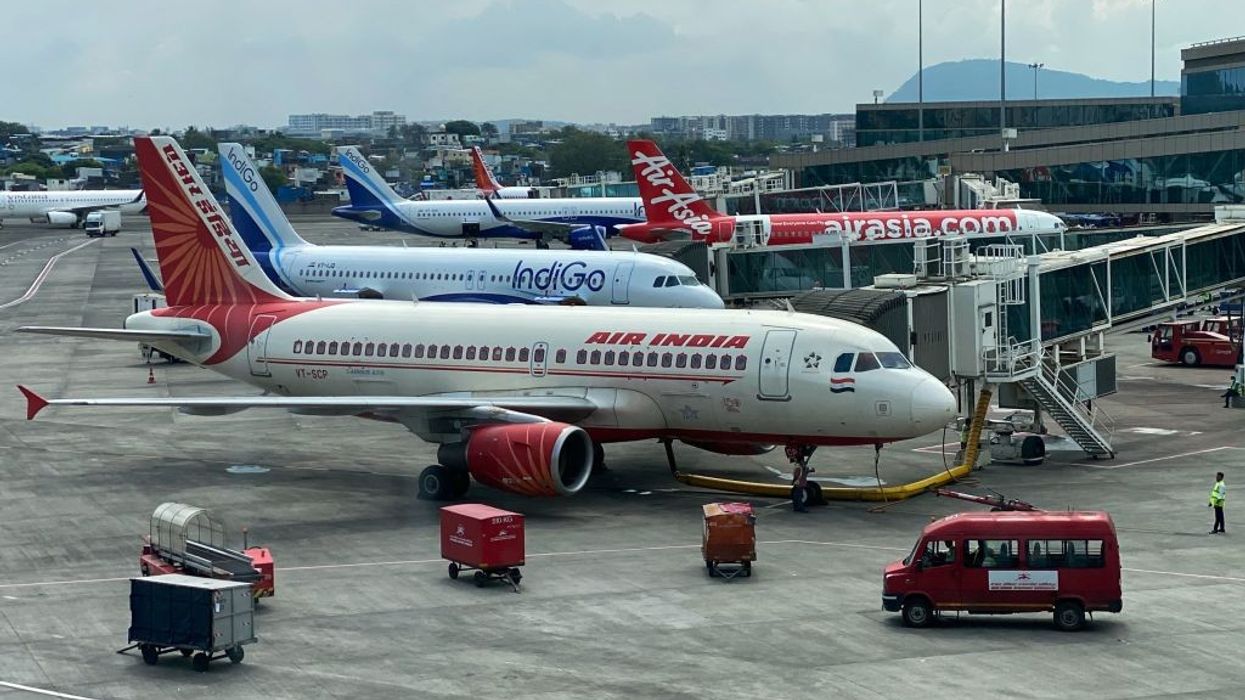

INDIA'S domestic airline market has registered robust growth in the last decade, and it is now the third-largest in the world, up from the fifth position a decade ago, according to global travel data provider OAG.
In its 2014 survey of large domestic aviation markets, India figured fifth on the list with eight million seats. The topper was USA, followed by China, Brazil, and Indonesia.
But in April 2024, India overtook Indonesia and Brazil with a capacity of 15.6 million seats. The US and China have retained their positions.
India’s capacity growth rate of seats over a 10-year average is the highest among the five markets.
"Over the last ten years, domestic airline capacity has almost doubled in India and has seen an annual growth rate of 6.9 per cent between 2014 and 2024. India is the fastest growing market across all five domestic markets we considered," OAG said.
China was close behind with annual growth of 6.3 per cent, while the US and Indonesia registered a growth of 2.4 per cent and 1.1 per cent respectively. Brazil saw a yearly decline overall within the period of -0.8 per cent.
Low-cost carriers
The OAG report noted that the growth in India's domestic airline market was primarily driven by low-cost carriers (LCC).
In April 2024, LCCs accounted for 78.4 per cent of domestic airline capacity in India, the highest LCC share of any of these five domestic markets, and budget carrier IndiGo accounted for the most seats.
“In the last 10 years, IndiGo has almost doubled its market share, from 32 per cent of capacity in 2014 to 62 per cent today. While the rest of the market has barely grown, averaging just 0.7 per cent a year, IndiGo has a domestic capacity growth rate of 13.9 per cent annually,” the report mentioned.
Air India (including Air India Express and Vistara) is the next largest carrier in the domestic market, and accounts for 28 per cent of capacity.
The two airlines account for 9 out of 10 airline seats in India's domestic airline market.
The report noted that India’s ten largest airports account for more than two-thirds of the country’s domestic capacity.
Delhi, with over 5.2 million seats in April 2024, accounts for 17 per cent of all domestic seats, followed by Mumbai with 3.7 million seats (12 per cent). The other major airports include Bengaluru, Hyderabad, Kolkata, Chennai, Goa, Ahmedabad, Pune, and Guwahati.
According to the government, the number of airports in the country has increased to 157 from 74 in the last 10 years.
The report noted that the UDAN scheme, which was implemented in 2017 to make air travel accessible to all, has helped in improving connectivity. The number of routes served in the domestic market has risen to 540 in April 2024, from 215 in April 2014.
However, the report said that the airport infrastructure needs to be scaled up to unlock the next phase of India’s domestic market development.