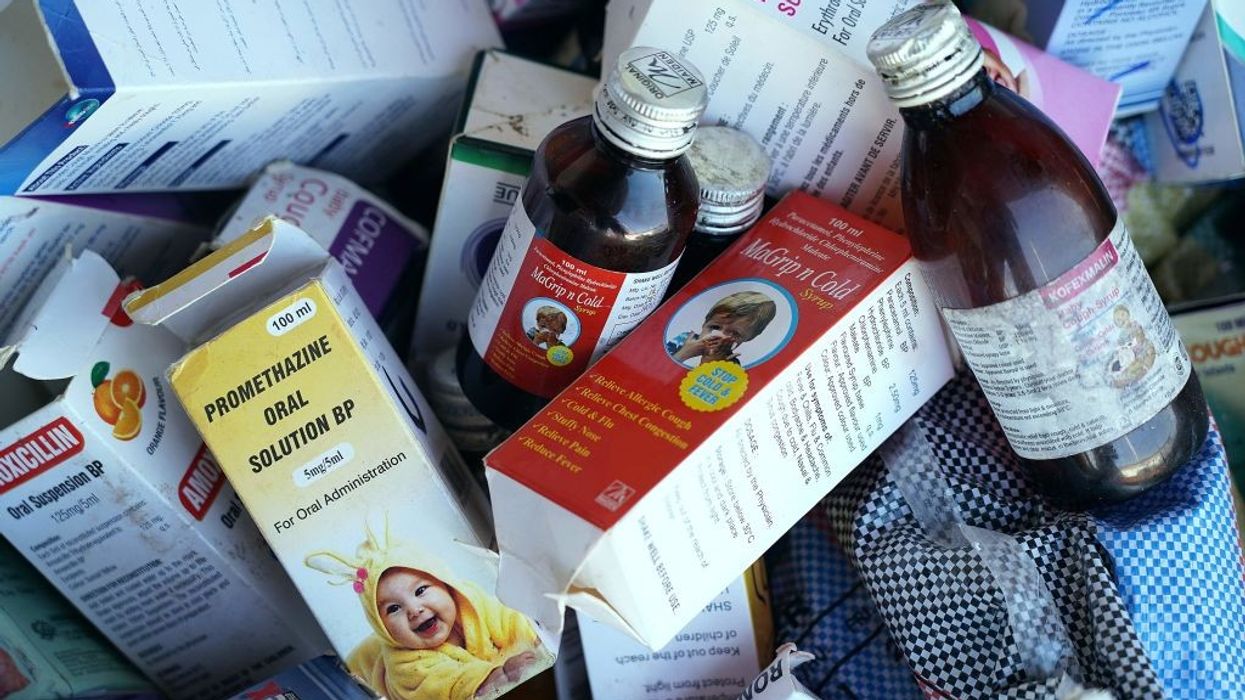

India will make tests mandatory for cough syrups before they are exported, a government notice showed on Tuesday (23), after Indian-made cough syrups were linked to the deaths of dozens of children in Gambia and Uzbekistan.
Any cough syrup must have a certificate of analysis issued by a government laboratory before it is exported, effective June 1, the government said in a notice dated May 22 and shared by the health ministry on Tuesday.
India's $41 billion (£33bn) pharmaceutical industry is one of the biggest in the world but its reputation was shaken after the World Health Organization (WHO) found toxins in cough syrups made by three Indian companies.
Syrups made by two of these companies were linked to the deaths of 70 children in Gambia and 19 in Uzbekistan last year.
"Cough syrup shall be permitted to be exported subject to the export sample being tested and production of certificate of analysis," said the notice issued by the trade ministry.
The health ministry did not immediately respond to a query on whether testing would be required for cough syrups sold in the domestic market.
The notice identified seven federal government laboratories where samples could be sent for testing, in addition to other state laboratories certified by a national accreditation body.
Indian tests of cough syrups made by Maiden Pharmaceuticals Ltd, linked to the deaths of children in Gambia, found no toxins but contaminants were detected in many drugs made by Marion Biotech, whose syrups were linked to deaths in Uzbekistan.
Reuters reported last week that India was considering a change to its pharmaceutical industry policy, including increased testing of cough syrups as well as of raw materials for drugs. The companies deny any wrongdoing.
The health minister and federal and state regulators also held a brainstorming session in the southern city of Hyderabad earlier this year "to find a solution to exported cough syrups that killed children," a document from the prime minister's office dated May 15 showed.
(Reuters)