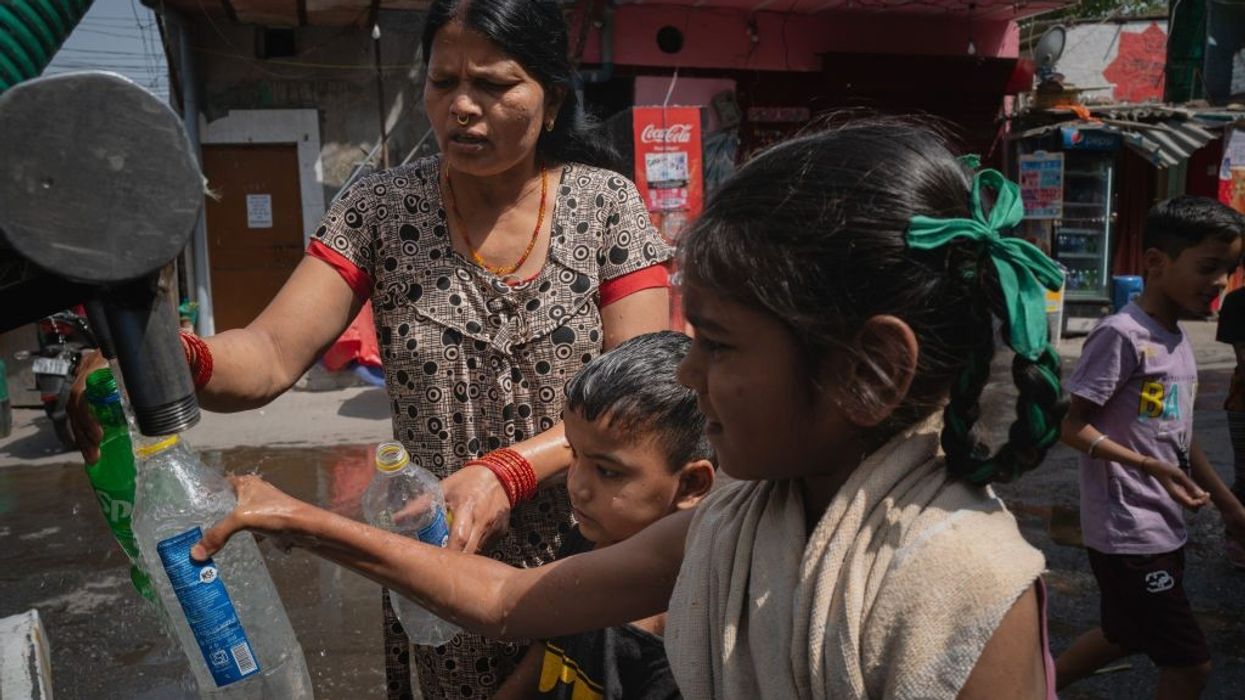

INDIA's weather bureau has warned the country was facing its second heatwave in three weeks, including in areas where millions of people are set to vote in the six-week election.
Analysts have blamed a dip in turnout compared to the last national poll in 2019 on widespread expectations that prime minister Narendra Modi will easily win a third term, as well as hotter-than-average temperatures heading into the summer.
The latest round of voting in the seven-phase election will take place on Monday (20), including in parts of India expected to see temperatures 2-3 degrees Celsius above normal.
Uttar Pradesh, West Bengal, Maharashtra and Jharkhand states, all of which will hold votes on Monday, could expect to see "moderate" heatwave conditions including temperatures around 40 degrees Celsius (104 degrees Fahrenheit), a forecast said late Thursday (17).
The Indian Meteorological Department warned of "moderate health concern" for infants, the elderly and those with chronic diseases, and advised residents of those states to avoid the heat.
The capital New Delhi was also expected to see maximum temperatures of 45C (113F) at the weekend, the forecast said.
Hundreds of millions of people across south and southeast Asia endured a prolonged heatwave last month that prompted school closures in the Philippines and Bangladesh.
India's election commission said last month it had formed a task force to review the impact of heatwaves and humidity before each round of voting.
In Mathura, a city near New Delhi, temperatures crossed 41C (106F) on polling day in late April, with election commission figures showing a turnout drop of nearly nine points from five years earlier.
Modi urged voters this month to drink "as much water as possible" on polling day after he cast his vote in his home state Gujarat.
India is no stranger to searing summer temperatures but years of scientific research have found climate change is causing heatwaves to become longer, more frequent and more intense both in the Asian subcontinent and around the world.
Severe storms also hit parts of the country this week including in the financial capital Mumbai, where strong winds collapsed a giant billboard that killed 16 people and left dozens more trapped under the wreckage.
At least 11 people were killed in lightning strikes during a thunderstorm in West Bengal on Thursday, authorities said.
(AFP)