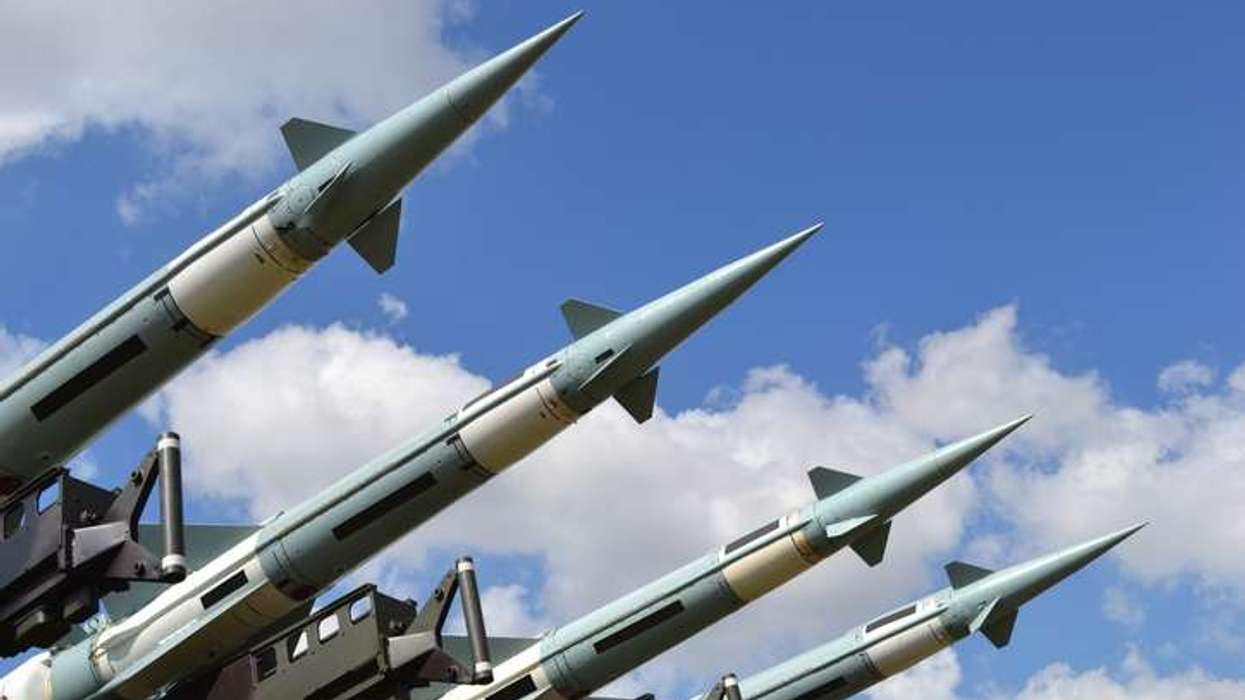

INDIA's nuclear arsenal is now estimated at around 190 warheads, including roughly 30 built for new missile systems currently in production, according to a new assessment from the Federation of American Scientists (FAS), a US-based nonprofit policy research organisation.
The FAS compiled the figures by cross-referencing publicly available information, government-sourced data, and commercial satellite imagery. The analysis appears in a report titled India's Nuclear Weapons – 2026, authored by Hans Kristensen, who directs the organisation's Nuclear Information Project.
Of the estimated total, more than 160 warheads are believed to be assigned to operational delivery systems already in service, with the remainder set aside for missile platforms still being developed.
A modernising arsenal
The report describes a nuclear programme that has continued to evolve in recent years, with India inducting several new weapons systems while others remain in the pipeline. These platforms are being designed to complement or eventually replace the country's existing nuclear-capable aircraft, land-based missiles, and sea-based systems.
The FAS calculated its numbers using estimates of India's weapons-grade plutonium stockpile. Citing figures from the International Panel on Fissile Materials, the report noted India had produced approximately 730 kilograms of such plutonium as of early 2026, with a margin of roughly 170 kilograms in either direction.
Using a rough benchmark of four kilograms of plutonium per warhead, the FAS calculated this stockpile could theoretically yield between 140 and 225 warheads — putting the working estimate of 190 assembled warheads within that range.
Uncertainties acknowledged
The report carefully flagged the limits of its methodology. It noted that India's 1998 nuclear tests confirmed a functioning fission weapon design, but that the country's subsequent progress toward boosted-fission or thermonuclear designs remains difficult to verify from outside sources.
It's also unlikely, the FAS said, that India has turned all its plutonium into finished warheads — some of it may be held back in reserve instead.
A further constraint on the total warhead count, the report said, is the number and type of delivery systems capable of carrying them — India is not expected to build substantially more warheads than its missiles, aircraft, and submarines could actually deploy.
India has maintained a no-first-use nuclear policy since shortly after conducting the Pokhran-II tests in 1998. Responding to questions in Parliament recently, the government reiterated that stance, saying it remained committed to maintaining credible minimum deterrence and a posture of "no first use" of nuclear weapons.
The FAS is a Washington-based think tank that has tracked global nuclear arsenals for decades, producing widely cited estimates on the stockpiles of nuclear-armed states, including India, Pakistan, China, and others, largely through open-source and satellite-based analysis rather than access to classified government data.
Wednesday's (9) report also suggested that India's total warhead stockpile is likely to continue growing in the coming years.






 An animation shows the death of his brotherBritish Museum
 Odo urges William to wage war against HaroldBritish Museum
 Simon Schama and Janina Ramirez discuss the tapestry at the FT Weekend FestivalAmit Roy
 William meets HaroldBritish Museum