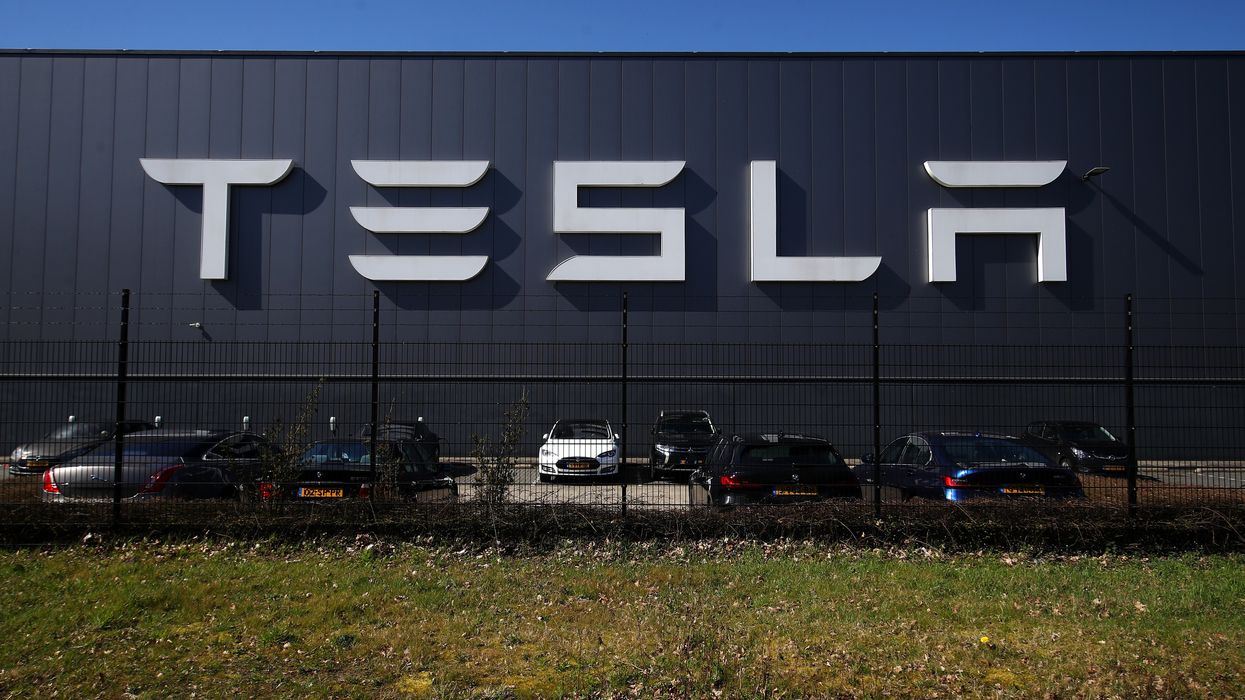

TESLA is not looking to manufacture cars in India, a minister said on Monday, as the government finalised its long-awaited electric vehicle (EV) policy aimed at encouraging foreign automakers to invest in local production.
The new policy offers reduced import taxes for foreign EV makers that commit to setting up domestic manufacturing facilities. While it was initially designed to attract Tesla, CEO Elon Musk put plans to invest in India on hold last year. Tesla’s current focus remains on importing vehicles into the country, despite Musk previously stating that India’s import duties were too high.
Other automakers, including Mercedes-Benz, Volkswagen, Hyundai and Kia, have expressed interest in the policy, according to Minister for Heavy Industries HD Kumaraswamy.
"Tesla, we are not actually expecting (interest) from them ... They are not interested in manufacturing in India," Kumaraswamy told reporters.
Skoda Auto Volkswagen India said it was closely watching the development of EV-related policies and evaluating the impact.
"Based on this, we define the appropriate next steps in line with our long-term strategy," the company said.
Under the new scheme, companies will be permitted to import a limited number of EVs at a reduced duty of 15 per cent, compared to the current 70 per cent, if they commit to investing around $500 million in building EVs in India, the Ministry of Heavy Industries said in a statement.
Companies taking part in the scheme must establish production facilities in India within three years of approval and meet local content requirements. India is currently the world’s third-largest car market.
Domestic companies such as Mahindra & Mahindra have invested significantly in local EV manufacturing and have opposed the reduction in import duties.
The policy allows for limited investments in equipment, research and charging infrastructure. A lack of fast chargers has been one of the challenges in expanding India’s EV market.
In 2024, EV sales accounted for 2.5 per cent of India’s total car sales of 4.3 million, with Tata Motors leading the segment. The government aims to raise this figure to 30 per cent by 2030.