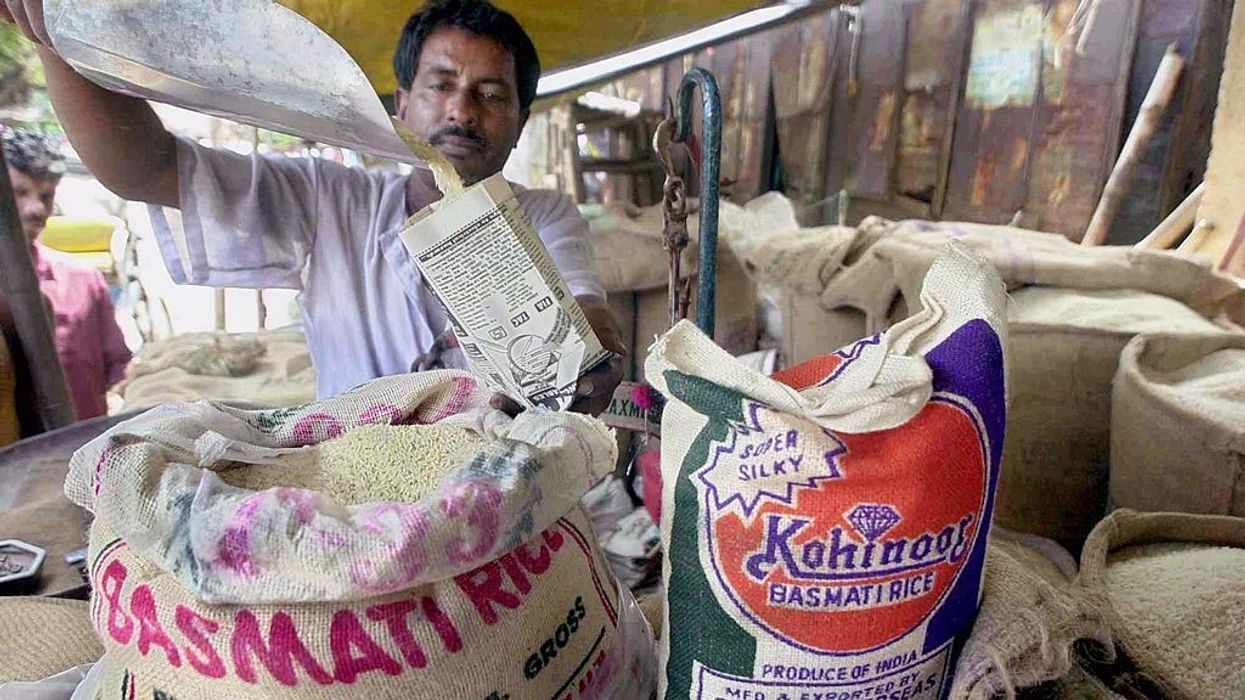

INDIA's decision to remove the floor price for basmati rice exports is expected to spur a flurry of orders from the Middle East, Europe, and the Americas, leading exporters said, helping New Delhi to increase its share of the global market.
The world's biggest rice exporter earlier this month removed a floor price of $950 (£779) a metric ton for basmati rice, weeks ahead of the arrival of the new season crop.
"This policy change has enabled Indian exporters to offer basmati rice at more competitive prices globally, which is likely to drive higher export volumes," said Akshay Gupta, head of bulk exports at KRBL Ltd.
The minimum export price (MEP) posed a barrier to exporting certain basmati rice grades, and its removal has opened up opportunities for global buyers to access the full range of options, said Gaurav Bhatia, director at DD International, one of the top basmati rice exporters.
India and Pakistan are the only growers of premium-grade basmati rice, and the Indian restrictions helped Pakistan gain market share in some categories.
However, with the removal of the MEP, India will be able to reclaim that lost share, said Dev Garg, the director of ViExport, a New Delhi-based exporter.
India's basmati rice exports during April to July, the first four months of the fiscal year, jumped 20 per cent from a year ago to 1.9 million metric tonnes despite the MEP.
The country exported a record 5.2 million tonnes of rice last fiscal year as Canada, Iraq, Oman, Saudi Arabia, and the UK raised purchases, offsetting the impact of lower buying by Iran.
Basmati is not widely consumed in India, and the government does not buy the variety to build state reserves, unlike common grades of rice.
India's basmati rice production is expected to rise by 10-12 per cent this year because of a favourable monsoon, which could further help New Delhi in increasing exports, said KRBL's Gupta.
(Reuters)