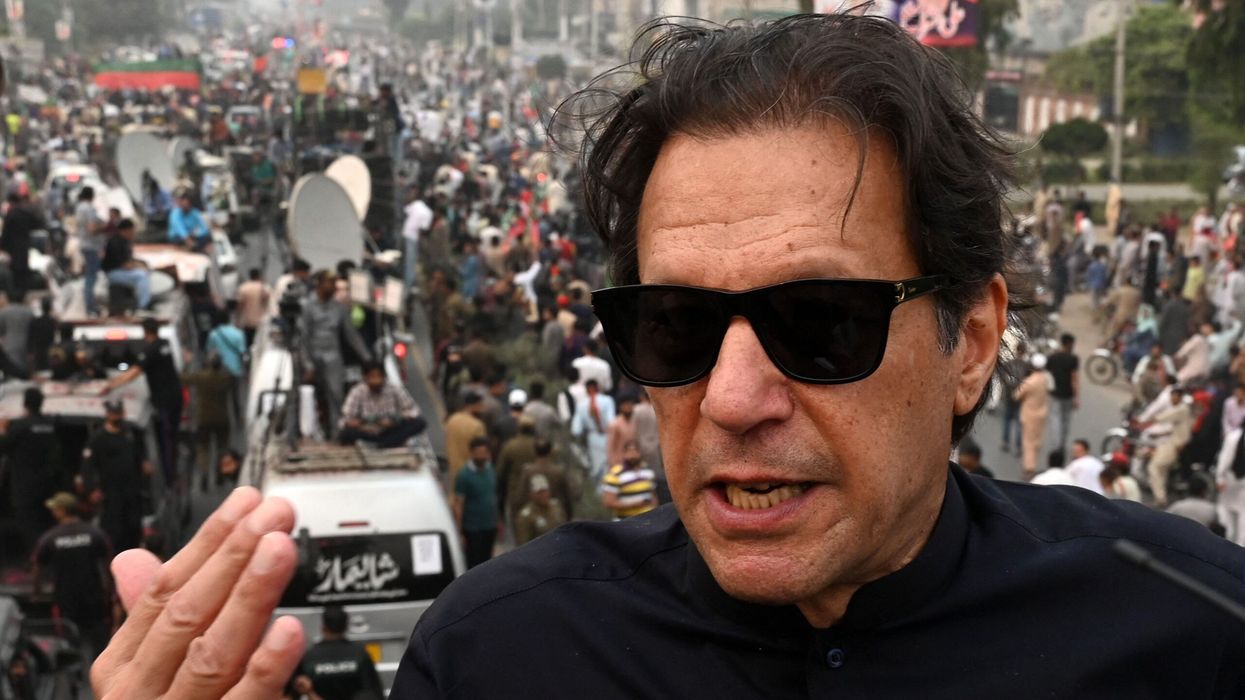

A PAKISTAN court on Friday sentenced former prime minister Imran Khan to 14 years in prison after convicting him and his wife, Bushra Bibi, in a graft case involving the Al-Qadir Trust.
Khan, who has been in custody since August 2023, faces charges in around 200 cases. His party claims the latest conviction is an attempt to silence him.
Speaking in court after the conviction, Khan said, "I will neither make any deal nor seek any relief."
The anti-graft court, which convened at the jail near Islamabad where Khan is held, found him and his wife guilty of corruption in connection with the welfare foundation they established.
Judge Nasir Javed Rana announced the sentences, with Khan receiving 14 years and Bibi seven years.
Bushra Bibi, who had recently been granted bail, was arrested again at the court following her conviction, according to her spokeswoman Mashal Yousafzai.
Khan has maintained that the charges against him are politically motivated and intended to prevent his return to power.
Analysts suggest the jail term is being used to pressure Khan into agreeing to step back from politics.
Since his ousting in 2022, Khan has openly criticised Pakistan's powerful military establishment.
Despite being handed four convictions, two of which have been overturned, and having sentences in two cases suspended, he remains in prison due to pending cases.
A UN panel of experts found last year that Khan's detention lacked a legal basis and appeared intended to disqualify him from political office.
Khan was barred from participating in February's election. Although his party, Pakistan Tehreek-e-Insaf (PTI), won the most seats, they were unable to form a government as a coalition of parties considered more favourable to the military took power.
(With inputs from AFP)