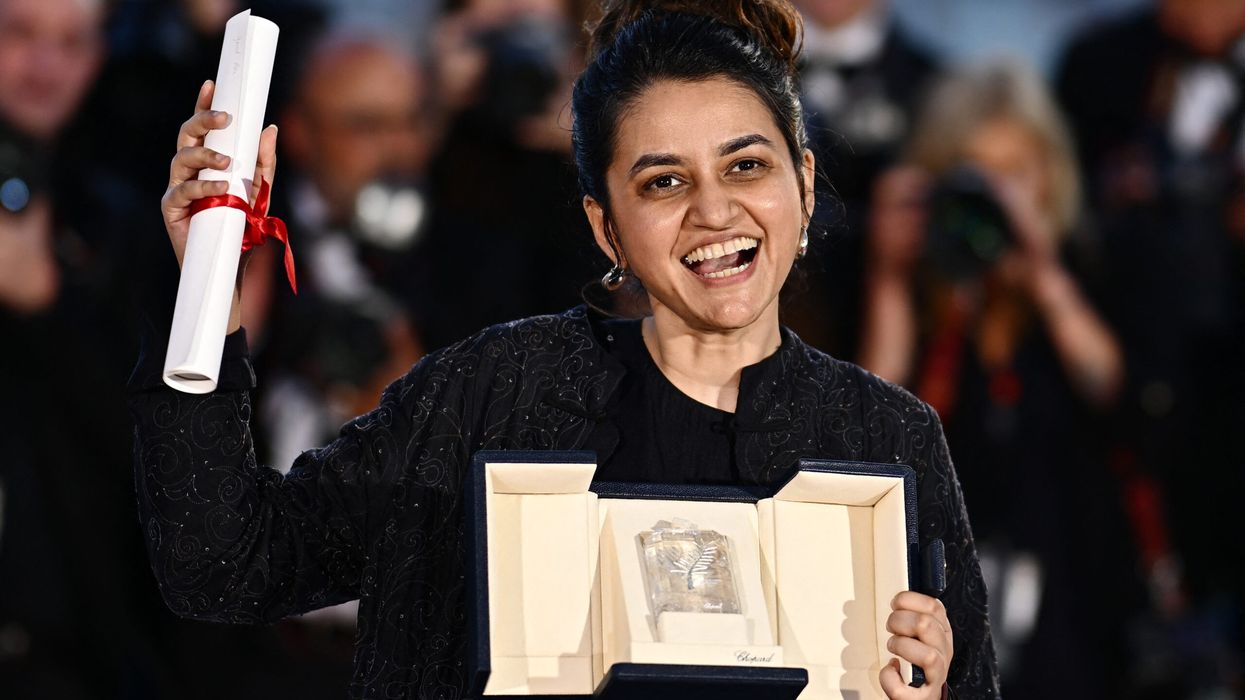

Fronted by Taapsee Pannu, Vikrant Massey and Harshvardhan Rane, Hindi film Haseen Dillruba (2021) has been trending on Netflix ever since its premiere on July 2. Directed by Vinil Mathew, the film has been written by Kanika Dhillon whose filmography includes such notable films as Manmarziyaan (2018), Kedarnath (2018), and Judgementall Hai Kya (2019).
Talking about Haseen Dillruba, Dhillon says that her fascination with Hindi pulp fiction novels while growing up was a major inspiration behind creating the small-town universe of the film. In the film Pannu plays the character of Rani Kashyap, a feisty woman who is a fan of a fictional Hindi crime novelist, Dinesh Pandit. Under investigation as a suspect for the murder of her husband, Rani reveals details about their thorny marriage but that seems to further blur the truth about what happened.
“I would always be intrigued by these novels and their covers, which would have these titillating pictures of women, blood, and a knife on the cover...I wanted to do something which was very pulp and rooted in a small town. I wanted to recreate this Hindi pulp fiction world in cinema,” Dhillon told a newswire.
She went on to add, “Dinesh Pandit is almost an ode to all these Hindi pulp fiction writers who we don't know but are really brilliant in what they write. Dinesh Pandit was, in fact, inspired by Surendra Mohan Pathak who has such a huge body of work. That's how Haseen Dillruba's world started coming together.”
“I have a problem with the portrayal of bubbly girls in cinema because girls are not bubbly all the time in public, they can be very irritating or hard a**. Women are not unidimensional. I don't enjoy this representation of women in cinema as cutesie (or) bubbly,” she said.
She believes machismo can never match up to the mystery of an introvert. “I feel there is a sense of mystery in an introverted guy. Machismo has nothing to do with bravery. Who says a guy who stays quiet can't be heroic when the time comes? I truly believe that people in real life also don't know what they are capable of. I love my heroes who completely surprise themselves and the audience. In Haseen Dillruba, what Rishu is and what he becomes is completely different,” she said.
After Manmarziyaan, which also starred Pannu, Dhillon again explores the set-up of arranged marriages and an extra-marital affair in Haseen Dillruba. While the element of risk is present in both arranged and love marriages, the writer said her stories can be placed somewhere in between the two extremes of the spectrum.
“Arranged marriage is a huge risk that one takes but then so is love marriage or any relationship where you sign up for a long time as there is a risk of it working out or not. The odds are the same. My stories find their place somewhere in between. It is never entirely transactional or entirely romantic. It can be a horrible transaction gone wrong or the love story of the decade.”
Dhillon said the narrative that a woman forgives her husband when he returns to her after straying is accepted, and with Haseen Dillruba she wanted the same for women. “In real life, we all know people when a man who had strayed has come back and the woman has accepted him back and we have not raised an eyebrow. But when a woman has gone out, then you have an issue. Then it becomes a no-win situation and that's a problem. If a woman forgives and becomes a bigger person, so should a man. This narrative that suits men has been propagated for so long that men actually believe it that it is ok for them to stray in a marriage. But what happens when a woman strays? Are you as nonchalant about it as you are in the case of men? I am glad I can talk about these things through cinema because then it starts a conversation,” she said.