
Skip to content
Search

Latest Stories

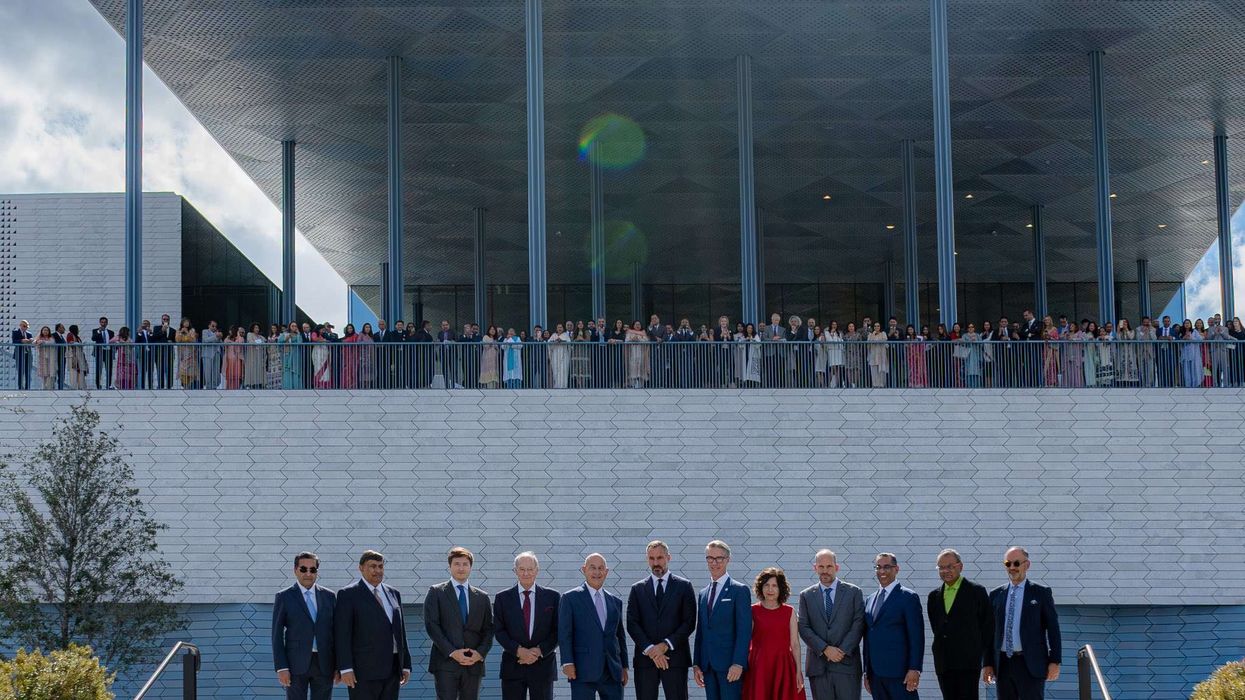
Houston opens first Ismaili Centre in the United States

The event was attended by Houston mayor John Whitmire; Princes Amyn, Hussain, and Aly Muhammad; members of the US Congress; Texas legislators; and representatives of interfaith and civic organisations.

Ismaili Centre

The Ismaili Centre is a place of worship and a social and cultural space for Ismaili Muslims. (Photo credit: X/@houmayor)

X/@houmayor

THE FIRST Ismaili Centre in the United States has been inaugurated in Houston. Mawlana Hazar Imam, His Highness the Aga Khan V, the 50th hereditary Imam of the Shia Ismaili Muslim community, opened the centre on November 6.

The event was attended by Houston mayor John Whitmire; Princes Amyn, Hussain, and Aly Muhammad; members of the US Congress; Texas legislators; and representatives of interfaith and civic organisations.


The Ismaili Centre is a place of worship and a social and cultural space for Ismaili Muslims. The 150,000-square-foot facility, located on more than nine acres near Buffalo Bayou, joins six earlier Ismaili Centres in London, Vancouver, Toronto, Lisbon, Dubai, and Dushanbe. It is designed by architect Farshid Moussavi and landscape architect Thomas Woltz, and is built to LEED Gold environmental standards.

“This building may be called an Ismaili Centre, but it is not here for Ismailis only,” the Aga Khan said. “It is for all Houstonians — a place open to all who seek knowledge, reflection, and dialogue.” Mayor Whitmire described the opening as “a proud moment for the city” and a “statement of unity, faith, and shared purpose.”

The centre will function as a cultural, civic, and educational venue, hosting exhibitions, performances, lectures, and interfaith dialogues, and will also be used for the community’s religious and social gatherings.

Houston has a sizable Indian-origin Ismaili population, and the inauguration holds significance for the diaspora and communities in India.

(With inputs from PTI)

More For You

Elon Musk H1B

Musk revealed that he had "unsuccessfully" tried to dissuade the president from raising tariffs.

Getty Images

Musk backs H1B visas, says US has 'long benefitted' from Indian workers

Highlights

  • Roughly 70 per cent of H1B visas used by Indian citizens working in technology and medicine sectors.
  • Trump administration imposed $100,000 fee on H1B applicants in September, sparking anxiety.
  • Approvals for Indian outsourcing firms drop 70 per cent since 2015 to lowest level in decade.
Elon Musk has backed the H1B visa programme, saying America has "long benefitted" from talented Indian migrant workers, even as he acknowledged the system is being "gamed" by some outsourcing companies.
H1B visa approvals for Indian outsourcing companies have plunged 70 per cent since 2015 to their lowest level in a decade and insisted the solution lies in stopping the abuse rather than dismantling the programme entirely.
Musk made the comments during an interview with Indian entrepreneur Nikhil Kamath on his podcast, released on Sunday evening. He said "We need to stop the gaming of the system. But I'm certainly not in the school of thought that we should shut down the H1B programme...which some on the Right are. I think they don't realise that that would actually be very bad."
Data released this month by the National Foundation for American Policy (NFAP) showed the top seven Indian companies had only 4,573 H1B petitions approved for initial employment this financial year.H1B visas allow US companies to hire skilled foreign workers, with roughly 70 per cent used by Indian citizens working in sectors like technology and medicine.

Visa approvals plummet

In September, US President Donald Trump added a $100,000 (£74,000) fee for H1B visa applicants, sparking anxiety among Indian workers and employers.

H1B visas are allocated through a lottery system. Outsourcing and staffing firms have been accused of manipulating the system using tactics such as submitting multiple entries for the same worker or using the visa to hire low-cost contract workers rather than for specialty occupations.

Keep ReadingShow less