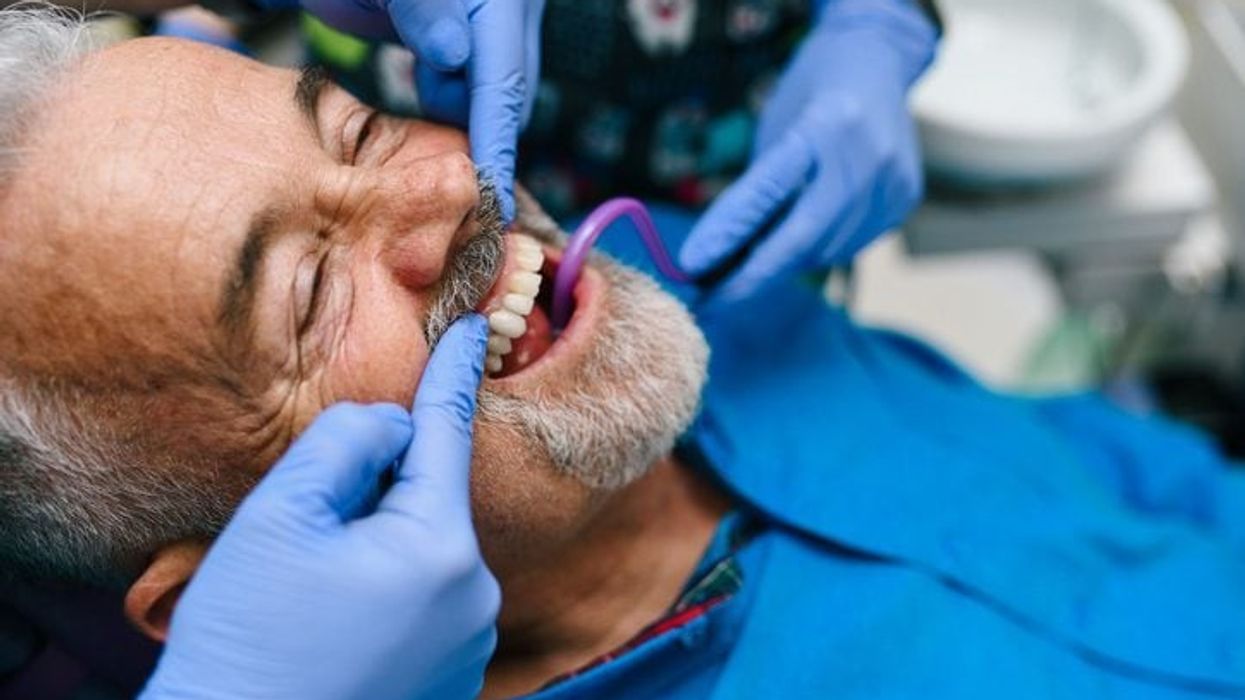

Scientists have uncovered a connection between periodontal (gum) disease and the development of amyloid plaque, a characteristic feature of Alzheimer's disease.
The research reveals that gum disease can trigger alterations in microglial cells, which play a crucial role in protecting the brain against the formation of amyloid plaque—a protein associated with cell death.
The study published in the Journal of Neuroinflammation sheds light on the mechanisms through which oral bacteria can infiltrate the brain and highlights the involvement of neuroinflammation in Alzheimer's disease.
Alzheimer's is a progressive brain disorder that gradually impairs memory and cognitive abilities.
The findings provide valuable insights into the relationship between oral health and the development of Alzheimer's, paving the way for potential preventive and therapeutic approaches in the future.
"We knew from one of our previous studies that inflammation associated with gum disease activates an inflammatory response in the brain," said senior study author, Alpdogan Kantarci, from the Forsyth Institute in the US. "In this study, we were asking the question, can oral bacteria cause a change in the brain cells?" Kantarci said in a statement.
The microglial cells the researchers studied are a type of white blood cell responsible for digesting amyloid plaque. They found that when exposed to oral bacteria, the microglial cells became overstimulated and ate too much.
"They basically became obese. They no longer could digest plaque formations," Kantarci said.
The finding is significant for showing the impact of gum disease on systemic health. Gum disease causes lesions to develop between the gums and teeth.
"The area of this lesion is the size of your palm. It's an open wound that allows the bacteria in your mouth to enter your bloodstream and circulate to other parts of your body,” Kantarci explained.
The ability of these bacteria to penetrate the blood/brain barrier, a protective lining along the inner surfaces of brain blood vessels, and interact with microglial cells has been observed.
To investigate this phenomenon, researchers conducted experiments on laboratory mice by inducing gum disease using oral bacteria typically found in mice. The progression of periodontal disease in the mice was closely monitored, and it was confirmed that the bacteria had indeed migrated to the brain.
Subsequently, the scientists isolated the microglial cells in the brain and exposed them to the oral bacteria. This exposure resulted in the activation of microglial cells, triggering neuroinflammation, and causing alterations in the microglial cells' response to amyloid plaques.
These findings indicate a potential mechanism by which oral bacteria can influence the behavior of microglial cells and impact the development of amyloid plaques in the brain.
"Recognising how oral bacteria causes neuroinflammation will help us to develop much more targeted strategies," said Kantarci. "This study suggests that in order to prevent neuroinflammation and neurodegeneration, it will be critical to control the oral inflammation associated with periodontal disease," Kantarci added.
(PTI)