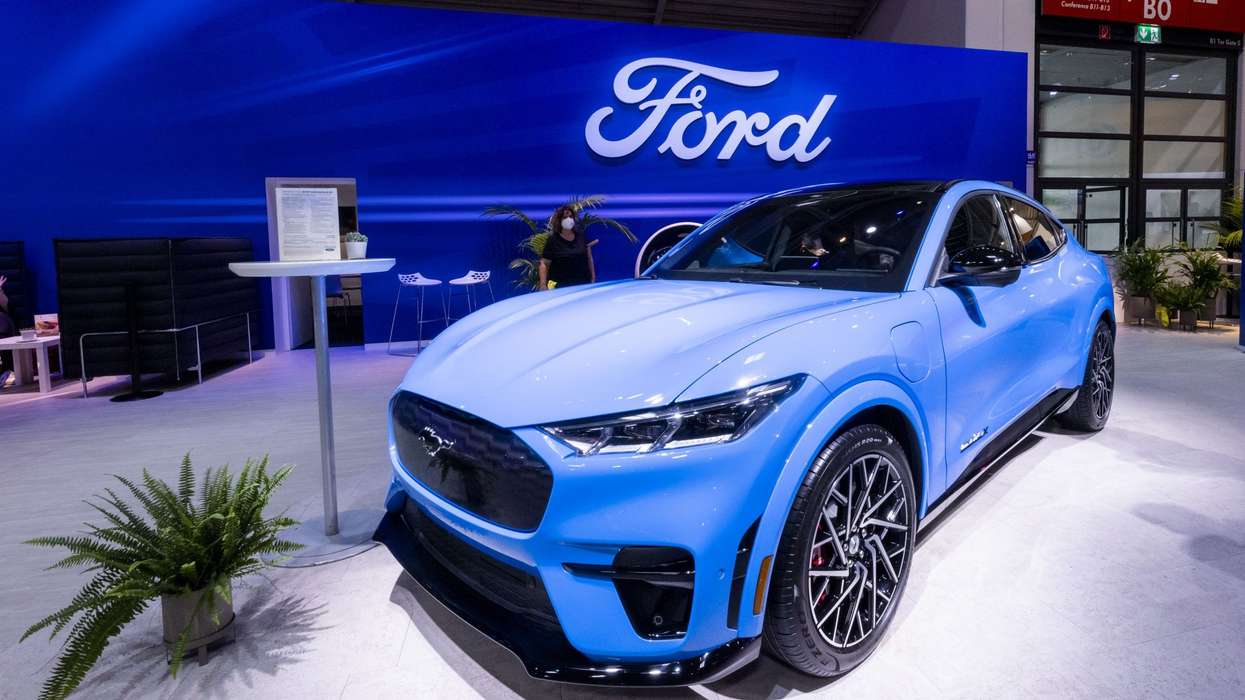

- Ford has dropped its commitment to become an all-electric car brand in Europe by 2030.
- Only two of the company’s five newly announced models will be fully electric.
- The move comes after heavy EV losses, job cuts and slowing demand across the industry.
Ford is stepping back from its earlier promise to become an all-electric passenger car brand in Europe by 2030, marking one of the clearest signs yet that major carmakers are rethinking the pace of the electric vehicle transition.
The company announced plans to launch five new models across Europe, but only two will be fully electric. The remaining vehicles will include petrol, hybrid and plug-in hybrid options as Ford shifts towards what it now calls a “multi-energy” strategy.
The decision reflects a broader change taking place across the global automotive industry, where several manufacturers are quietly softening earlier electric vehicle targets amid slower consumer demand, high production costs and growing financial pressure.
Ford’s latest reset was announced after a meeting with European dealers in Salzburg, Austria. Jim Baumbick, president of Ford in Europe, reportedly said the company was not building vehicles “to meet regulatory mandates” but for customers.
He reportedly added that hybrid technology could help reduce emissions more quickly because it gives drivers the flexibility to switch between electric and conventional driving.
The shift marks a significant reversal from Ford’s position in early 2021, when the company pledged that all passenger vehicles sold in Europe would be fully electric by 2030, with the broader vehicle lineup including vans expected to follow by 2035.
A year later, Ford reinforced that commitment while discontinuing the Fiesta, once one of Britain’s bestselling cars, saying the move aligned with the Paris climate agreement and the company’s long-term environmental goals.
Hybrids return as EV demand slows
Ford now appears to be moving closer to the strategy adopted by several rivals that are trying to balance electric ambitions with slowing customer uptake.
The company said some upcoming models would allow buyers to choose between petrol, hybrid or plug-in hybrid powertrains depending on preference and affordability.
Among the newly announced vehicles will be a European version of the Bronco, the company’s off-road 4x4 model, alongside two crossover vehicles using multiple engine options.
The two fully electric vehicles planned for Europe will include a hatchback model and a smaller SUV. Industry reports suggest the electric hatchback may be assembled at Renault’s EV factory in Douai, northern France, where the new Renault 5 is already being produced.
Ford also plans to launch an all-electric Transit van aimed at cities with tighter emissions restrictions, as well as a heavy-duty Ranger pick-up truck for the European market.
The company’s decision comes after mounting pressure on its wider electric vehicle business. Ford’s US parent company recently recorded a write-down of roughly £15 billion ($19 billion) linked to failed EV investments and restructuring costs.
The group has also cut thousands of jobs across Europe and Britain while reshaping manufacturing operations.
A changing market leaves carmakers recalculating
Ford’s retreat from its all-electric target goes further than some competitors.
Volvo, one of the earliest traditional carmakers to commit fully to electric vehicles, has missed some of its earlier zero-emission goals but still maintains that all new models launched in future will be fully electric.
Ford, however, is openly arguing that pushing consumers too quickly towards EVs may backfire.
The company reportedly said emissions targets disconnected from “the reality of consumer demand” risk encouraging motorists to keep older, higher-polluting vehicles for longer while also undermining industrial investment.
The shift also highlights how dramatically Ford’s position in Britain has changed in recent years. Once the dominant force in the UK car market, the company’s share has reportedly fallen from more than one in ten new car registrations to roughly one in twenty since its original all-electric announcement.
Industry analysts increasingly believe carmakers are entering a more cautious phase where hybrids may serve as a longer-term bridge technology rather than simply a short stop before full electrification.