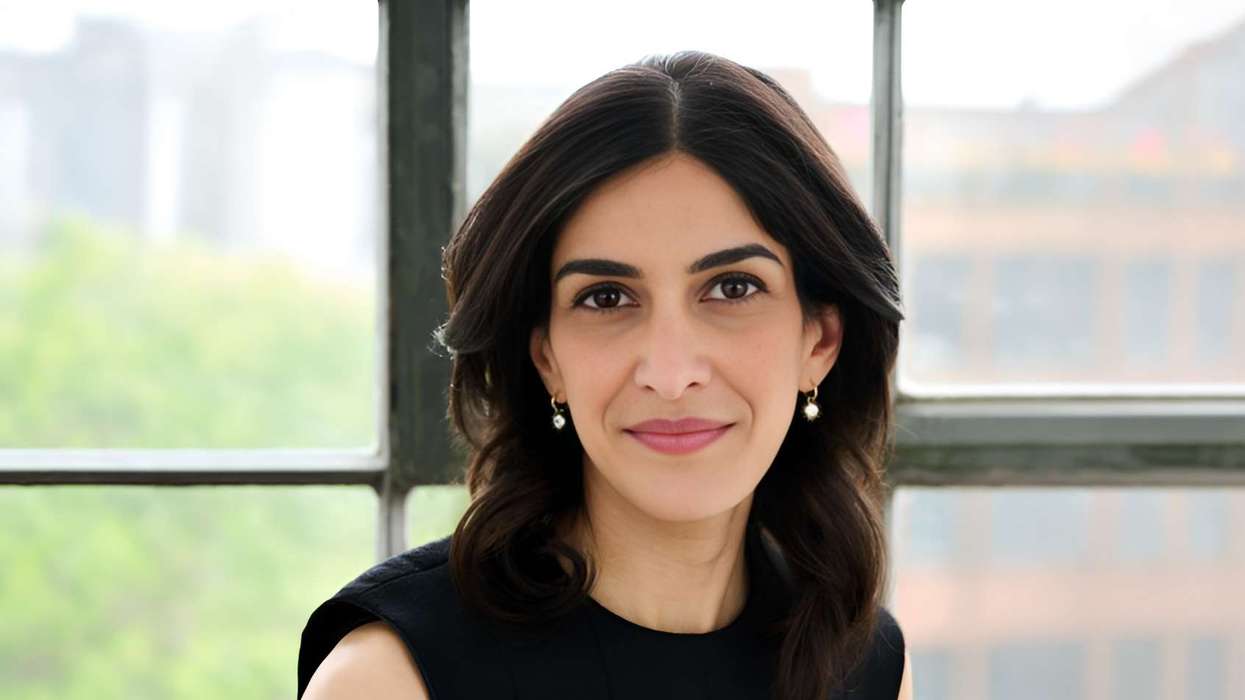

WHEN Channel 4 announced late last year that media executive Priya Dogra would become its eighth chief executive, much of the initial attention centred on the historic milestone: she would be the first person of colour to lead the British broadcaster.
But to frame her appointment primarily through that lens would be to miss the point. The board’s decision was less about symbolism and more about choosing a leader equipped to navigate one of the most testing periods in Channel 4’s history.
The broadcaster needed someone who understood the mechanics of the advertising market but also knew how to run large, complex operations across multiple territories. It needed someone who had worked inside the machinery of the global streaming wars and emerged with a clear sense of how they function.
Dogra – now among the most experienced executives in European broadcasting – ticks all three boxes.
She formally takes over this month, succeeding Alex Mahon after an eight-year tenure that saw Channel 4 survive two government attempts at privatisation and begin a serious push towards a streaming-led business model.
In announcing her appointment, Channel 4 pointed to her “experience in driving commercial growth and digital transformation” and her “track record of nurturing creative processes”.
Dogra inherits a broadcaster that has already begun reshaping itself but remains mid-transition. In recent years, Channel 4 has shifted decisively towards digital growth, with streaming now central to its strategy rather than an adjunct to linear television.
The competitive landscape has changed dramatically. Channel 4 now competes for advertising with the likes of Google and Meta while also confronting a streaming ecosystem that has rewritten where audiences spend their time. Digital advertising accounts for more than 30 per cent of the broadcaster’s total income, and it has publicly committed to becoming a “digital-first public service streamer” by 2030.
Dogra’s task is therefore less about setting direction from scratch than about execution and acceleration – translating strategic intent into sustainable results while protecting the broadcaster’s distinctive editorial voice.
Before arriving at Channel 4, Dogra built a career across some of the world’s most influential media organisations, developing a reputation for navigating commercial and structural change.
Most recently she served as chief advertising, group data and new revenue officer at Sky, where she led Sky Media and oversaw advertising, data strategy and emerging revenue streams.
Dogra spent her childhood in Delhi in the 1990s, when television choices were limited. Before the arrival of cable networks and foreign investment, viewers had access to just two domestic channels, and the highlight of the week was a single hour of cartoons at the weekend.
The media landscape shifted rapidly with the arrival of multichannel television. Watching American programmes for the first time, she began to understand the cultural reach and economic power of the medium.
Curiosity about the wider world – combined with her family’s international ties, as her parents had lived in Canada before she was born – eventually led her abroad. She enrolled at the University of Toronto to study commerce and computer science, though she soon realised that neither discipline quite matched her ambitions.
Instead, she found her way into investment banking, joining Citigroup’s technology, media and telecoms group. Over seven years she worked across New York, London and Toronto, advising media and telecoms clients – including Time Warner.
That relationship proved decisive. In 2009, she joined Time Warner’s mergers and acquisitions group. Within six years she was leading the department.
Her tenure coincided with one of the most tumultuous periods in the modern media industry. In 2014 she helped defend the company against a hostile takeover bid from 21st Century Fox, an episode that underscored the accelerating consolidation reshaping global media.
Dogra was reportedly one of only four company insiders aware of the early negotiations surrounding Time Warner’s proposed merger with AT&T and served as a key negotiator on the deal. When the transaction completed in 2018, she had helped oversee one of the most consequential mergers in the industry – a move that ultimately set in motion the chain of deals and restructurings that would lead to the creation of Warner Bros. Discovery.
She was subsequently appointed executive vice-president of strategy and corporate development. In November 2020 she relocated to London to become president of WarnerMedia EMEA and Asia (excluding China), overseeing programming, distribution, streaming and local production across a vast geography.
Following the formation of Warner Bros. Discovery in 2022, she became president and managing director for Warner Bros. Discovery EMEA.
At the time, the company’s European portfolio included Warner Bros Pictures, Warner Bros Television, HBO and HBO Max, Discovery Channel, Discovery+, CNN, Eurosport, Cartoon Network, Adult Swim, Food Network, Quest, Really, Animal Planet, TLC, ID, HGTV and Turner Classic Movies.
In practical terms, that meant overseeing an ecosystem spanning streaming platforms, film studios, sports rights, television networks, home entertainment and local production.
Her stint at Sky – which she joined in June 2024 as chief advertising and new revenue officer – was relatively brief but notable. She was the architect of Universal Ads, a cross-industry initiative developed with Sky, ITV, Channel 4 and Comcast’s FreeWheel to build a self-serve TV advertising platform aimed at small and medium-sized businesses.
As Dogra takes the helm at Channel 4, the broadcaster finds itself in reasonable health but facing significant headwinds. The advertising market remains volatile while streaming continues to fragment audiences and reshape viewing habits.
Channel 4 must continue to deliver distinctive, risk-taking content while adapting to viewers who increasingly consume programming on their own terms. It must grow commercially without diluting the public-service purpose that defines its existence.
Dogra’s leadership will ultimately be judged on whether Channel 4 can emerge from this transition more resilient, more digitally fluent and more commercially secure – without losing the edge that has made it culturally relevant for more than four decades.
Dogra is not a programme-maker. She is not a journalist. Her career has been built in the world of deals, strategy and commercial infrastructure.
At Channel 4, that may prove precisely what the moment requires.