
A man, who was seriously injured in his effort to save the public from a weapon-wielding schizophrenic, criticised the bravery award given to two police officers, calling the honour a “joke”.
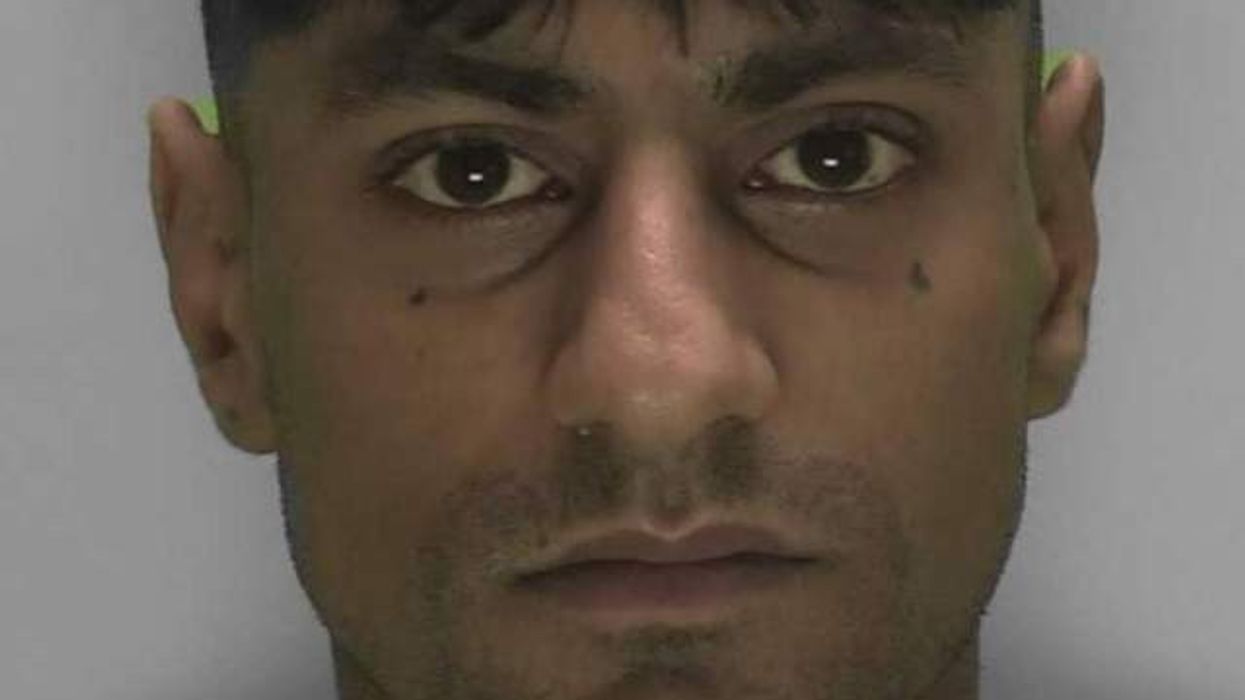
Ifran Malik, 39, said he would not have been stabbed last year had the force been prompt in confronting the attacker - Ali Bhatti - who was waving a Samurai sword in Crawley.
Already on bail for possessing a dagger in a public place, Bhatti called up 999 three times saying he wanted to kill.
While still on the phone with police, the schizophrenic left his house and rode a motorcycle towards the Broadfield Roundabout, where he crashed. He then started walking through traffic along Horsham Road, waving the Samurai sword in the air.
Malik, the father of four, recognised Bhatti and confronted him. But Bhatti stabbed Malik with the sword, causing serious injuries to his chest and forearm.
Bhatti continued the unprovoked attack and slashed at a second man who was walking along the footpath nearby.
Police constable Ryan Oakley and Sergeant James Arrol-Barker approached the armed man and deployed their Taser multiple times before it took effect and Bhatti fell to the ground.
The officers placed him in handcuffs and seized the weapon. Bhatti, 33, an unemployed man from Henderson Road in Crawley, was taken into custody.
This week, he was sentenced to indefinite detention in a secure hospital.
Oakley and Arrol-Barker won the 2022 Police Federation Bravery Awards for the Southeast region for their actions in detaining Bhatti.
But Malik called the police response to the schizophrenic’s actions a ‘joke'.
“They sat in their cars and we ran past them,” he told Mail Online.
“If the police had done their duty, we wouldn't be here today and I wouldn't have been stabbed. They should've been on his door in seconds. They waited once, twice, three times and still, they did nothing.”
Father-of-four stabbed with Samurai sword by schizophrenic criticises bravery awards given to police officers
Ifran Malik said he would not have been stabbed last year had the force been prompt in confronting the attacker.






 Curator Emma Slocombe with ikat robes and arabachi coats in the Peter the Great Room in Blickling Hall Amit Roy
 View of the entrance to Blickling Hall on a rainy autumn dayAmit Roy
 Kente cloth from Ghana in the Long Gallery in Blickling Hall
 Decoration in the Great Hall at Blickling Hall Amit Roy
 Palampore fragment made in coastal south-east India in the Brown Room in Blickling Hall Amit Roy
 Bed valance dating from early 1700s in the Italian Print Room at Blickling Hall Amit Roy
 Indian inspired fabric draped on sofas in the South Drawing Room in Blickling Hall Amit Roy
 Indian inspired fabric draped on sofas in the South Drawing Room with Indian carpet in Blickling Hall Amit Roy
 Karun Thakar has picked out the geometric patterns in the bookcase and the Kente cloth in the Long Gallery in Blickling Hall Amit Roy
 Large tapestry depicting Peter the Great defeating the Swedish army at the Battle of Poltava in 1709 Amit Roy
 ikat robes and arabachi coats in the Peter the Great Room in Blickling Hall Amit Roy
 Baghs and kanthas made by women provide contrast to the men only portraits in the Great Hall at Blickling Hall Amit Roy
 Baghs and kanthas in the entrance Great Hall at Blickling Hall Amit Roy
 Baghs and Kanthas in the Great Hall in harmony with stained glass window at Blickling Hall Amit Roy
 Kimonos reflect Japanese influence in Upper Ante Room in Blickling Hall Amit Roy
 Kimono in Upper Ante Room in Blickling Hall
 A view of the Palace and fort at Agra shows romantic side of India Amit Roy
 Blickling Hall Amit Roy
 Table carpet, European 1670-1680 Amit Roy
 Unfinished 17th century Italian embroidery in the Print Room at Blickling Hall Amit Roy
 Picture of Kashmir shows a romantic view of India Amit Roy
 A panel of Ashburnham bed hangings made in Gujarat for sale in Europe in the Brown Room in Blickling Hall Amit Roy
 Colcha made in the 1600s by women in Bengal for the Portuguese market in the Long Gallery at Blickling Hall Amit Roy




