
Highlights
- The former minister argues the Strait of Hormuz has become more important than Iran’s nuclear programme
- According to him, the UK-India trade deal needs a better strategy
- Britain is not a middle power – it must stop talking itself down, he said
BRITAIN has fallen into the "slow lane" of international diplomacy while regional powers take charge of negotiations following recent US and Israeli attacks on Iran, a former Foreign Office minister has warned.
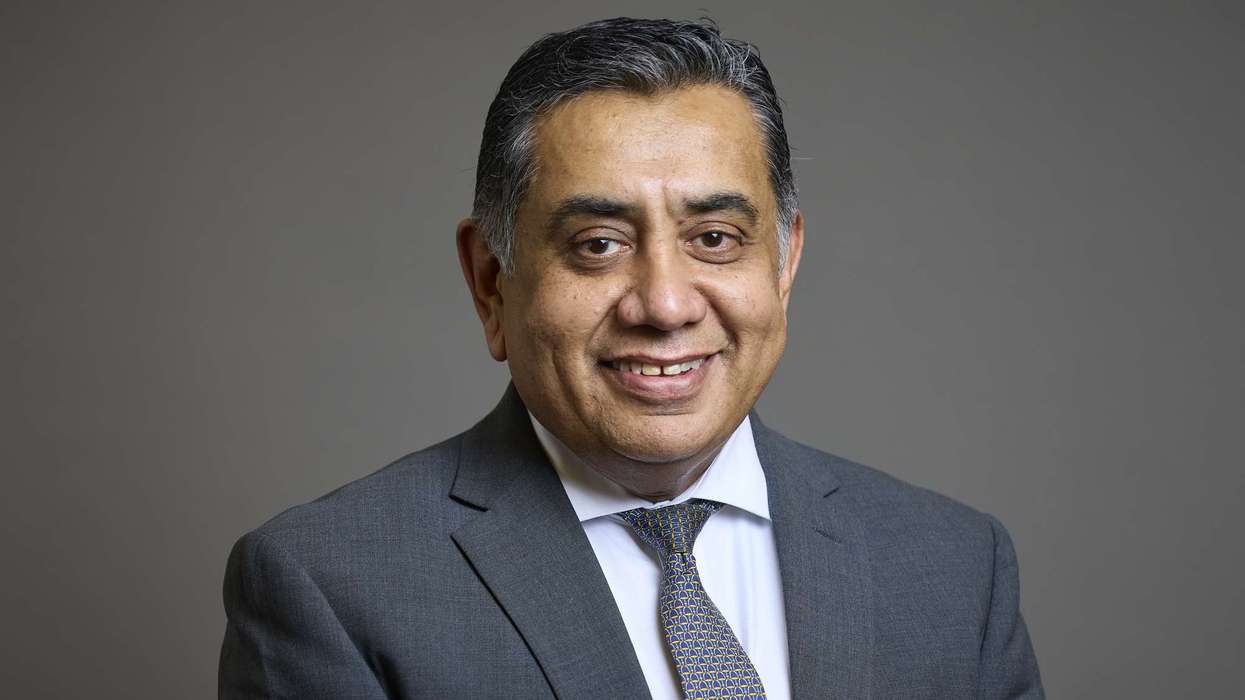
Lord Tariq Ahmad of Wimbledon, who served as minister of state at the Foreign Office for more than seven years overseeing the Middle East, North Africa, Pakistan, and Iran, cautioned that the economic and political fallout from the Middle East conflict is hitting global markets, energy supplies, and shipping routes far beyond the region.
AMG Intelligence: In Conversation with Lord Ahmad | Diplomacy, Leadership & the Future of Britain
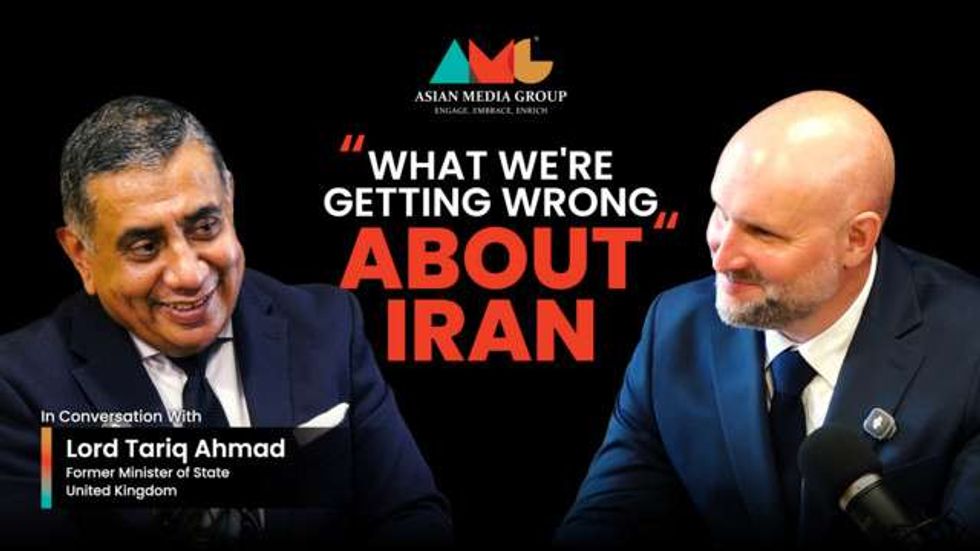 AMG Intelligence: In Conversation with Lord Ahmad | Diplomacy, Leadership & the Future of Britain open.spotify.com
In a wide-ranging interview with Eastern Eye, Lord Ahmad pointed out that the Strait of Hormuz, a key global shipping route, had become more important than Iran’s nuclear programme in the immediate crisis.
He said Britain had once played a quiet but important role in the region.
“The UK always had a key role,” he said. “Our diplomacy is very different and has been historically, yet it has been very effective. It was all about relationships and keeping relationships alive.”
However, he said Britain had now stepped back.
“I do think we have been in the slow lane on this, and that gap has been filled by countries such as Pakistan,” he said.
He praised the roles played by Pakistan, Qatar, Egypt, Turkey and Oman in maintaining dialogue between countries with competing interests. According to him, Pakistan’s relationship with both Washington and Tehran had helped it act as a bridge.
Lord Ahmad also pointed to the growing security relationship between Saudi Arabia, Pakistan and Türkiye. He said the deal, known as the Mecca agreement, reflected the idea of collective defence, under which an attack on one country could be treated as an attack on the others.
He said Britain and other European countries had not been sufficiently involved in these emerging regional arrangements.
UK-India trade and investment
The Asian politician said the UK-India free trade agreement could benefit both countries, particularly in services, technology and manufacturing.
But he warned that the agreement would need better communication and closer co-ordination across the British government.
“There needs to be a bit more strategic thinking,” he said. “We had a stuttered start.”
He said policies such as Britain’s steel strategy should not unintentionally damage imports from India or undermine the wider agreement.
Lord Ahmad said businesses should look beyond traditional markets and consider opportunities in the Gulf, Central Asia, India, Malaysia and Indonesia.
The Middle East, he said, remained a gateway to Africa and Central Asia despite the damage caused by the conflict.
Hormuz is now the central issue
The former minister said the immediate focus of the Middle East conflict had shifted from Iran’s uranium enrichment to the Strait of Hormuz.
“The dominant factor is to get the Strait open and operational,” he said, warning that the disruption was affecting regional economies and the wider global economy.
The narrow waterway between Iran and Oman is a major route for international shipping and energy supplies. Lord Ahmed said Iran was now using the strait as “greater leverage” in its effort to protect the regime.
He expected a compromise to emerge, possibly involving different arrangements for ships based on their national flags, ownership and trading relationships.
“It will not go back to what it was prior to February,” he said. “I think it is now being used as greater leverage.”
He said the United States and Iran both needed a way out of the conflict.
Britain needs continuity
He criticised frequent changes in political leadership and ministerial teams in Britain.
“I served under five different prime ministers. I served under six different foreign secretaries in seven years,” he said.
In his view, diplomacy requires people to remain in place long enough to understand the issues and build trust.
“If there is one thing you learn in diplomacy, it is that we do not need constant changes of prime minister and foreign secretary,” he said.
He added that ministers should retain experienced officials, learn their briefs quickly and focus on delivery rather than media attention.
“Get on with the job, master your brief and give it everything,” he advised.
He further said that ministers should invest in relationships with civil servants, experts and international partners.
He rejected the description of Britain as a “middle power”.
“I have never been someone who sees Britain as a middle power,” he said. “We are something bigger than that.”
He pointed to Britain’s G7 membership, financial services sector, nuclear deterrent, defence industry, global diplomatic network and diverse population.
Britain should not try to imitate the United States or China, he said, but it should stop underestimating its own capabilities.
“Do not talk yourself down,” he said. “Talk about ambition. Talk about yourselves as a nation with ambition and achievement.”
He urged Britain to make better use of its strengths in defence, development and diplomacy.
- YouTube www.youtube.com
What makes a good prime minister?
The most important quality in a prime minister was the ability to listen, Lord Ahmad said.
“The ability to listen, more than anything else,” he said. “Get the right people in the room.”
He praised David Cameron for bringing people together and creating committees focused on specific issues. He said a leader did not have to agree with everyone in the room, but should give people a proper hearing.
He also said leaders needed a clear long-term plan and the courage to make difficult decisions.
“You are there to lead,” he said. “You cannot lead by the committee. You cannot lead by public opinion. Sometimes you must go with principles.”
On ministers, Lord Ahmad said poor preparation and a lack of consultation could quickly cause problems. He criticised Liz Truss’s failure to engage with officials, the City and business leaders before announcing her economic plans.
His advice to new ministers was simple: understand the brief, choose experienced people and do not rush to remove officials.
According to him, Saudi Arabia had undergone significant social and economic change since 2017.
He pointed to the growing presence of women in leadership, concerts, sporting events and a more open approach to visitors from different Muslim communities.
He said Saudi Arabia’s Vision 2030 programme contained both realistic and ambitious targets, but believed the country’s transformation was genuine.
Over the next decade, he said the countries most likely to succeed would be those that invested in technology, artificial intelligence, data and the digital economy.
He identified China, India, Malaysia, Indonesia, Qatar, Saudi Arabia, the UAE, Bahrain and Kuwait as countries with strong potential.
According to him, the Gulf was becoming more important not only economically but also diplomatically and militarily.
A complex picture of Iran
According to Lord Ahmad, Iran was a “very complex country” with a rich culture and a well-educated population. He criticised the suppression of women, minorities and political opponents, but warned against viewing the country only through a western lens.
“We have to stop putting a western lens on human rights,” he said, adding that Britain’s own record had also been “pretty chequered” more than a century ago.
He said Iran’s economic and political isolation had strengthened hardline elements within the country, particularly the Islamic Revolutionary Guard Corps, or IRGC.
He supported efforts to proscribe the IRGC, saying the organisation was undermining both Iran’s institutions and the rights of its citizens.
However, he rejected the idea that military action could bring lasting political change.
“By bombing them in a sort of carpet-bombing campaign, you are not going to suddenly get people welcoming others,” he said.
He referred to the wars in Iraq and Afghanistan as examples of the limits of military intervention. “You can even have boots on the ground, but it does not necessarily mean you are going to achieve the end objective that we would like to see from the West,” he said.
Iran is playing for regime survival
Lord Ahmad said the Iranian government was focused on protecting itself after attacks, internal political tensions and a change in leadership.
“I think the government of Iran is playing for the survival of the regime,” he said.
He believed most ordinary Iranians wanted the conflict to end, particularly after the deaths of civilians and children. But he said the government would also seek to preserve its influence and prevent the IRGC from being weakened completely.
The former minister said countries with links to both Iran and the West would be vital in future negotiations. He named Pakistan, Turkey and Qatar as possible bridges.
The aim, he said, should be to prevent Iran from acquiring a nuclear weapon while allowing the country to avoid being reduced to “absolute rubble”.
Diplomacy depends on relationships
For Lord Ahmad, diplomacy begins long before a crisis.
“The art of diplomacy … was about building relationships,” he said. “It was not just speaking to someone because I needed something or they needed to talk to me.”
He said these relationships became particularly important during negotiations over hostages held by Hamas after the 7 October attacks and the subsequent war in Gaza.
Qatar played a central role because it could communicate with Hamas, he said.
“You do not make peace with your friends; you make peace with your foes and enemies,” he said. “You need someone to be talking to the other side.”
He added that Britain had helped connect hostage families with officials in Qatar and had maintained communication with Israel despite strong public pressure.
Lord Ahmad revealed he had received death threats, abusive messages and visits to his home while serving as Middle East minister.
“I could have walked away from this,” he said, but added that ending those relationships would have harmed the people the negotiations were intended to help.
He also described how sharing food could reduce tension during difficult talks. Referring to negotiations between Israelis and Palestinians, he said disagreements eased when the two sides began discussing food and discovered common ground.
“It was building something,” he said. “It was also easing the tension.”
While speaking about the impact of artificial intelligence, he said that many people still did not understand how quickly AI and other technologies could reshape daily life.
“AI is going to be a huge question,” he said.
He noted AI could change jobs, services and the way people understood reality, particularly as virtual material became increasingly difficult to distinguish from real events.
The challenge, he added, was to educate both younger and older people while preserving human contact.
“But we must not lose the human touch,” he said.