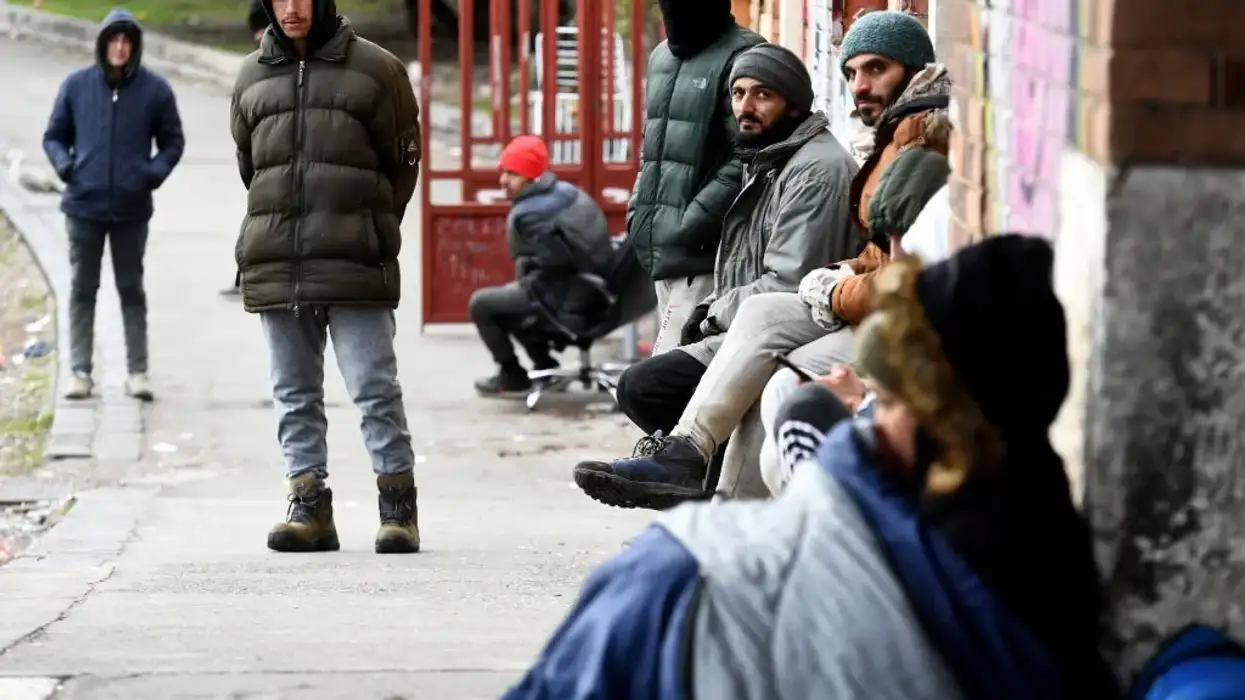
ASYLUM applications in the EU jumped last year after Covid travel curbs were lifted, surging 50 percent over 2021 to the highest level since a 2016 influx of refugees.
The preliminary data, from the EU Agency for Asylum (EUAA), showed there were nearly one million asylum claims lodged in 2022 in the bloc's 27-member states plus Switzerland and Norway.
Syrians and Afghans were the two main nationalities seeking protection in Europe, together accounting for a quarter of the claims.
Migrants from Turkey, Venezuela, Colombia, Pakistan, Bangladesh and Georgia were the next biggest groups, though in smaller numbers.
Ukrainians fleeing the Russian invasion mostly did not come under the asylum data as they benefit from a separate EU temporary protection regime introduced in March 2022, which gives automatic protection after registration.
According to the EU statistics agency Eurostat, four million Ukrainians took up protected status and only two percent applied for asylum.
Still, that made for more than 28,000 Ukrainians who applied for asylum in the EU in 2022 - the most ever registered.
Travel restrictions that European and many other countries brought in during the early stages of the Covid pandemic blocked movement by many migrants, including asylum-seekers.
Those were largely lifted over the course of 2022 as EU countries rolled out mass Covid vaccination programmes.
In all, according to the EUAA, there were 966,000 asylum applications in 2022.
That compared with 1,251,815 claims in 2016.
The data showed the highest number of unaccompanied minors - 43,000 - since 2015, when more than a million asylum-seekers, most of them from war-torn Syria, came to Europe for protection.
Two-thirds of the unaccompanied minors came from Syria and Afghanistan.
In 2022, there were a total 131,697 applications from Syrians and 128,949 from Afghans.
Following were 55,437 claims from Turks and a threefold year-on-year increase in claims from Venezuelans and Colombians (some 51,000 and 43,000 respectively).
After came smaller numbers from Bangladeshis, Georgians, Ukrainians, Indians, Moroccans, Tunisians, Nigerians and Somalians.
The 16th-biggest group of asylum-seekers was Russians, with 16,920 claims.
Then came applicants from Egypt, the Democratic Republic of Congo, Iran, Albania, Peru and Eritrea.
(AFP)
EU asylum claims soar to seven-year high