
- Citroën is targeting a starting price of around €15,000, roughly £12,700.
- The concept features a roll-back canvas roof, colourful interior and distinctive retro details.
- A production version is expected by 2028, with rapid DC charging potentially optional on the entry-level model.
Citroën is bringing back one of its most recognisable cars as an electric vehicle, hoping to make battery-powered motoring more affordable without losing the charm that made the original 2CV a French automotive icon.
Unveiled at the 2026 Paris Motor Show, the new 2 CV Concept previews a small electric car that Citroën aims to launch by 2028, with a starting price of around €15,000. The target would put it among Europe's more affordable electric cars, although the final retail price and production specifications have yet to be confirmed
The original 2CV was designed around a simple idea: make personal transport accessible to ordinary people. The new concept attempts to bring that philosophy into the electric era, at a time when many new cars have become larger, heavier and more expensive.
Xavier Chardon, Citroën's chief executive, said: “The brief of the original 2CV was to democratise mobility. It put people on wheels both inside and outside of France, and it could do that because it concentrated on the single benefits for users, and took away the superfluous.”
He added: “It is the same philosophy that we are applying to the new 2CV.”
What does the new electric Citroën 2CV look like?
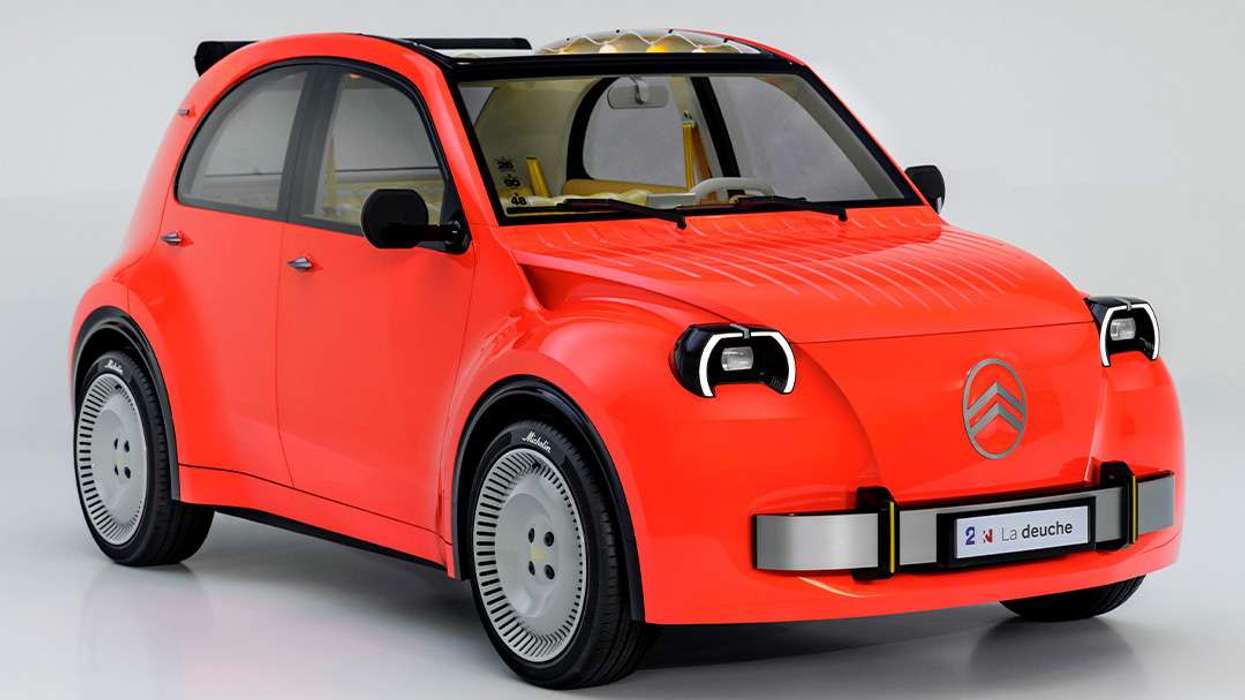
The concept retains several features associated with the original car, including round headlights, steel wheels, a curved roofline and a roll-back canvas roof. Modern LED lighting and a blacked-out tailgate give the design a more contemporary appearance.
At 3.76 metres long, the concept is shorter than the original 2CV. Citroën says the compact dimensions are intended to recapture the agility of smaller cars while making driving and parking easier. The company is also targeting a weight of around one tonne, which could help efficiency if that figure carries through to production.
Inside, the design is deliberately cheerful and uncomplicated. Colourful fabric runs across the dashboard and door panels, while thick, tartan-trimmed bench seats give the cabin a distinctive character.
An 8-inch infotainment screen sits alongside a slim display bar that Citroën calls its Smart Vision Display, which presents key driving information. The graphics are inspired by comic books, according to the company.
The unusual details continue throughout the cabin. A removable storage basket made from wood and bio-based plastic replaces the traditional centre console, while door storage compartments are designed to hold everyday items, including half a dozen eggs.
The brake pedal is shaped like a tortoise and the accelerator like a rabbit, a playful reference to slowing down and speeding up. A detachable radio, called the Radioen, is styled to evoke older portable radios.
Citroën has also worked on the sounds associated with the car, with the horn and start-up sound of the electric motor intended to echo those of the original model.
The result is a concept that uses nostalgia as more than a styling exercise. Its practical storage, compact dimensions and simple cabin are intended to reinforce the original car's focus on everyday usability.
How much will the new electric 2CV cost, and when will it launch?
Citroën is targeting a starting price of around €15,000, equivalent to approximately £12,700 at the exchange rate used in the original report. The figure is a target rather than a confirmed UK retail price, and the final cost could vary by market, equipment and available incentives.
The production model is expected by 2028 and will be built in Europe, according to Citroën. It is intended to sit between the brand's Ami microcar and C3, giving buyers another option in the small-car market.
Keeping the entry-level price low will require careful choices about equipment. Citroën chief executive Xavier Chardon has indicated that rapid DC charging could be optional on the cheapest version, helping the company control costs.
The brand has also indicated that it could expand the range if demand supports it. Possible derivatives include a Fourgonnette-style van and an off-road version, both drawing on the original 2CV's reputation for versatility. These versions have not been confirmed for production.
The challenge will be turning the concept's appealing design and low target price into a car that can compete in an increasingly crowded electric market. The production model will need to balance affordability with the range, charging capability, safety equipment and practicality that buyers expect.
For Citroën, the new 2CV is an attempt to make electric mobility feel accessible rather than intimidating. Whether it succeeds will depend on how closely the finished car matches the concept's promise of simple, characterful motoring at a price more people can afford.