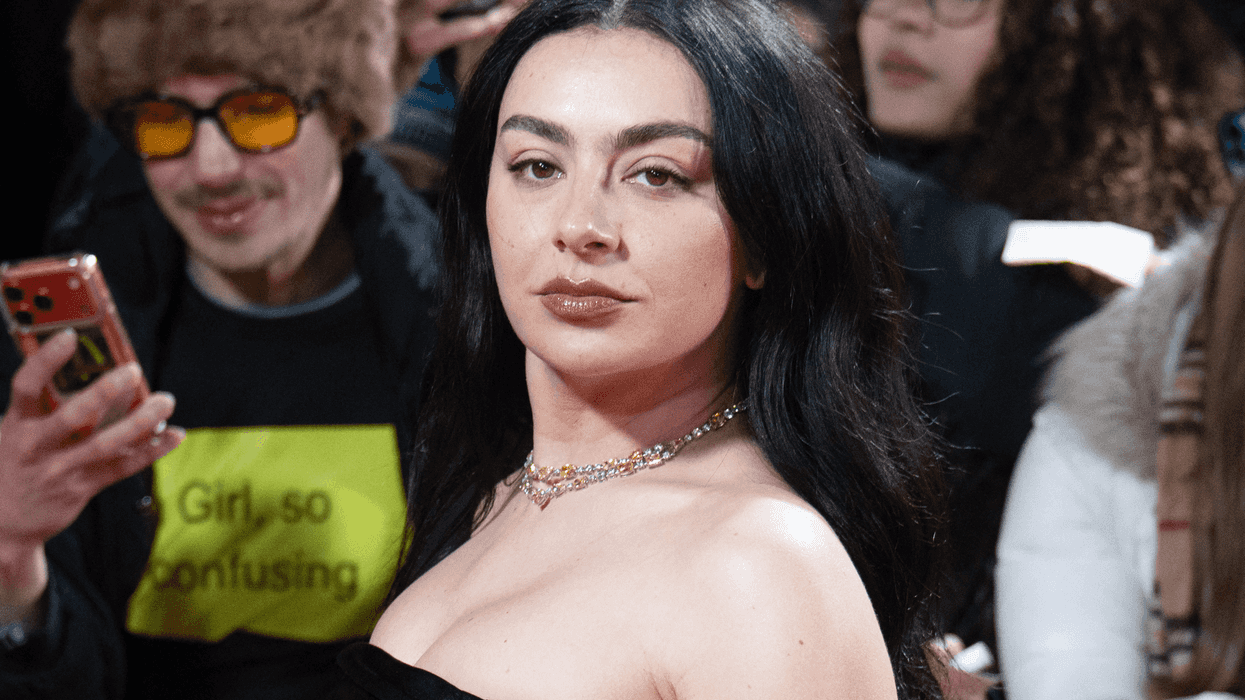

WIND lashes across the Yorkshire moors, a string section swells, and a familiar voice cuts through the gothic drama of a new screen adaptation of Wuthering Heights. The soundtrack – brooding, romantic and faintly mischievous – bears the unmistakable imprint of Charli XCX, an artist who has spent more than a decade refusing to stay in one creative lane.
The moment marks a telling shift. Having spent years reshaping modern pop, she is increasingly stepping into cinema as both collaborator and on-screen presence. In recent months she has appeared on press junkets and major chat shows alongside the cast of Wuthering Heights, treating the film’s promotional circuit not as a guest musician but as a creative partner. It is a reminder that the British star’s influence now stretches well beyond the recording studio.
That expansion has been deliberate. Earlier this year she co-produced and starred in The Moment, a mockumentary directed by Aidan Zamiri that premiered at the Sundance Film Festival before screening at the Berlin Film Festival. The film features her playing a fictionalised version of herself navigating sudden global fame while wrestling with record-label pressures and artistic expectations.
“It’s up to the world, but for me it’s over,” she said when asked about the cultural wave sparked by her 2024 album Brat. “You can’t dread the end when it’s over.”
The line captures both the humour and the self-awareness of The Moment. The film blurs reality and satire, drawing on experiences she accumulated over years inside the music industry. “The scenarios that we show in the film are not true,” she explained at the festival premiere, “but given a different set of circumstances, they might.”
Making the project proved, in her own words, “quite cathartic”, allowing her to channel frustrations that come with long-term fame into an exaggerated fictional narrative.
Cinema is only one strand of a year that continues to underline her cultural reach. This summer she will headline the Reading and Leeds Festivals – the twin British music events that have long served as a rite of passage for global rock and pop acts – performing across the August bank holiday weekend before tens of thousands of fans.
For an artist who once built her reputation on underground club culture, such moments underline how far her influence now stretches.
Born Charlotte Emma Aitchison in Cambridge in 1992, she grew up straddling cultures. Her mother, Shameera, is of Gujarati Indian descent whose family fled Uganda during Idi Amin’s expulsion of Asians; her father, Jon Aitchison, is Scottish. Weekends with her grandparents in Crawley were filled with Bollywood films, while school in Essex sometimes brought harsher reminders of difference. She has spoken about being bullied as a “half-Indian girl with frizzy hair” in predominantly white classrooms – experiences that sharpened both her self-awareness and her defiance.
Music offered escape early. At 14 she was writing songs; by the late 2000s she was uploading them to MySpace and performing at London warehouse raves. The alias ‘Charli XCX’, taken from an old MSN Messenger screen name, stuck simply because she had nothing better at the time. The accidental stage name would become one of pop’s most recognisable brands.
Early fame arrived sideways. In 2012 she provided the anarchic hook to Swedish duo Icona Pop’s I Love It, a global hit that became her first UK number one. Two years later she was again everywhere, this time as the voice behind Iggy Azalea’s blockbuster Fancy and the solo smash Boom Clap.
Yet commercial success never fully captured her ambitions. Instead, she spent much of the 2010s quietly reshaping the sound of modern pop. Working with the PC Music collective, she leaned into experimental electronic textures and hyper-pop aesthetics that initially seemed too strange for mainstream radio but later became influential across the industry. Mixtapes such as Pop 2 and albums like Charli (2019) and How I’m Feeling Now (2020) built a fiercely loyal fan base that relished the collision of club culture, internet irony and emotional candour.
That reputation for experimentation eventually culminated in Brat, the album that turned her from cult innovator into a full-scale cultural phenomenon. The record topped charts across multiple countries and spawned a viral aesthetic – the now-famous neon-green palette – that spread rapidly across social media. The term “brat” itself became a defining cultural shorthand for the carefree, rebellious mood of the moment.
Even as the album dominated headlines, its creator seemed eager to move beyond it. The pop star has long argued that artists must avoid lingering too long in one cultural moment – a philosophy that helps explain her rapid shift towards film, writing and broader creative collaborations.
In essays published on her Substack, she has reflected on the strange duality of pop stardom: the glamour of arriving at parties in black SUVs and wearing jewellery guarded by security staff, contrasted with long hours spent in anonymous backstage spaces, airports and hotel corridors – “soulless liminal spaces”, as she calls them, where artists exist perpetually in transit.
Those reflections reveal an unusually analytical approach to fame. She views pop not simply as entertainment but as a cultural ecosystem shaped by internet culture, fandom and fashion – an ecosystem she has repeatedly helped to influence.
Her career now stretches across songwriting, production, acting and visual storytelling. Even as Brat collected awards – including a Grammy for Best Dance/Electronic Album – she was already hinting at broader ambitions. Acting roles in films such as The Gallerist and I Want Your Sex this year suggest an artist determined to expand her creative terrain.
What makes her powerful, however, is not simply the accolades but the restless momentum behind them. At each moment when the mainstream catches up with her ideas, she seems to pivot again – towards a new sound, a new medium or a new artistic experiment.
In a culture obsessed with relevance, that refusal to stand still may be the most powerful move of all.
ENDS