
CHINA and India are likely to attempt interference in Canada’s general election on April 28, while Russia and Pakistan also have the potential to do so, the country’s spy service said on Monday (24).
The Canadian Security Intelligence Service made its comments at a time when Ottawa’s relations with both India and China are chilly.
Beijing and New Delhi have denied previous allegations of interference.
Canada was slow in responding to efforts by China and India to interfere in the 2019 and 2021 elections, but their outcomes were unaffected by the meddling, an official probe concluded in a final report released in January.
Vanessa Lloyd, deputy director of operations at CSIS, told a press conference that hostile state actors were increasingly leveraging artificial intelligence to meddle in elections.
“The PRC (People’s Republic of China) is highly likely to use AI enabled tools to attempt to interfere with Canada’s democratic process in this current election,” she said.
Earlier this month Beijing announced tariffs on more than $2.6 billion (£2bn) worth of Canadian agricultural and food products, retaliating against levies Ottawa slapped on Chinese electric vehicles and steel and aluminium products last year.
Canada said last week that China had executed four Canadian citizens on drug smuggling charges, and condemned Beijing’s use of the death penalty.
Asked for a response to the CSIS comments at a regular news briefing on Tuesday, a Chinese foreign ministry spokesperson said China had always adhered to the principle of not interfering in the internal affairs of other countries, and had “never had any interest in interfering in Canada’s internal affairs”.
Canada last year expelled six Indian diplomats – including the head of mission – over allegations they were involved in a plot against Sikh separatists on Canadian soil.
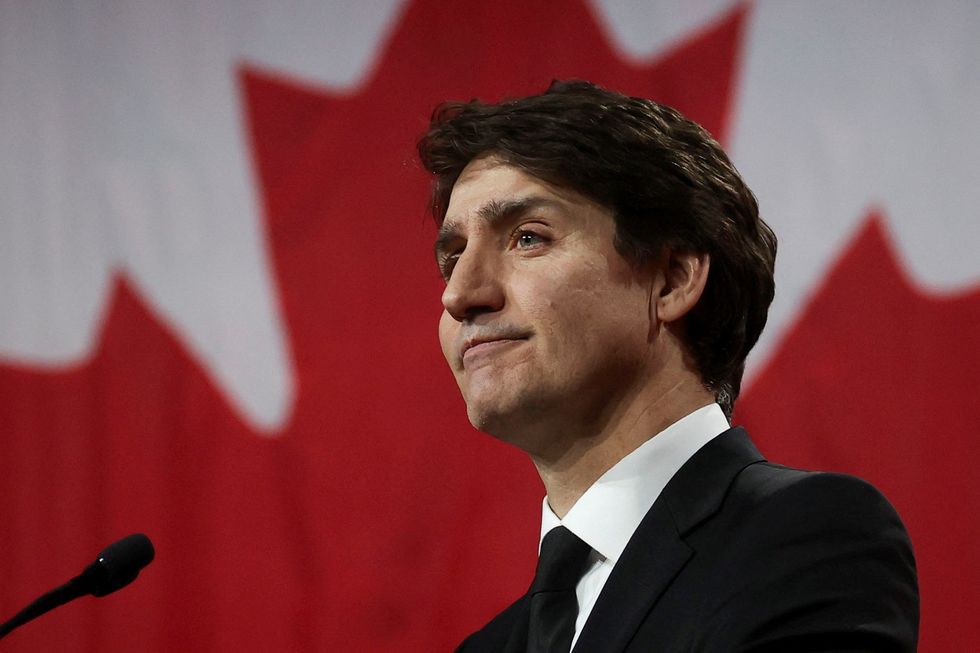 Justin Trudeau, who made the allegations about India’s role when he was prime minister
“We have also seen that the government of India has the intent and capability to interfere in Canadian communities and democratic processes,” said Lloyd.
The Indian diplomatic mission in Ottawa was not immediately available for comment. Meanwhile, quoting unnamed sources, the Globe and Mail alleged on Tuesday (25) that agents of India and their proxies meddled in the 2022 election of Pierre Poilievre, a Conservative Party leader.
Quoting a source with “top-secret clearance”, it said the CSIS learned that Indian agents were involved in raising money and organising within the south Asian community for Poilievre during the leadership race, which he won.
CSIS did not have evidence that Poilivre or members of his inner circle were aware of the alleged actions of India’s agents and their proxies, it said, quoting the source.
Russia and Pakistan could potentially conduct foreign interference activities against Canada, Lloyd added.
“It’s often very difficult to establish a direct link between foreign interference activities and election results ... Nevertheless, threat activities can erode public trust in the integrity of Canada’s democratic processes and institutions,” she said.