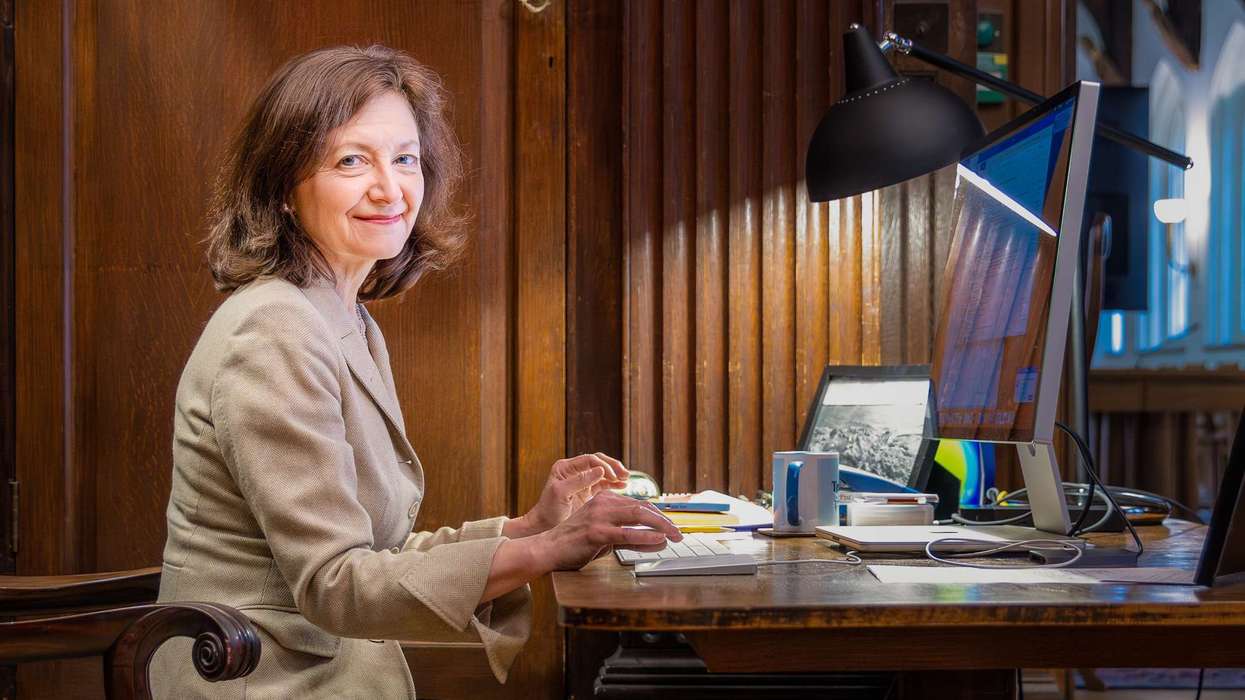

Cambridge, one of the world’s top universities, is setting out to strengthen the already close relationship that it has had with India for well over a century.
How this is being done was explained by the university’s vice chancellor, Prof Deborah Prentice, in an exclusive interview with Eastern Eye.
This was conducted at her office in The Old Schools in Trinity Lane in Cambridge.
One important scheme being put in place is for the Judge Business School in Cambridge to offer certificates to students in India. This will involve eligible candidates being taught in India for two weeks by academics who will fly out from Cambridge. Then the students will come to Cambridge for a week.
Another big change will be for Cambridge University to admits students from India as undergraduates after they finish school. At the moment, Indian students mostly come as postgraduates. The relaxation means Cambridge recognises Indian school leavers – rather like their British Indian counterparts – are ready to start undergraduate courses instead of being made to wait three years. They will be able to start at 18 rather than in their early twenties.
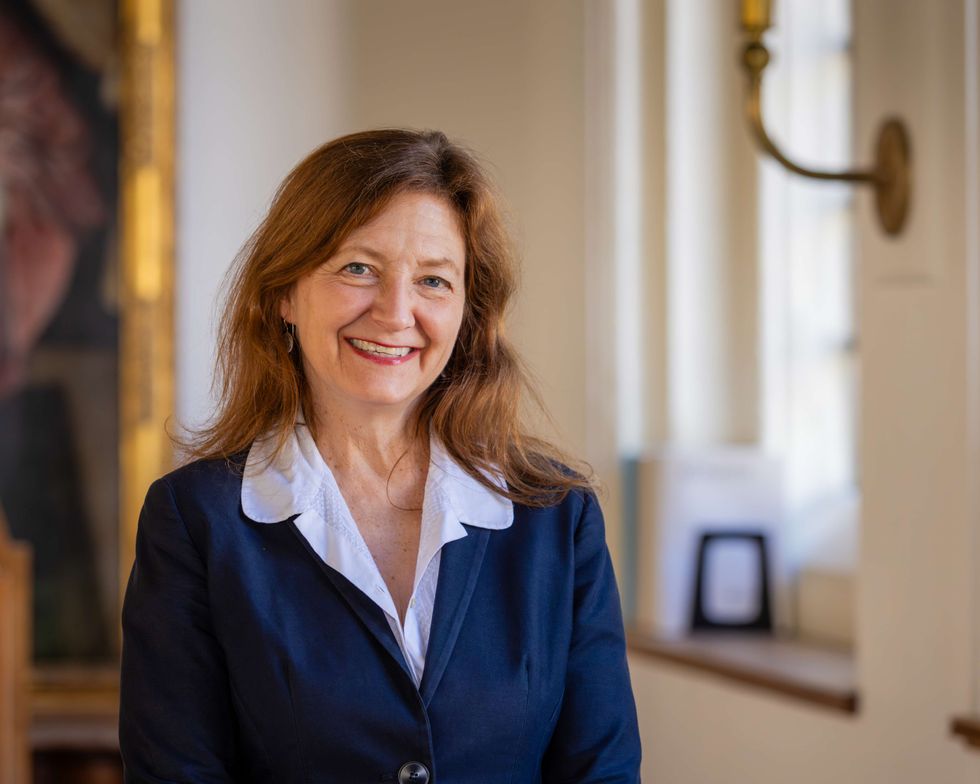 Deborah Prentice Cambridge University
The Indian CBSE Class XII qualification will now be accepted by the university for some undergraduate courses, alongside additional requirements where appropriate.
The relationship is of critical importance to India because it will help with fundamental research and the development of the country. It will allow the best and the brightest scholars in the country to engage closely with their counterparts in Cambridge.
Prentice, who visited Mumbai and Delhi in January this year and expects to return to India in another 12 months or so, said: “We have alumni and opportunities in various corners of India. India is so federated that we have been exploring ways of engaging across the country.”
Cambridge (as well as Oxford) have historically appealed to India.
The vice chancellor pointed out: “We are historically very strong in science and technology, and that remains true. We’re extremely strong in material science and physics, in computer science and AI. Our signature, certainly in terms of where we’ve made the biggest mark, would be in physics, in astrophysics, in all areas of engineering. We have an incredibly strong engineering course.”
She added: “Our department of engineering is all in one department at Cambridge – except chemical engineering. Life sciences, biology and medicine – all of those areas (are also strong). We’ve got real strength across the arts, humanities, and social sciences as well.”
She spoke of Cambridge’s strength in AI, an area of particular interest to India: “We’ve got research that spans basic research to pushing the boundaries of AI. We’ve got a really promising plan for integrating AI into undergraduate and postgraduate education in a systematic and thoughtful way, focusing a lot on how students engage AI and making sure that we are aware of the latest research on how AI affects learning and how to optimise that. AI is a huge interest of Cambridge University Press, which is looking at things like assessment and testing across the world. We’ve got a lot going on in AI.
“What I’ve seen in other countries are the biomedical areas because their problems are similar: so, we want people coming here to our biomedical campus, learning the latest in cancer detection or whatever, and then taking that back.”
The interview was joined by Prof Bhaskar Vira, Cambridge University’s Pro-Vice-Chancellor for Education and Environmental Sustainability, who explained: “I was just with colleagues at the Judge Business School, trying to understand what they are planning. Now, we want to enable that to happen, but not constrain their activities in India by saying you have to fit in with our vision that you have to be in Bombay or in Bangalore. That’s a slightly different model to some of the British institutions that have chosen to put physical campuses in India, which we quite explicitly are not going to do. It’s very difficult to produce the ecosystem that leads to a Cambridge degree in an offshoot campus.
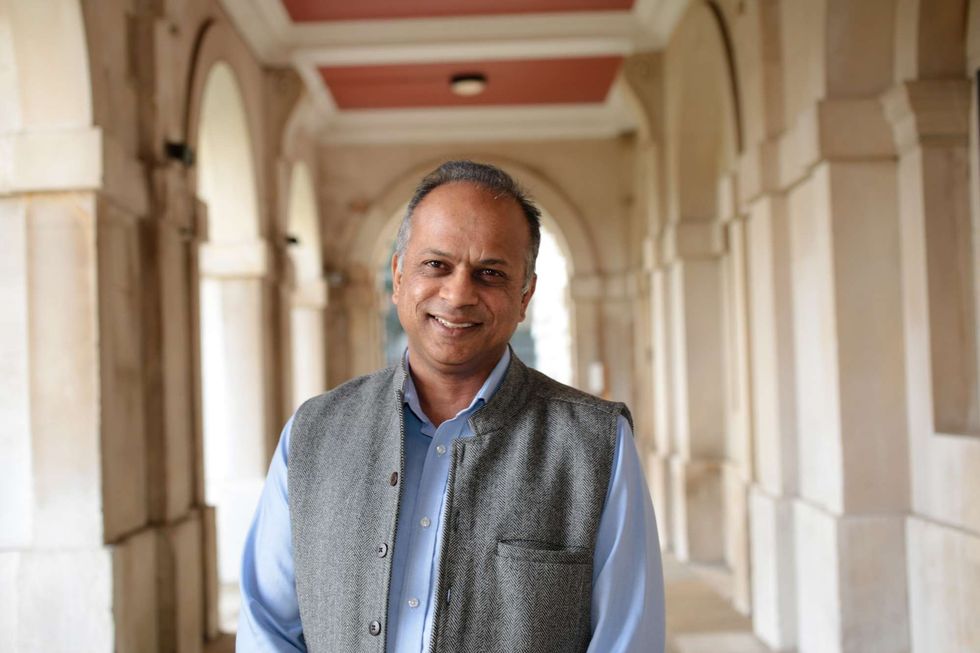 Bhaskar Vira Cambridge University
“Eight or nine Russell Group universities that are now in India are physically setting up a campus and trying to teach BA degrees in India, which isn’t something that we will do.”
He explained the Cambridge plan: “One of the programmes that’s currently being discussed by the Judge Business School would have two weeks of teaching
in India, followed by a week at the Judge Business School in Cambridge, so they would get a three-week teaching package. We want Cambridge faculty to teach in India, so they would go for the two weeks when the students are being taught in India, and then, of course, the students would come to Cambridge and be taught in Cambridge. That’s the model.”
After three weeks, people would be eligible for a “certificate” rather than a degree.
Vira recalled: “When I was last there (in India), I was talking to a number of people in the medical and healthcare business. We’re told that there are 7 million healthcare professionals in India who need to be skilled up on things like the use of AI for medicine. We have people who could teach that.”
He said: “You could do a two-week skilling course for people working in hospitals or in healthcare to understand how you can incorporate AI into your medical profession. That’s the kind of executive programme we are trying to develop. We are bringing in Cambridge people to teach that stuff, but it would be in country, in India, so it would be accessible to a much larger number of people. Not everyone can afford to come to Cambridge. We’re talking about that happening in metropolitan centres. We definitely don’t want to restrict it to one place.
“One of the conversations that we’re having is with the Indian Institute of Science in Bangalore. They want to do something about encouraging people to work on things like solar batteries, and infrastructure to support the renewable energy transition. There are people in our physics labs who are working to try and take that conversation forward. The (Indian) government has talked about quantum computing. We’ve got people in physics doing quantum computing, so there is a conversation beginning about how could we respond to that. Critical minerals is another area that’s been identified. Cambridge is very responsive to what is being articulated out of India.”
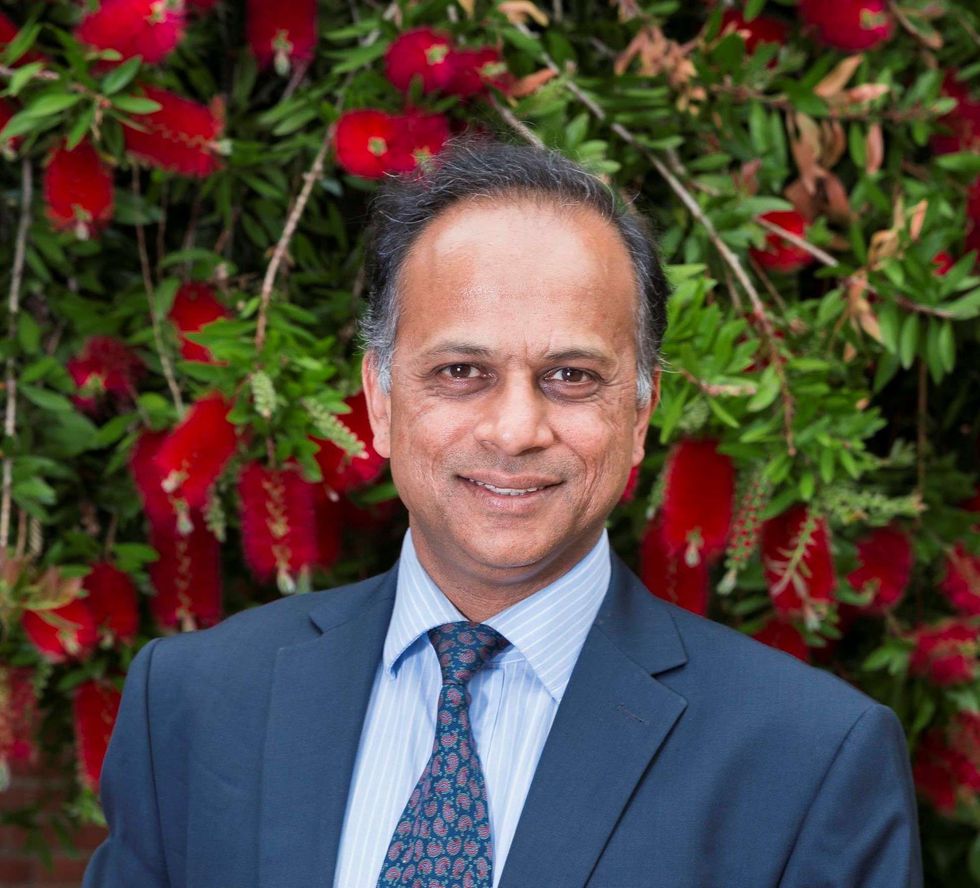 Bhaskar Vira Cambridge University
Vira also set out the plan to accept Indian school leavers as undergraduates: “It’s a very price-sensitive market, and a very reputation-sensitive market. Indian parents care a lot about the institution that their children are going to. We used to not accept Indian school leaving qualifications as a minimum entry requirement for Cambridge, but we’ve worked with our colleges, and they’re now willing to allow students who’ve done Indian school exams to apply to Cambridge.”
He said: “They were always able to come at 18 if they’d done A levels or IB (International Baccalaureate), but obviously you know only a very small fraction of Indian students do that. We’ve now opened it up so that the national qualifying exams, the school leaving exams, are treated as an entry requirement for Cambridge. That should change in the next admissions round.”
In the last 20 or 30 years, the flow of aspirational Indian students shifted more towards the US and away from the UK. But there has apparently been a decline since Donald Trump returned to the White House.
“There’s been a bit of a Trump effect, and they have been moving back to Europe and the UK,” commented Vira. “There is a bit of a backlash. The US is feeling a less welcoming place for immigrant students than it used to be, so that dynamic is changing. The most recent data is that there’s been a significant decline in Indian students going to the US.”
There is another factor, said Vira. “You’ve also had the growth of private universities in India. There is a middle class who would have ordinarily been paying for their children to go abroad, who are now paying for private education in India. Some of the Russell Group are trying to cater to that market of an in-country education. They’re at the same price point as the Indian private universities.”
What helps Cambridge maintain and develop its links with India is the presence of a large and influential alumni in the country. On example is Dr Yusuf Hamied, head of the pharma giant, Cipla, who was educated at Christ’s College, and has been exceptionally generous both to his old college and to the university.
Vira emphasised the point that had been made by the vice chancellor: “Over many decades we have had several hundred touchpoints between individual academics and India because it’s the nature of the way work that we do. People have their own kind of bilateral relationships.”
He went on: “We have relationships with some of the old public institutions, and then obviously as new universities have come on stream, we’ve been making links with the new private universities as well. Those tend to be in the language we use: PI to PI, principal investigator to principal investigator. That’s the way most research and science gets done, which is bilateral. You find somebody who you want to work with, and there’s been a lot of that going on for a very long time.
“The other is that students have come to Cambridge over decades and centuries. People like myself. I came here as a student. A number of people have been supported through access to education but also through the scholarships we are able to offer, so that students are able to come to Cambridge without cost being a barrier. So there’s a flow of students who then become alumni and well-wishers. There’s a very strong alumni network, but Bombay, Delhi and Bangalore are the big centres where we’ve got lots of people who have a Cambridge connection and remain very loyal in terms of their desire to keep connected with the university.
“What we’ve tried to do in a more structured way is to put a framework around that, which goes to the heart of the university’s mission. The university’s mission is centred around teaching and research. When the vice chancellor was in India, that’s what we shared as our framework for engaging with India under this umbrella of what we’re calling the ‘Cambridge-India Centre for Advanced Studies’.
“There’ll be a learning and education pillar, a research and teaching pillar, and then a third one, around innovation and impact. This is especially picking up on India’s current entrepreneurial culture – lots of young people setting up startups – and how we can support that ecosystem. We don’t want to push all of that into a single institutional presence in India, but have these multiple nodes of contact. So that’s really how the strategy has evolved.”
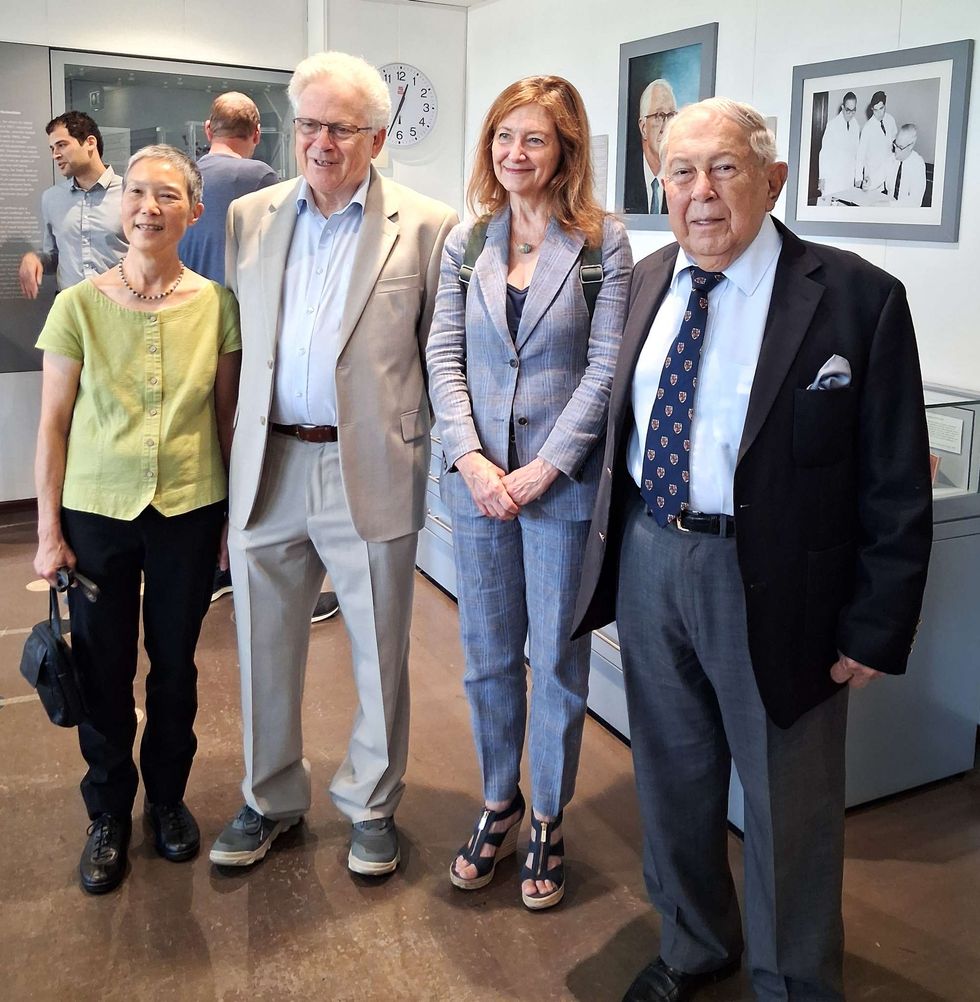 Cambridge labs opening. (From left) Katherine Abell, Jeremy Sanders, Deborah Prentice and Jeremy Sanders Amit Roy
Cambridge has also established a non-profit ‘Section 8 company’ in India, the Cambridge India Research Foundation, which enables members of the public, Cambridge alumni, and friends of the university to provide funds for bursaries, fees and other expenses incurred by Indian students studying in Cambridge, as well as supporting research partnerships.
Vira said: “The other interface we have is with government institutions like the Office of the Principal Scientific Adviser. So, in terms of where the science agenda for India is moving, we try and have conversations with them, and the Indian High Commission (in London) now has created the post of a scientific attaché.”
On AI, he revealed: “One of the things we’ve been doing over the last three years is that we’ve been working with Infosys and doing executive training for their engineers in AI. Our data-intensive science lab works directly with Infosys and has been providing training. We actually have a research group from
Cambridge embedded in the Infosys (UK) headquarters in Canary Wharf. We have trained over 500 of their professionals.”
He summed up: “Our biggest strength are the talented students and staff that we have, and they thrive because we say, ‘Go off and do your thing.’ “
Next year, as an exercise in soft power, the Cambridge University women’s cricket team will tour India just as the men did this year to play six matches.
The relationship with Cambridge could prove transformative for India.
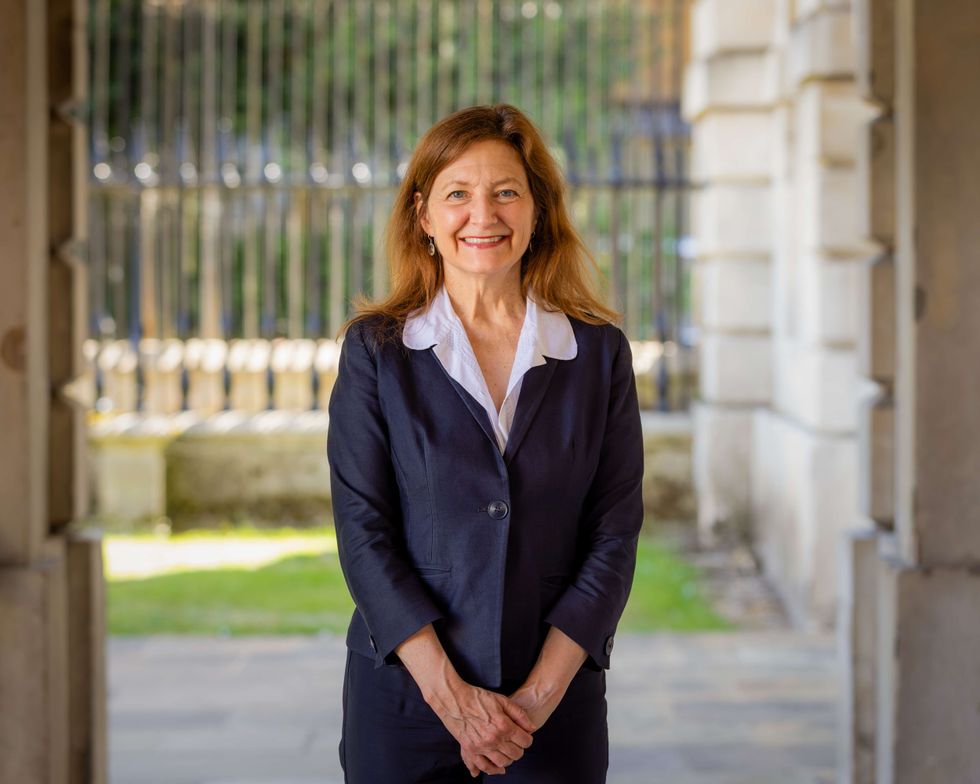 Deborah Prentice Cambridge University
The vice chancellor said: “We’ve got more Nobel prizes than anybody but America. We have the most of any university.”
Vira mentioned the figure: “127.”
Two of them happen to be Amartya Sen (for economics) and Venkatraman Ramakrishnan (for chemistry).
At a personal level, the vice chancellor learnt a great deal about India from her son, who spent a year studying in Varanasi.
Prentice described her own experience of India as “vivid”.
Things most people in India would take for granted were new to her. “There are so many things that were unexpected. I mean being at the airport in Mumbai at three in the morning, and it being like daytime. I’ve never been anywhere else in the world and seen an airport as busy at three in the morning as that airport was.”
She saw something of Mumbai and Delhi and met alumni. “It was a sampler of the riches we could discover. It reminded me a little bit of the United States in that it is very federated. India just felt very big. It felt very diverse, and a place to learn much, much more about.”
Deborah Prentice, an American social psychologist and former Provost of Princeton University, assumed office on 1 July 2023. She is the 347th vice chancellor of Cambridge, which has been going for more than 800 years.
“Being the 347th is sort of humbling,” she said. “It reminds you that you are just a steward. We are all just stewards in what we do. Being the 347th brings that point home.”