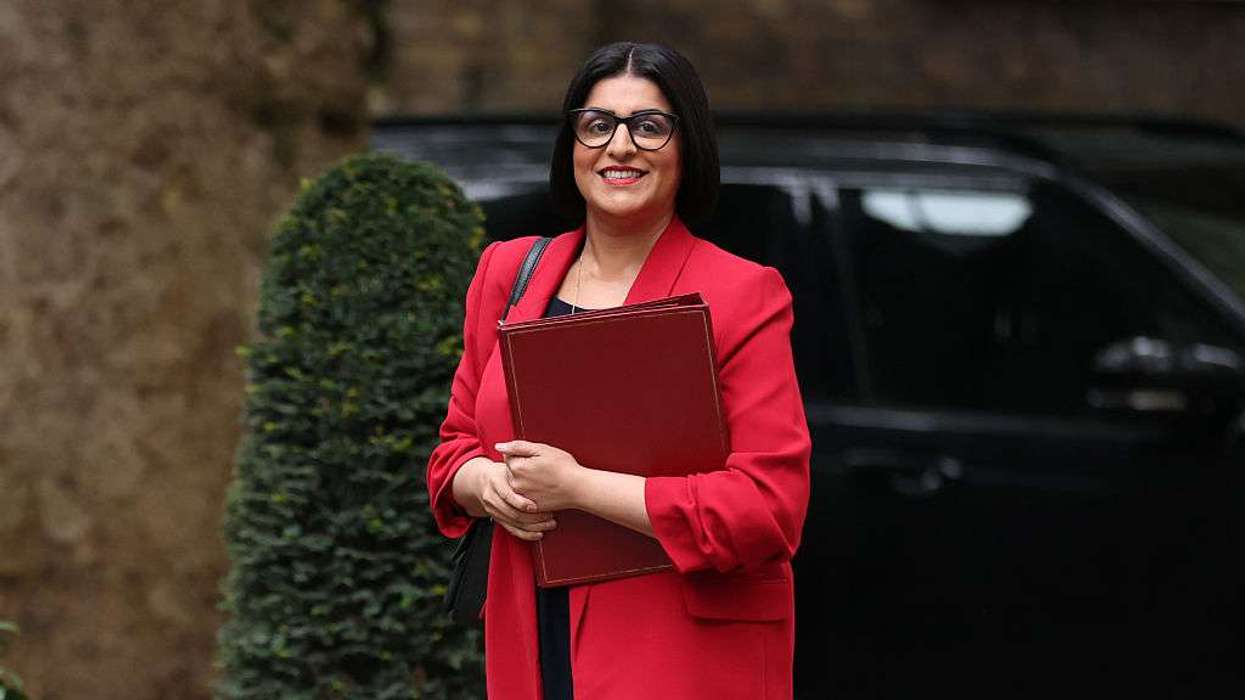

- Shabana Mahmood has reopened the UK Resettlement Scheme for new refugee referrals.
- Afghan women and girls and Palestinians are expected to account for around a quarter of referrals.
- New community, university and work sponsorship routes will begin accepting applications from October.
Shabana Mahmood has reopened the UK Resettlement Scheme (UKRS), bringing back a route for refugees fleeing war and persecution while the government steps up its focus on controlled, safe and legal migration.
The Home Secretary announced the reopening on Monday (28), with the government saying the scheme will initially resettle hundreds of people. The number is expected to rise to the low thousands as small boat crossings fall, with an annual cap to be set.
Around one in four referrals is expected to involve Afghan women and girls and Palestinian refugees. Most refugees will be referred through the UN Refugee Agency (UNHCR), while Palestinians will be referred through the International Refugee Assistance Project.
The first arrivals are expected before the end of 2026.
Alongside the reopening of the UKRS, the government is introducing three new sponsorship routes through communities, universities and employers.
Community and student sponsorship applications are due to open in October, with the first arrivals expected in autumn 2027. Applications from employers will open in spring 2027, with the first arrivals expected later that year.
Sponsors will be expected to provide accommodation, help refugees integrate into their communities and support them in finding work.
Those arriving through the new routes will have a five-year route towards permanent settlement in the UK.
A controlled route alongside tougher border measures
Mahmood has presented the changes as part of a wider attempt to restore control over the UK's asylum and immigration system while maintaining routes for people who need protection.
"I know the British people have not given up on their belief that we should be compassionate, live up to our international obligations, and save the lives of those fleeing war and persecution," Mahmood said.
"This is what we can do and who we can be as we restore control to our borders, bear down on small boat crossings, and unlock the inherent generosity of this country."
The government argues that expanding capped legal routes could also reduce the incentive to use dangerous irregular routes, including small boats across the English Channel.
The announcement comes as the government continues to report a reduction in small boat arrivals. It said more than 48,000 attempted crossings had been stopped since the general election, while more than 80,000 people had been removed from the UK since July 2024.
The latest move also follows the government's decision last year to close or discontinue several Afghan resettlement schemes. More than 39,000 people had arrived under the Afghan Citizens Resettlement Scheme before the schemes were closed.
The UKRS was originally launched in 2021 to provide a route for refugees identified as being in need of resettlement.
Refugee organisations have welcomed the reopening but have questioned whether the numbers will be large enough.
The Refugee Council said the new routes were welcome but argued that they should be expanded to accommodate thousands rather than hundreds of refugees. It also called for the reopening of refugee family reunion routes.
The International Rescue Committee UK also welcomed the focus on Afghan women and girls and Palestinians, but said the programme would need to be scaled up to meet the level of need.
Mahmood has also been working on wider reforms to the UK's settlement system. The government is expected to set out its final position on changes to indefinite leave to remain later this year.
For now, the resettlement announcement marks a renewed attempt to combine humanitarian protection with tighter controls over how people enter and settle in the UK.