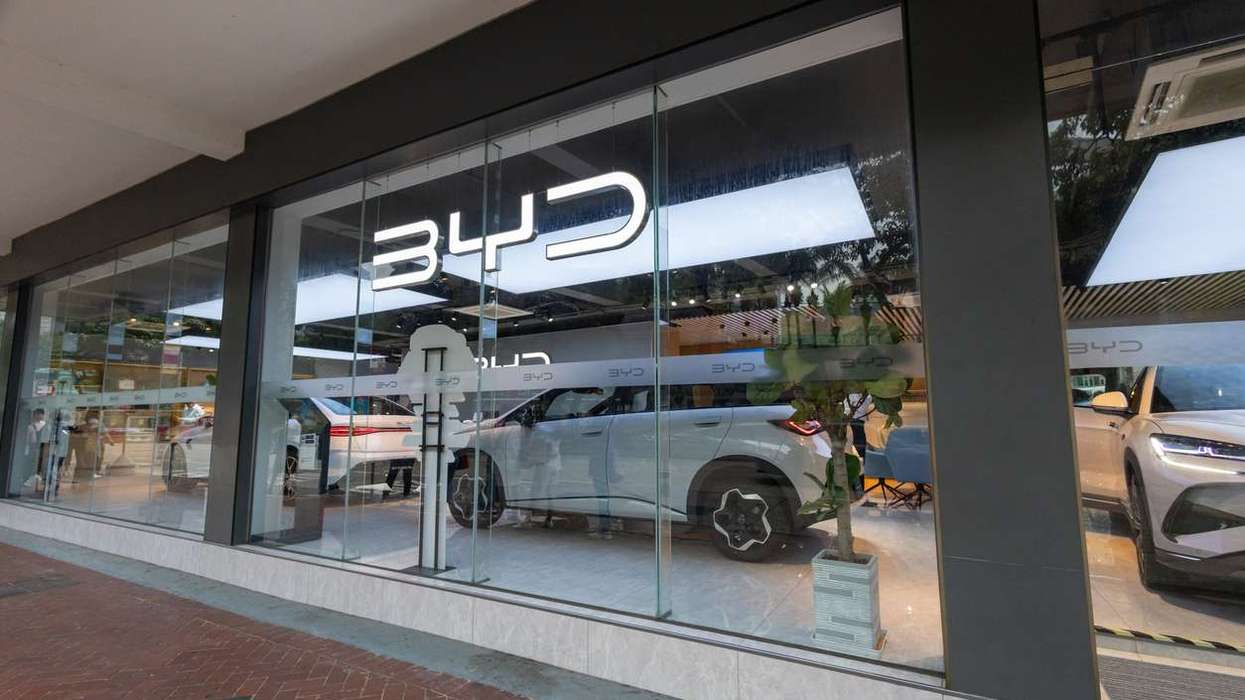

- BYD plans to install 300 ultra-fast EV chargers in the UK by the end of 2026.
- The chargers could add significant range in minutes rather than hours.
- Most current electric cars cannot yet use the technology's full charging capacity.
Chinese electric vehicle giant BYD is planning a major expansion of ultra-fast charging infrastructure in Britain, with technology that could dramatically cut the time drivers spend waiting to recharge their vehicles.
The company said it intends to install 300 high-power EV chargers across the UK by the end of 2026, rising to 600 by 2027. The rollout forms part of BYD's wider push into the British electric vehicle market and its broader European charging strategy, which includes plans for 3,000 ultra-fast charging stations across the continent.
The new chargers are designed to tackle one of the biggest barriers to EV adoption: charging time. BYD claims its latest "flash charging" technology could recharge compatible vehicles in around five minutes, bringing charging times closer to those associated with filling a petrol or diesel car.
The race to make charging as fast as refuelling
At the heart of the system is a charger capable of delivering up to 1.5 megawatts (MW) of power, making it significantly more powerful than the rapid chargers commonly used across Britain.
Most public rapid chargers currently operate at around 150 kilowatts (kW), while even many of the fastest chargers available to motorists typically peak at around 350kW.
The chargers will use the standard Combined Charging System (CCS) connector, meaning many electric vehicles will technically be able to plug in. However, vehicles will only charge at the maximum speed their batteries are designed to handle.
At present, very few cars can take advantage of the technology's full potential.
BYD's Denza Z9GT, which is expected to launch in Britain with a price tag of around £100,000, is currently among the first vehicles designed to support charging speeds approaching 1.5MW. According to the company, the vehicle can charge from 10 per cent to 70 per cent in around five minutes and from 10 per cent to 97 per cent in roughly nine minutes.
Most electric vehicles currently on UK roads operate far below those levels. Some of the fastest-charging models from manufacturers including Hyundai, Kia and Porsche can accept around 350kW under ideal conditions.
A bigger charging network, but challenges remain
BYD said the chargers will be installed at Denza retail locations as well as existing charging operator sites. The company also aims to create a network where stations are positioned roughly every 50 kilometres across parts of Europe.
One challenge facing ultra-fast charging infrastructure is access to sufficient electricity. Grid connections for high-power charging sites can often take years to secure.
To address that issue, BYD plans to install large battery storage systems alongside charging stations. These batteries can be charged during off-peak periods and then used to deliver power to vehicles when needed, reducing pressure on local electricity networks.
The company is targeting charging costs of around 50p per kilowatt-hour, potentially below rates charged by many public charging operators.
Stella Li, BYD's executive vice-president, reportedly said the technology could be a "game-changer" because drivers are often unwilling to wait 30 minutes or longer to recharge their vehicles.
The announcement comes as competition intensifies among carmakers and battery manufacturers to reduce charging times. Chinese battery giant CATL recently unveiled a new battery capable of charging from 10 per cent to 98 per cent in just over six minutes under test conditions.
Whether drivers experience five-minute charging on a large scale may depend on how quickly compatible vehicles arrive on UK roads. For now, the technology appears to signal the direction the industry is heading as manufacturers race to make electric vehicles more convenient for mainstream buyers.