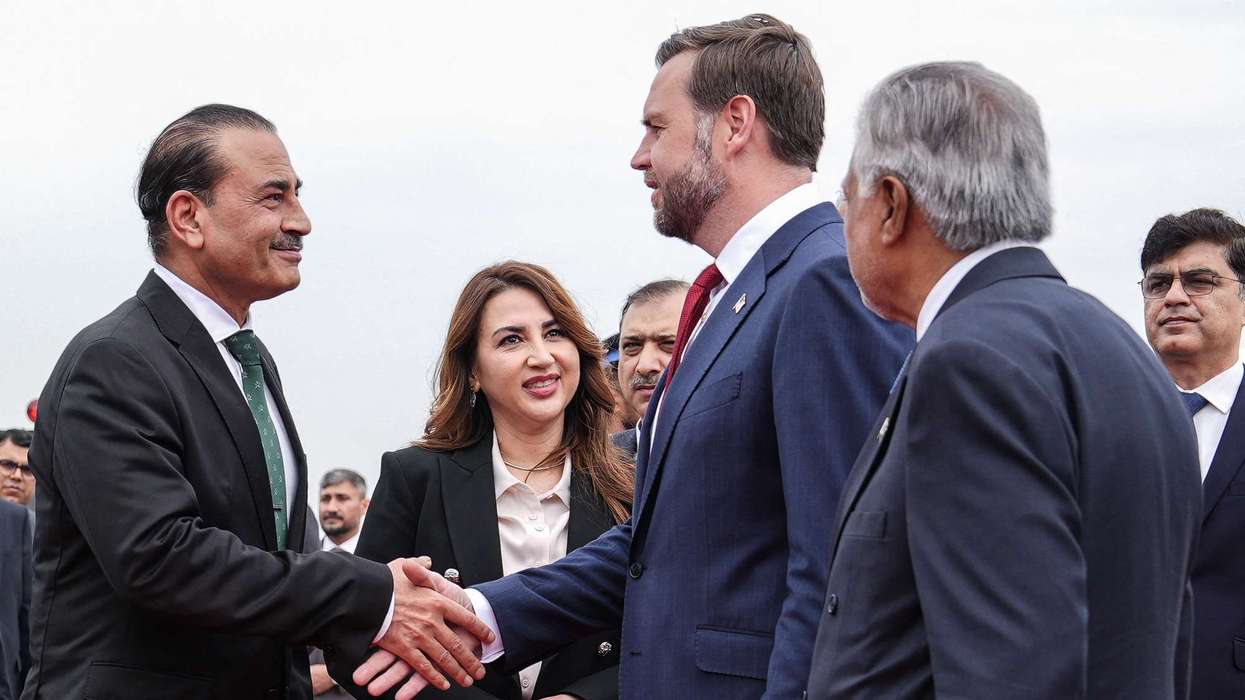

WHEN US Vice President JD Vance arrived in Islamabad for talks with Iran, it also showed who is shaping Pakistan’s foreign policy.
Vance was received by Pakistan’s army chief, Field Marshal Asim Munir, whose role has moved beyond the military into diplomacy. The moment reflected a broader shift in how Pakistan engages with the world.
Munir was not in the background during the talks. He was at the centre of the process — greeting delegations, interacting with US officials, and helping facilitate discussions alongside foreign minister Ishaq Dar.
Political analyst Qamar Cheema said, "He is a soldier, a statesman and a diplomat."
Pakistan’s role in bringing the United States and Iran to the table drew attention, given its relationship with Washington. The country has had a fluctuating alliance with the US, marked by cooperation as well as criticism over military influence in governance.
Munir’s rise has come with a consolidation of military authority. He has been given legal immunity and an extended tenure, while the military’s influence across governance, the economy and the judiciary has increased, according to analysts.
Shuja Nawaz of the Atlantic Council said, "The military now has the deepest ever penetration and control of the economy and judiciary."
Foreign policy has long been linked to Pakistan’s military. Meetings with the army chief have been part of diplomatic visits. What has changed is the visibility and direct involvement of the current chief.
"Field Marshal Asim Munir appears to be far more hands-on in matters of governance and foreign policy than his predecessors," Nawaz said.
Munir’s international profile has grown through regional outreach and engagement with global leaders. His ties with Iran and Saudi Arabia, and his interaction with US president Donald Trump, have been noted by observers.
Trump has referred to him as his "favourite field marshal", reflecting a developing rapport.
Analyst Hassan Abbas said, "Asim Munir's diplomatic status was boosted by the war with India primarily and then his outreach in Washington DC."
Even though the talks ended without an agreement, Pakistan said it would continue to facilitate dialogue. prime minister Shehbaz Sharif said, "Field Marshal Munir, through tireless effort, played a key and historic role in extinguishing the flames of war and in bringing both parties to the negotiating table."
As delegations departed, Munir was again on the tarmac. The outcome of the talks remained unclear, but Pakistan positioned itself as a facilitator.
(With inputs from AFP)