
Highlights
- Gary "Angry" Anderson, frontman of Australian hard rock band Rose Tattoo for 50 years, has died aged 79
- He died on September 21, 2026, in Australia; his family and band confirmed the news on September 23; no cause of death has been given
- He had suffered a cardiac arrest in August while on Rose Tattoo's farewell European tour, forcing the remaining shows to be cancelled
- Beyond music, he was made a Member of the Order of Australia in 1993 for his youth advocacy work, and Rose Tattoo were inducted into the ARIA Hall of Fame in 2006
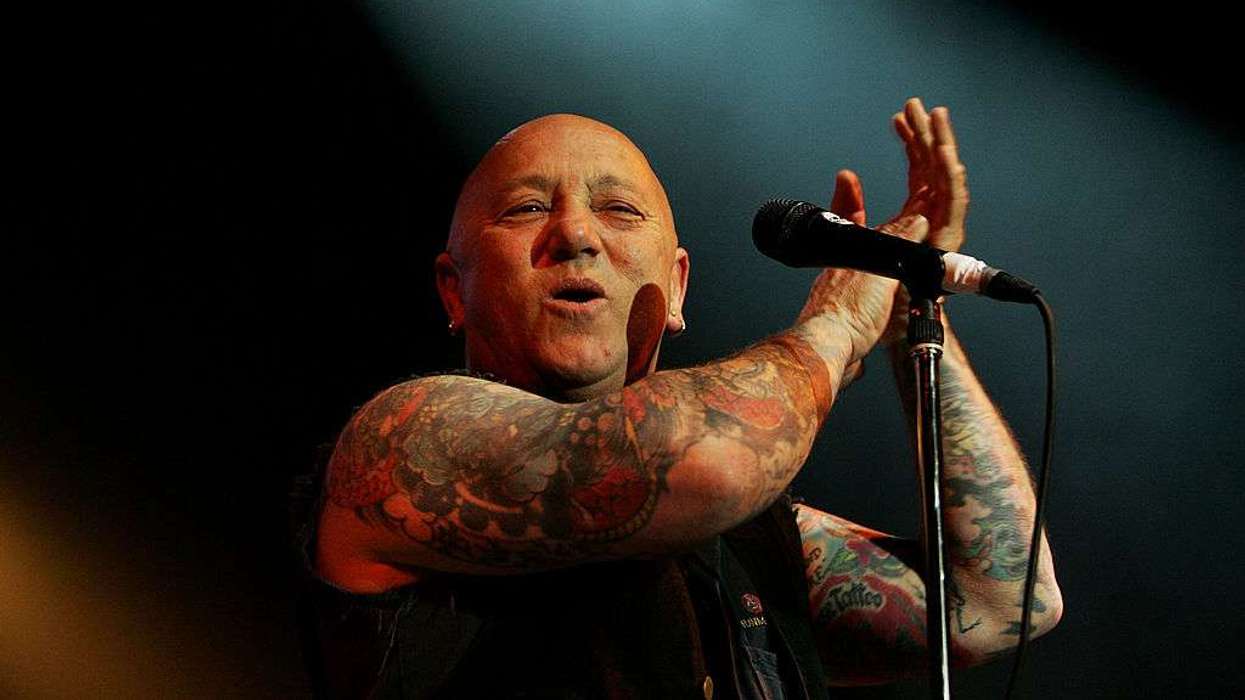
Gary "Angry" Anderson, the gravel-voiced frontman who fronted Australian hard rock band Rose Tattoo for half a century, has died aged 79.
The final tour, and a cardiac arrest in Europe
His family and bandmates confirmed his death in a joint statement on Wednesday. "It is with great sadness we announce the passing of Gary 'Angry' Anderson on the eve of Monday 21 September 2026, surrounded by his loved ones here in Australia," the statement read. "Angry was a devoted father, and much-loved bandmate, friend, and member of the wider music and entertainment community. His loss will be deeply felt by all those who knew and loved him both here in Australia and overseas." The family and band asked for privacy and said they would not be giving interviews.
No cause of death has been given. Anderson had suffered a cardiac arrest in August while Rose Tattoo was partway through what had been billed as its farewell tour of Europe, marking the band's 50th anniversary year. The remaining tour dates were cancelled while he received treatment, and the band had been expected to return to Australia this month, including a planned slot on Suzi Quatro's Red Hot Summer Tour in November.
From a Melbourne factory floor to Rose Tattoo
Gary Stephen Anderson was born on August 5, 1947, in Melbourne, to an Anglo-Australian father and a Mauritian mother, and grew up in the working-class suburb of Coburg. He left school to work as a fitter and turner before music took over; he originally wanted to be a blues guitarist, citing Bob Dylan and John Lennon as influences, but ended up on vocals almost by accident, after realising two bandmates were better guitarists than he was.
He fronted blues rock band Buster Brown from 1973, whose original lineup included Phil Rudd on drums before Rudd left to join AC/DC. When Buster Brown split in 1975, Anderson moved to Sydney and joined Rose Tattoo the following year, replacing original singer Tony Lake. The band's breakout single, "Bad Boy for Love", reached number 19 in Australia in 1977, followed by "Rock 'n' Roll Outlaw", "Nice Boys" and "We Can't Be Beaten" — songs that built Rose Tattoo's reputation well beyond Australia, including a formative 1981 European tour that took in the Reading Festival.
The unlikely solo hit that outsold the band
Anderson's biggest chart success came not with Rose Tattoo but as a solo artist. His 1987 ballad "Suddenly" was used as the wedding theme when Neighbours characters Scott Robinson and Charlene Mitchell — played by Jason Donovan and Kylie Minogue — married on screen, and the song rode the episode's popularity to number 3 in the UK, number 3 in Ireland and number 2 in Australia, where it was kept off the top spot only by Minogue's own "Locomotion". It later earned a BPI Gold certification in Britain.
Rose Tattoo disbanded in 1987, by which point Anderson was the group's last remaining original member, though they later reunited multiple times, including a 1993 tour supporting Guns N' Roses in Australia at the American band's own request. The group was inducted into the ARIA Hall of Fame in 2006.
Acting, TV and two decades of charity work
Anderson built a long second career in Australian film and television, playing Ironbar Bassey in Mad Max Beyond Thunderdome (1985) and appearing in shows including Housos, Fat Pizza and Bogan Hunters, alongside stints as a human interest reporter on A Current Affair and The Midday Show.
He was appointed a Member of the Order of Australia in 1993 "in recognition of service to the community, particularly as a youth advocate," and spent decades organising charity projects through media contacts — including building a playground for disabled children within 48 hours, funding artificial limbs for Cambodian landmine victims, and constructing respite units for people living with HIV/AIDS. Having watched cancer claim five of his former Rose Tattoo bandmates, he later became a public advocate for men's health and prostate cancer awareness.
Politics, controversy and personal loss
Anderson's public life was not without controversy. In 2007 he drew criticism for comments about Muslim immigration to Australia, and he later stood for parliament twice for the National Party before withdrawing his candidacy, then in 2016 was endorsed by the Australian Liberty Alliance, a party opposed to Muslim immigration, as a Senate candidate. He did not win any of the seats he contested.
His personal life carried its own hardship. Anderson wrote in his 1994 biography, Angry: Scarred for Life, of physical and sexual abuse in his childhood. He married Lindy Michael in 1986, with whom he had four children, before the couple divorced in 2002. In 2018, his son Liam was killed in an attack in a Sydney park — a loss Anderson rarely spoke about publicly afterward.
Anderson is survived by his three remaining children, his brother Rodney, and his Rose Tattoo bandmates.