
ONE reason I watched the BBC documentary Amol Rajan Goes to the Ganges with particular interest was because I have been wondering what to do with the ashes of my uncle, who died in August last year. His funeral, like that of his wife, was half Christian and half Hindu, as he had wished. But he left no instructions about his ashes.
Sooner or later, this is a question that every Hindu family in the UK will have to face, since it has been more than half a century since the first generation of Indian immigrants began arriving in this country. Amol admits he found it difficult to cope with the loss of his father, who died aged 76 three years ago. His ashes were scattered in the Thames.
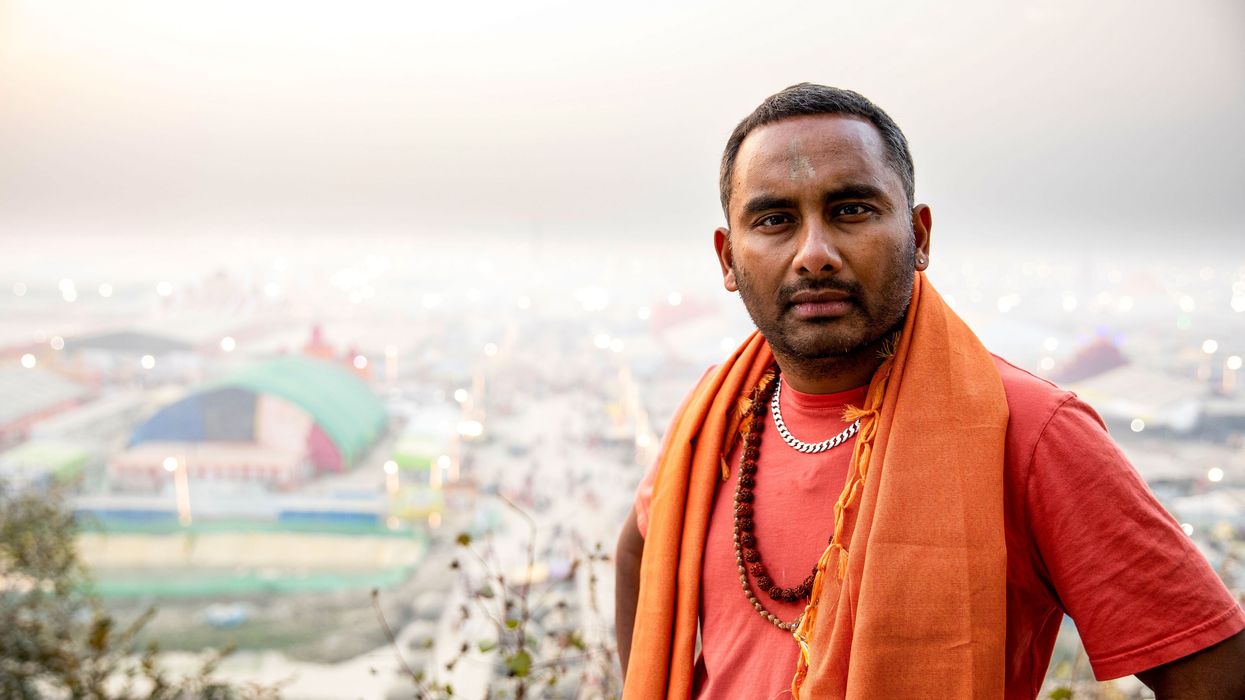
Amol, who is 41, was born in Calcutta and was brought to Britain when he was three.
“My dad was my hero, totally and utterly,” he declares.
He recalls: “Very suddenly, three years ago, he got pneumonia, went into hospital, spent five dreadful weeks in intensive care, and died. This was really shocking to me because it was the first time I’d ever lost someone I loved.” Watching the grand final of University Challenge, in which Christ’s College, Cambridge, beat Warwick 175–170 in an exciting finish, we saw Amol’s intellectual and secular side as a BBC TV presenter.
He says he is an atheist, but nevertheless undertook a pilgrimage to the Ganges to see if he could emancipate his father from the eternal cycle of birth, death and rebirth and help him gain moksha. He couldn’t get to the confluence of the Ganges and the Yamuna at the Kumbh Mela because of a stampede in which 30 people were trampled to death and hundreds injured. But he participated in pind daan and took a dip in the Ganges.
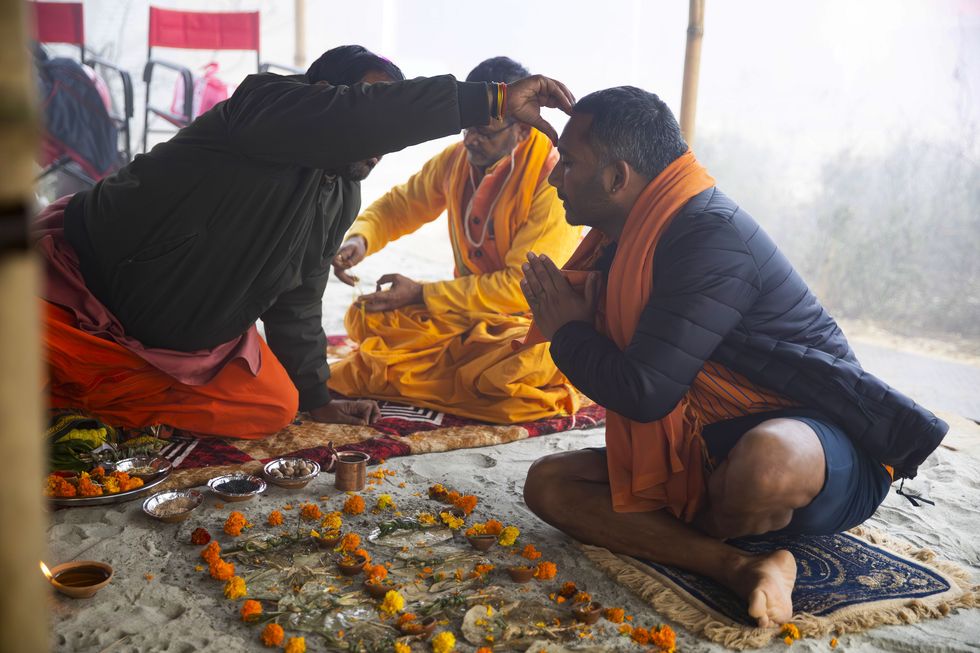 Rajan offers the pind daan in honour of his father and ancestors
He says: “I think that one of the things that I wanted to go to the Kumbh Mela to do, was to confront my grief, reconnect with my dad, but also to try and work out what the next 38 or 40 years of my life would have to do with the first half.”
Expressing grief on camera, as Amol does, is a little odd, but he explains: “I think there are three things I want people to take away from this documentary. One is about grief, the other is about faith, and the final one is about family. Every grief is different, and everyone grieves for somebody they’ve lost in a very unique way, but I do think there are certain rules about grief. I do think it does get easier over time, and I do think that sharing grief by talking about it, by connecting with other people that are aggrieved, is a really valuable thing. This documentary is a way of trying to grieve in public, not for vain reasons, but because I think there’s something that people could learn from that.”