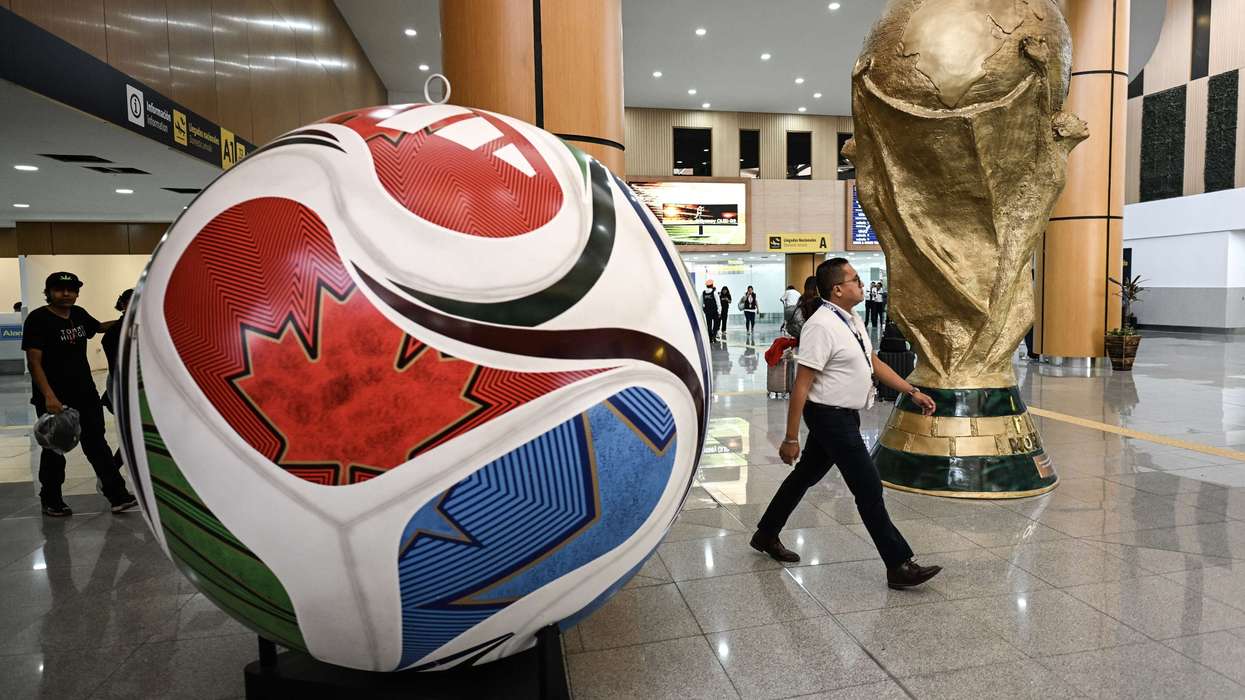
The 2026 football world cup will be bigger than ever before. With 48 teams taking part for the first time, the opening match between Mexico and South Africa next Thursday (11) will be the first of no fewer than 104 matches on planet football. FIFA’s global hype machine would probably struggle with the concept that biggest may not always be best - the most teams, the most games, the highest ticket prices too – but may be testing that to the limit this time.
When Argentina beat France in the last men’s world cup final, it was the 64th and final match of the 2022 tournament. This time, it will take 72 first round matches just to send 16 teams home and decide which 32 teams will play the knock-out ties.
That expansion enables some romantic underdog tales. The tiny island nations of Curacao and Cape Verde make their World Cup debuts, as do Jordan and Uzbekistan. Scotland, once world cup regulars, are back for the first time this century. Much of Scotland will be awake at 2am next Saturday (13) night, as they kick off against Haiti, before playing Morocco and Brazil later. A third of the games are on after midnight in the UK: South Korea versus Czech Republic at 3am in the UK will be a stamina test of fully committed armchair fandom.
Argentina’s 2022 triumph – after four European winners in a row – helped to remind everybody that this is a world cup. Morocco’s fourth place was the best ever performance by an African team. East Asian nations dominate Asia’s international scene. South Korea made a semi-final as hosts two decades ago. Japan being the first Asian team to beat England at Wembley has kindled hopes of their best ever tournament.
South Asian sides have never qualified for the world cup finals, though many fans follow the tournament. A stand-off between Fifa and Indian broadcasters over the price-tag has delayed a broadcasting deal to the last minute. Those decking out much of Kolkata and Kerala in Argentinian and Brazilian colours for the next month will be relieved to see it resolved.
The growing popularity of the Premier League means England will have some Indian fans, too, as will the global stars of France, Portugal and Spain. There has never been any kind of ‘cricket test’ dilemma or debate for British Asian football fans, who overwhelmingly support England at football - or Scotland in Glasgow.
Simple maths makes organising a 48-team tournament awkward. Two-thirds of the teams finishing third in their four team groups will qualify for the last 32, which may incentivise playing defensively for a draw at the start. Fifa may have inadvertently mimicked the pattern of a cricket world cup, with a seemingly endless opening round with limited sporting jeopardy before the decisive games take place. So expect this football world cup to be a tournament of two halves – trundling along for a few weeks, before exploding dramatically into life as June turns to July for the high-stakes knockout matches across the final fortnight.
Who will win? Spain and France start as the favourites. The champions, Argentina, will be contenders. Brazil have struggled against European sides since their last world cup victory in 2002, but hope Carlo Ancelotti’s coaching can make a decisive difference. Portugal and Morocco, Senegal and co-hosts Mexico are among several teams who will believe they could beat any of their rivals on the right day and so turn into serious contenders in the final stages. The bookmakers tend to rank England alongside those South American giants as the joint third favourites.
I have believed, for a decade, that England’s quest for a World Cup would end with victory in 2026. This prediction once had some logic behind it: young England teams were under-17, under-19 and under-20 world champions simultaneously a decade ago. On the eve of this tournament, it is much more a simple act of faith over experience. It is 30 years ago this summer since “football’s coming home” became a new national anthem for the hosting of Euro 96, singing about “thirty years of hurt” since England’s one World Cup victory in 1966. The ‘oh so nears down the years’ have continued for 30 more years, so I do feel that the footballing gods must surely now see 2026 as the perfect year to end the cycle.
I was at Wembley to see England’s Lionesses win the first of two European titles in 2022 - wearing my 1966 England replica top in which I will watch England’s matches this summer. Even the antics of Fifa's president Gianni Infantino and US president Donald Trump can now quite extinguish the magic of a World Cup. I cannot promise that my prophecy of football coming home will actually come true this summer – but all those years of hurt should never stop us dreaming.