
Highlights
- Abhishek Bachchan defended the visual effects work in Raja Shivaji amid online criticism
- The actor said Indian filmmakers operate with far smaller budgets than Hollywood studios
- Bachchan stressed that the film’s emotional storytelling mattered more than technical comparisons
Abhishek Bachchan pushes back against VFX criticism
Abhishek Bachchan has defended the visual effects in Raja Shivaji, arguing that comparisons between Indian historical films and Hollywood productions ignore the huge financial gap between the two industries.
The actor, who plays Sambhaji Shahaji Bhosale in the film, addressed the criticism during an interview with News18, where he said audiences often overlook the realities of filmmaking budgets and production timelines in India.
According to Bachchan, visual effects work depends heavily on both time and financial investment. He explained that VFX is a detailed craft that improves with longer development periods, but Indian filmmakers rarely have the luxury of unlimited schedules or resources.
He also pointed out that Raja Shivaji, directed and produced by Riteish Deshmukh alongside Genelia Deshmukh, was made as a Marathi film within a tightly controlled budget.
‘Hollywood spends millions on VFX alone’
Bachchan argued that comparisons with Hollywood spectacles fail to account for the scale of investment available to major international studios.
He said some Hollywood productions spend more than £470 million purely on visual effects, separate from the overall cost of the film itself. Indian productions, he noted, work with only a fraction of those resources.
The actor added that while filmmakers naturally want to improve the quality of effects work, there comes a practical point where budgets and timelines must be balanced against the financial realities of the project.
According to Bachchan, extending VFX work for years could improve the final output, but doing so would also dramatically increase production costs and place additional pressure on the film.
Bachchan says the film’s emotional core matters most
Despite the online debate surrounding the visuals, Bachchan maintained that Raja Shivaji succeeds in delivering what it set out to achieve emotionally.
He said the film was always intended to be driven by storytelling and feeling rather than technical spectacle alone, adding that criticism around VFX would eventually fade while the narrative impact would remain more important.
The actor also expressed confidence in Riteish Deshmukh’s vision for the project, saying the filmmaker had managed to tell the story effectively within the limitations available to him.
A large ensemble backs the historical drama
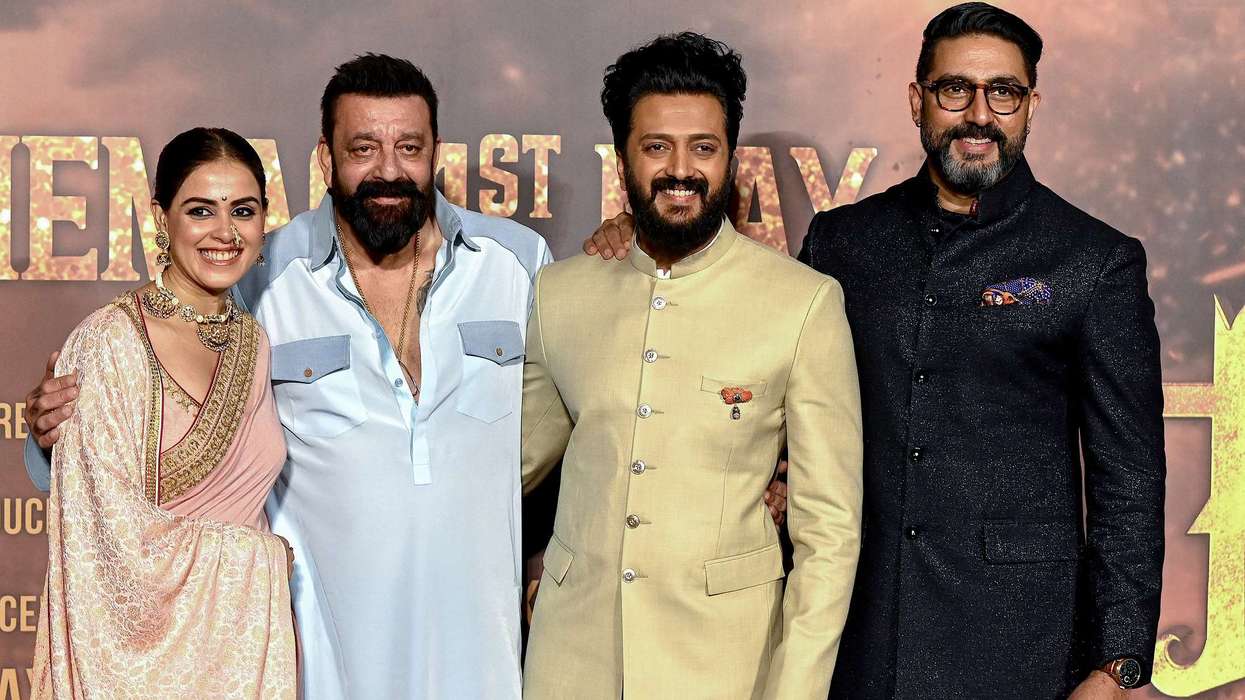
Produced by Jio Studios and Mumbai Film Company, Raja Shivaji features a large ensemble cast including Sanjay Dutt, Vidya Balan, Mahesh Manjrekar, Sachin Khedekar, Bhagyashree, Fardeen Khan, Boman Irani and Amol Gupte.
The film has also drawn attention for a cameo appearance by Salman Khan.