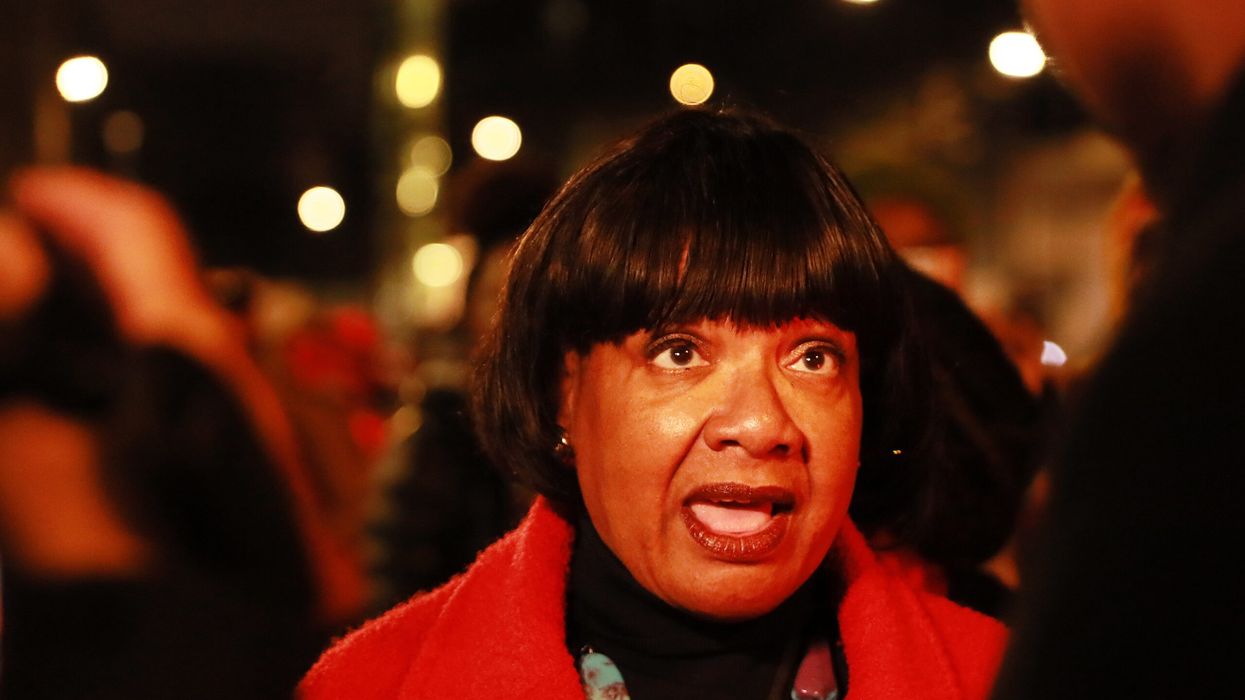

THE LABOUR Party has confirmed that Diane Abbott, Britain's first Black woman lawmaker, will be able to run in the July 4 election following confusion over her candidacy.
Labour leader Keir Starmer told reporters that Abbott is "free to go forward" to contest her seat in northeast London.
Abbott, MP for a northeast London constituency since 1987, was suspended by Labour in April last year over comments she made about Irish, Jewish, and Traveller people not facing racism "all their lives." Despite her immediate apology and retraction of the remarks made in a letter to the Observer newspaper, the party opened an investigation, the findings of which have not been publicly disclosed.
Abbott, who apologised for the remarks, was reinstated to the party this week, but media reports had indicated she would be barred from running.
On Wednesday, Abbott posted on social media that she was "very dismayed that numerous reports suggest I have been barred as a candidate," indicating she had not yet heard directly from Labour.
On Friday, prominent Black Britons signed an open letter criticising the treatment of Abbott.
Abbott, who ran for party leader in 2010, is a respected figure within Labour and a close ally of ex-leader Jeremy Corbyn, who appointed her as the party's home affairs spokesperson during his tenure from 2015 to 2020.
Corbyn was suspended by Labour in 2020 after he did not fully accept the findings of a rights watchdog's probe into claims that anti-Semitism became rampant within the party under his leadership. He has been sitting as an independent MP since then and recently announced he would stand in the coming election as an independent candidate.
Opinion polls show that Labour is widely predicted to win the election on July 4.
(Agencies)






 Curator Emma Slocombe with ikat robes and arabachi coats in the Peter the Great Room in Blickling Hall Amit Roy
 View of the entrance to Blickling Hall on a rainy autumn dayAmit Roy
 Kente cloth from Ghana in the Long Gallery in Blickling Hall
 Decoration in the Great Hall at Blickling Hall Amit Roy
 Palampore fragment made in coastal south-east India in the Brown Room in Blickling Hall Amit Roy
 Bed valance dating from early 1700s in the Italian Print Room at Blickling Hall Amit Roy
 Indian inspired fabric draped on sofas in the South Drawing Room in Blickling Hall Amit Roy
 Indian inspired fabric draped on sofas in the South Drawing Room with Indian carpet in Blickling Hall Amit Roy
 Karun Thakar has picked out the geometric patterns in the bookcase and the Kente cloth in the Long Gallery in Blickling Hall Amit Roy
 Large tapestry depicting Peter the Great defeating the Swedish army at the Battle of Poltava in 1709 Amit Roy
 ikat robes and arabachi coats in the Peter the Great Room in Blickling Hall Amit Roy
 Baghs and kanthas made by women provide contrast to the men only portraits in the Great Hall at Blickling Hall Amit Roy
 Baghs and kanthas in the entrance Great Hall at Blickling Hall Amit Roy
 Baghs and Kanthas in the Great Hall in harmony with stained glass window at Blickling Hall Amit Roy
 Kimonos reflect Japanese influence in Upper Ante Room in Blickling Hall Amit Roy
 Kimono in Upper Ante Room in Blickling Hall
 A view of the Palace and fort at Agra shows romantic side of India Amit Roy
 Blickling Hall Amit Roy
 Table carpet, European 1670-1680 Amit Roy
 Unfinished 17th century Italian embroidery in the Print Room at Blickling Hall Amit Roy
 Picture of Kashmir shows a romantic view of India Amit Roy
 A panel of Ashburnham bed hangings made in Gujarat for sale in Europe in the Brown Room in Blickling Hall Amit Roy
 Colcha made in the 1600s by women in Bengal for the Portuguese market in the Long Gallery at Blickling Hall Amit Roy




