
Highlights
- More than 1,600 migrants arrived in the UK in small boats between Thursday and Sunday.
- Dutch authorities rescued 38 men, including 36 Afghans, from a drifting inflatable boat.
- Two Sudanese men have been arrested on suspicion of people smuggling.
- Migrant boats have increasingly been setting off from Belgium and further along the French coast.
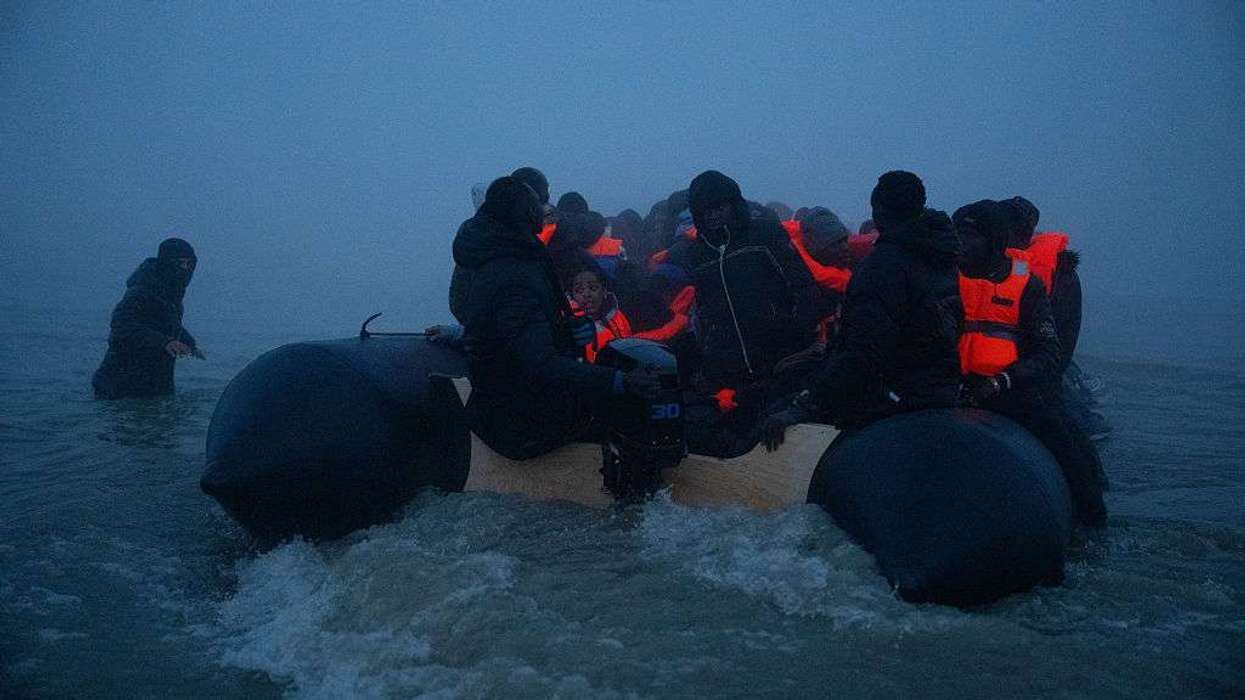
DUTCH authorities have rescued 38 men from an inflatable boat drifting without power off the country's southern coast, as more than 1,600 migrants reached the UK after crossing the English Channel in four days.
The rescue on Saturday (31) came amid growing evidence that people attempting to reach Britain are using departure points further along the European coastline, including Belgium and Normandy in France, rather than the traditional routes near Calais and Dunkirk.
The boat was discovered off the coast near Breskens in the Netherlands' Zeeland province. It was carrying 38 men, including 36 who identified themselves as Afghans and two Sudanese nationals suspected of being people smugglers. The two Sudanese men have been arrested.
Royal Netherlands Marechaussee spokesperson Captain Doron Wallin said authorities did not know where the boat had departed from or where it was heading.
"It was the first time that we see this in Netherlands' waters but we don't know yet what was the place of departure of the boat," he said.
None of the passengers was wearing a life jacket, and the vessel had lost its engine, leaving it drifting in open water in what officials described as a "very dangerous" situation.
The boat was towed to Cadzand, where those requiring assistance received first aid. The rescued men were subsequently taken to a nearby accommodation centre. Authorities were also checking for medical problems, including hypothermia, after their exposure to the cold.
Investigation continues
Police are investigating whether the boat had set off from France, Belgium or the Netherlands. Departures from Dutch waters are rare, with most small boats attempting to reach Britain traditionally leaving from the northern French coast.
The rescue coincided with a sharp increase in arrivals across the Channel following three weeks of stormy weather, during which no crossings were recorded.
Home Office figures show that 263 people arrived in the UK last Thursday (29), followed by 671 on Friday (30), 259 on Saturday and 477 on Sunday (1), taking the four-day total to more than 1,600.
The latest arrivals come despite the government's claim that overall Channel crossings have fallen significantly this year. It said the number of people arriving during the summer was the lowest for the period since 2020.
There have also been changes in the routes used by people attempting the crossing. Earlier this year, a rise in departures from Belgium was reported, while a boat that left Cherbourg in Normandy recently spent more than 30 hours at sea before being intercepted.
People arriving in larger groups
Dr Peter Walsh, a senior researcher at the University of Oxford's Migration Observatory, has said longer journeys could be linked to police operations disrupting launches from northern France.
"It's not at all optimal for these boats to set off so far away from their intended destination," he said.
Despite a fall in the overall number of boats crossing this year, some have been carrying larger groups. One vessel in August had 230 people on board, the largest number recorded making the journey in a single boat.
Thousands of migrants are also believed to be living in two camps between Calais and Dunkirk. Duncan Capps, interim border security commander at the Home Office, told the House of Commons Home Affairs Select Committee last month that the French estimate was almost 3,800 people across the two camps.
Shadow home secretary Chris Philp criticised the government's handling of the issue, saying: "The boats keep coming, the smugglers keep operating, and Labour keeps making excuses."
A Home Office spokesperson said joint operations with international partners had prevented more than 50,000 crossing attempts and resulted in the seizure of 1,100 boats and engines since the Labour government took office.
(with inputs from AFP)