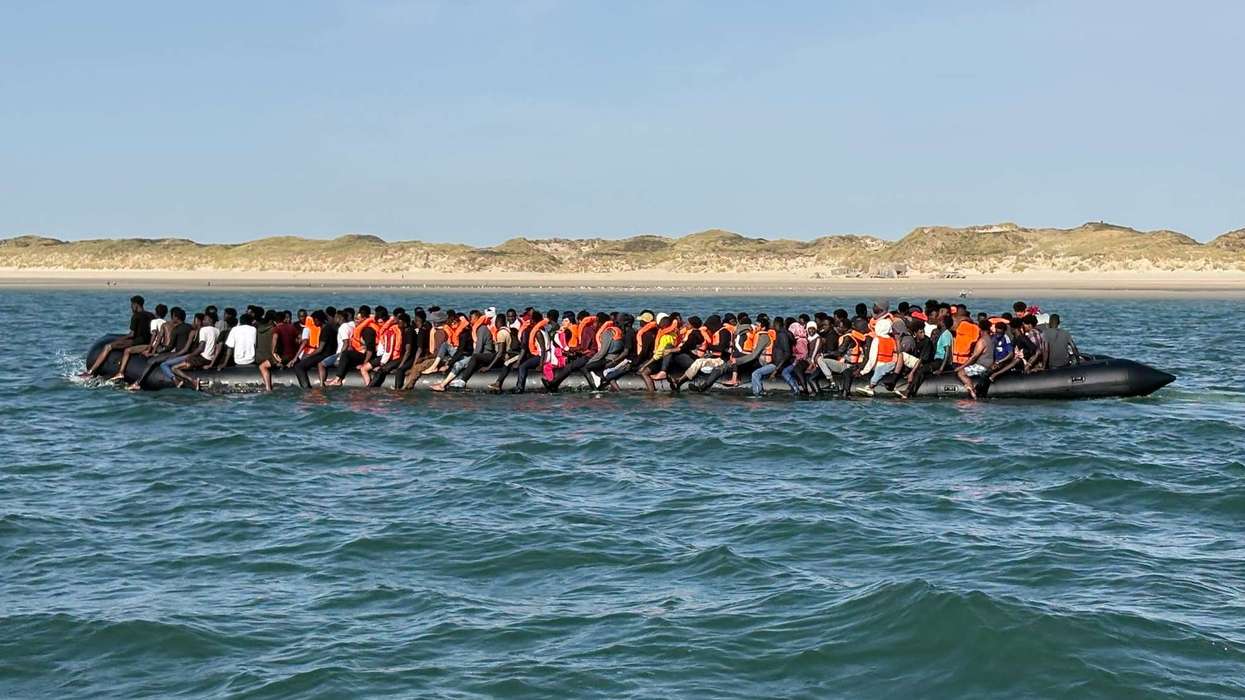

A RECORD 230 migrants crossed the English Channel to Britain in a single small boat, France's lifeboat service and UK media reported on Monday, as larger numbers of people continue to travel aboard individual vessels.
The 230 migrants, including more than 20 children, were counted aboard the rubber dinghy as it left the northeastern French coast amid chaotic scenes late on Sunday, the SNSM lifeboat service said in a statement posted online.
The number was higher than the previous record for a single boat, set last month when 165 people successfully crossed the busy shipping waterway.
Reform UK Reveals Royal Navy Plan for Small Boats
The SNSM said on Monday it was "a new and sad record for the number of people crammed onto these flimsy boats".
Last week, a UK-bound dinghy carrying more than 150 people capsized in the Channel after its engine caught fire, leading to a major search-and-rescue operation.
In the latest record-breaking journey, French lifeboats escorted the dinghy up to British waters before handing over to British authorities, Jean-Marc Lamblin, the SNSM's local branch director, told AFP.
He said the rubber dinghy was around 15 metres (49 feet) long.
"For the past three months, we've been seeing more and more" of these 15-metre dinghies, Lamblin added.
"We recently passed the record of 150 people; we didn't think there could be more, but now there really are no limits anymore."
The UK home ministry, which did not confirm the exact number of people aboard the boat, condemned "the reckless and dangerous tactics employed by the criminal gangs facilitating these crossings".
Prime Minister Andy Burnham's spokesman said it was "shocking" to see "appalling images ... of young babies being put into these unseaworthy craft".
"They show the reality behind the ruthless smuggling gangs that are prepared to risk human lives for profit," he added.
Britain has been trying to curb the Channel crossings, which have become a political issue and have seen tens of thousands of migrants arrive each year on the shores of southeast England.
Since coming to power in 2024, the centre-left Labour government has sought to "smash the gangs" facilitating the journeys, including through increased cooperation with France.
In April, London signed a new three-year deal with Paris on the crossings, agreeing to pay up to €766 million ($897 million) to increase French law enforcement efforts.
The UK government says the strategy is working, pointing to a more than 42 per cent year-on-year fall in migrant small boat arrivals in the first half of 2026, to just over 14,000 people.
However, the number of crossings has increased in recent weeks. A daily record for 2026 was set on July 29, when 752 people crossed the Channel.
(With inputs from agencies)