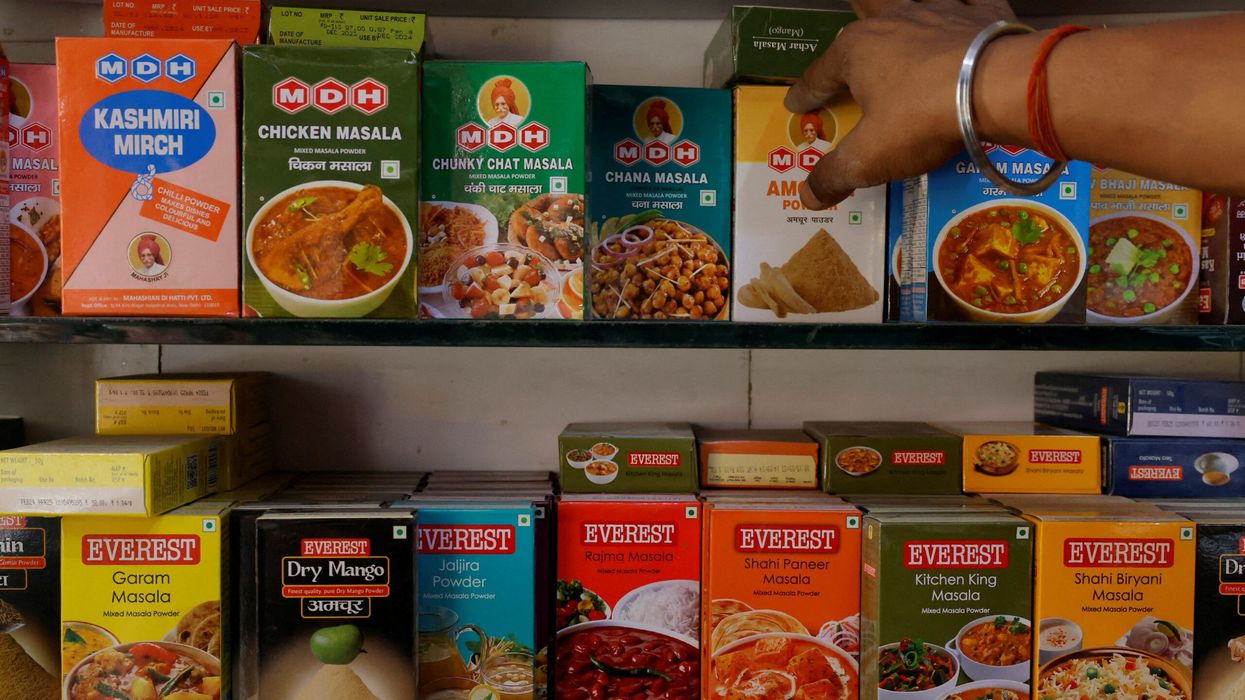

FOOD watchdog has applied extra control measures on all spice imports from India, it said on Wednesday (15), becoming the first to ramp up scrutiny of all Indian spices after contamination allegations against two brands sparked concerns among global food regulators.
Hong Kong last month suspended sales of three spice blends produced by MDH and one by Everest, saying they contained high levels of a cancer-causing pesticide ethylene oxide.
Singapore also ordered a recall of the Everest mix, and New Zealand, the US, India and Australia have since said they are looking into issues related to the two brands.
MDH and Everest - two of India's most popular brands - have said their products are safe for consumption.
In the most stringent crackdown so far impacting all Indian spices, country's Food Standards Agency (FSA) said that in light of the concerns it has "applied extra control measures for pesticide residues in spices from India which includes ethylene oxide".
The agency did not elaborate on the exact steps it is taking.
"The use of ethylene oxide is not allowed here and maximum residue levels are in place for herbs and spices," James Cooper, deputy director of food policy at the FSA, said in a statement to Reuters.
"If there is any unsafe food or food on the market, the FSA will take rapid action to ensure consumers are protected."
India's Spices Board, which regulates exports, did not immediately respond to a request for comment.
India is the biggest exporter, consumer and producer of spices in the world.
In 2022, Britain imported $128 million (£101m) worth of spices, with India accounting for almost $23m (£18m), data from the Observatory of Economic Complexity website shows.
MDH and Everest export their products to many regions including the US, Europe, South East Asia, Middle East and Australia.
(Reuters)



