
Highlights
- Wildlife authorities will verify the origin and documentation of the lar gibbon featured in Vikram’s social media video.
- The threatened primate is protected under international wildlife trade rules and Indian wildlife law.
- Conservationists have raised concerns about the illegal trade in young gibbons and the harm caused during their capture.
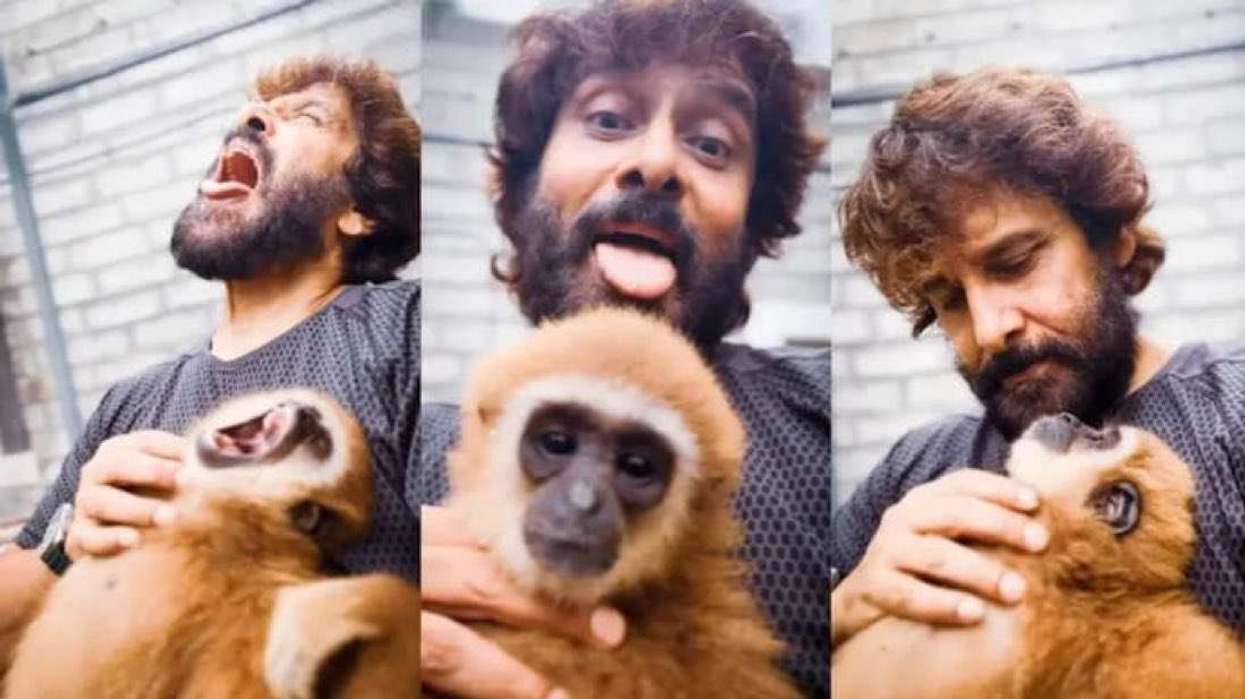
Actor Vikram’s video featuring a lar gibbon has prompted wildlife authorities in Chennai to examine how the protected exotic animal came to be kept in a private setting.
The video, shared by Vikram on social media, shows the actor interacting with a well-grown lar gibbon. While the footage quickly attracted attention online, it also raised questions among wildlife officials and conservationists about the animal’s source and whether its owner has the necessary documentation.
Wildlife department to verify gibbon’s source
Chennai wildlife warden Kulal Yogesh Vilas told the Times of India that the department will verify where the animal came from, including who it was procured from and whether its owner has documents establishing its purchase and possession.
A forest ranger is expected to conduct the verification. The Wildlife Crime Control Bureau has also said that state wildlife authorities are generally asked to examine cases involving exotic pets, including checking ownership documents and the source of the animals.
Records cited in the report show that lar gibbons had passed from Laikhuram Singh in Manipur to SK Keshavanathan in Erode before being sold to Chinni Krishna Ranganathan in Chennai.
Why conservationists are concerned about the gibbon
The lar gibbon, or Hylobates lar, is native to Southeast Asia and is listed under Appendix I of the Convention on International Trade in Endangered Species of Wild Fauna and Flora (CITES), which places strict restrictions on international commercial trade.
In India, it is also classified as a Schedule IV animal under the amended Wildlife Protection Act. Possession of exotic species can involve requirements relating to their acquisition, registration, transfer and supporting documentation.
Beyond the legal questions, conservationists have highlighted the risks involved in obtaining young gibbons from the wild.
Shravan Krishnan, an animal rights activist and member of the Tamil Nadu State Board for Wildlife, said the attention on the animal’s appearance could distract from the circumstances behind its capture.
“Most likely this Gibbon would have been trafficked from south east Asia where poachers would have killed the parents and smuggled the baby.”
Conservationists say poachers can kill a mother while taking a young gibbon, while in some cases an entire family may be killed to obtain one young animal for the illegal pet trade.
Captivity raises further welfare questions
Lar gibbons are arboreal animals that rely on large tree canopies for movement and survival. Conservationists say captivity can affect their natural behaviour and welfare.
The animal in Vikram’s video appeared well-grown, prompting further questions about how long it may have been in captivity. There have also been allegations that illegal traders in India have been involved in breeding and selling such primates.
The wildlife department’s proposed verification is expected to establish the gibbon’s source, trace its reported ownership history and determine whether the required documents are in place.