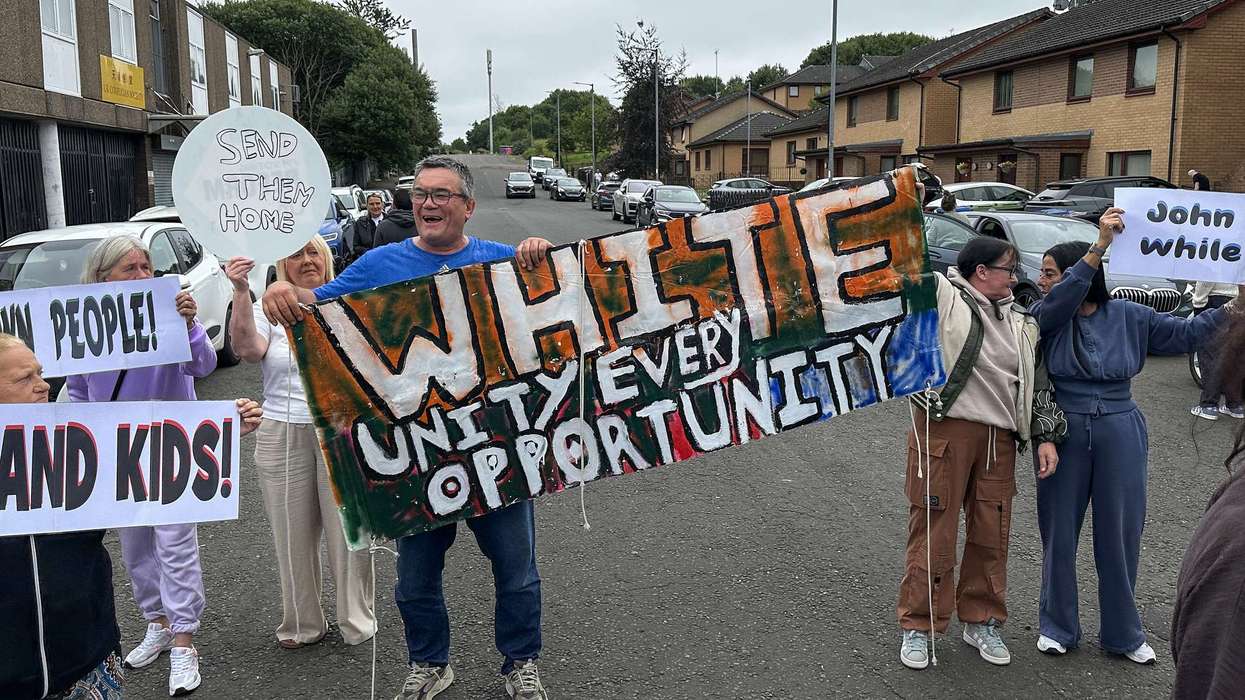

IT TOOK three nights of violence in Thetford, Norfolk for the police to restore order. A crowd chanted “get them out” and “deport, deport, deport” as they pelted a house with eggs and smashed the windows. Several dozen people tried to break down the door, hoping to confront the people inside, violently attacking the police who blocked them.
This violent criminality was not political protest, but an attempt at a xenophobic pogrom to drive out asylum seekers housed in the property. The police relocated them elsewhere for their own safety. That felt like ‘mission accomplished’ for the angry crowd. Online, extremists suggested other places could target asylum seekers’ homes to emulate Thetford’s success. Disorder in Belfast and Epping had seen a crime, committed by an asylum seeker, used to mobilise collective punishment against migrants and other ethnic minorities. Nobody involved in the Thetford disorder suggested those in the house targeted had caused any trouble. The mere presence of asylum seekers in the town was perceived as a threat – from “illegals” or “invaders”.
There had been weeks of protest over government proposals to turn the RAF Barnham base, just over the Suffolk border, into a major asylum accommodation site. Many were turned away from a packed town council meeting, which was unanimous in opposing the plan. Both local Labour MPs were critical, too. National far right groups seized the chance to organise local demonstrations.
“The concerns of communities are central to our immigration reforms. However, violence and disorder are never acceptable,” a Home Office spokesperson said after the worst night of violence in Norfolk. The statement highlighted attacks on serving police officers, but it did not mention the targeting of asylum seekers. It seemed to try much harder to empathise with the mob than its victims, though it was unlikely to connect with those who had daubed “Home Office Scum” on the wall by the RAF Barnham gates. Local Labour MP Terry Jermy, a surprise general election victor over former prime minister Liz Truss, made the crucial point that the Home Office statement had omitted. “I do not know the immigration status of the people placed in these properties or their legal status, but I do know they are human beings that must be afforded the same rights that we all expect in this country.” In interviews, government ministers Anna Turley and Wes Streeting struck a balance in contrasting protest with unacceptable violence. Yet neither home secretary Shabana Mahmood nor prime minister Andy Burnham made any comment at all.
Is violent disorder becoming normalised as a staple of the British summer? There is a 90 per cent social norm against violence in our society, but that may be insufficient to prevent outbreaks of unrest. Seven per cent of people told pollsters they agreed with the disorder in the 2024 riots. Two per cent were elated by it and hoped it would escalate. That group hankering for violence could be 1,000 people in any small city of 100,000 people, or 500 people in Thetford population of 25,000. It took fewer than 6,000 participants to spread havoc across thirty locations in the six days of rioting in 2024.
Stronger policing to protect lawful protest – without tolerating violent intimidation – should involve a much clearer red line: that intimidating people in their homes to force them out is not legitimate protest. Those sharing possible target addresses online should be warned that they risk prosecution too. But avoiding riots should be nobody’s test of cohesion.Asylum dispersal policies have been disastrous for community cohesion. Private contractors have incentives in a cost-driven process to house asylum seekers where housing is cheapest. Councils get little, if any, advance notification of those being placed in their areas. None of the immediate options are easy, though the large RAF bases are perhaps the worst of all worlds: they are the only option more expensive than asylum hotels, providing flashpoints over plans that may never materialise at all. The government should expedite the emptying of asylum hotels – in six months, not three years – to underpin a pledge to do asylum dispersal differently. A controlled refugee route to Britain with community contact at its heart can start to make local voice central to refugee protection around the country.
For 25 years, government efforts at cohesion have been mostly reactive to shock events. The Starmer government’s response to the 2024 riots did gradually produce the foundations for a useful cohesion strategy, though its existence and purpose went largely uncommunicated in the crisis of those months. That does give an opportunity for the new government to get onto the front foot, though dedicated ministerial ownership of cohesion will be vital if the government’s big ambitions on the cost of living, devolving power and expanding housing are not to crowd it out. The lesson of Norfolk is that events will put cohesion back on the prime ministerial agenda.