
INDIA may still meet its 6.3 per cent–6.8 per cent growth projection for the 2025–2026 fiscal year that began on April 1, despite global disruptions from new US tariffs, if oil prices remain below $70 (£54.7) per barrel, government officials said, even as many private economists lowered their forecasts.
Economists, including at Goldman Sachs, have lowered India’s growth estimates by 20-40 basis points to 6.1 per cent for the current 2025-2026 financial year, citing the impact of the global tariffs imposed by US president Donald Trump.
A 26 per cent tariff on Indian imports, with even higher levies on other countries like China, has escalated global trade tensions, with major stock indices plunging in Asia on Monday.
The finance ministry has already received four to five proposals from the commerce ministry to support export industries, including an extension of interest subsidy scheme, aid for diversification, and increased bank credit, an official said.
“We are still studying the impact of tariff hikes on the export sectors and the decision could be taken at the appropriate time,” the official said.
Another finance ministry official, however, said the tariffs would not weigh heavily on India’s key fiscal parameters for the 2025-2026 year.
“We have already made provisions in the budget for duty remission schemes to help exporters and are open to doing more,” the official said.
The officials spoke on condition of anonymity as they were not authorised to speak to the media.
India’s finance ministry did not immediately respond to an e-mailed request for comment.
India does not plan to retaliate against Trump’s tariffs as officials try to negotiate a resolution, Reuters has reported.
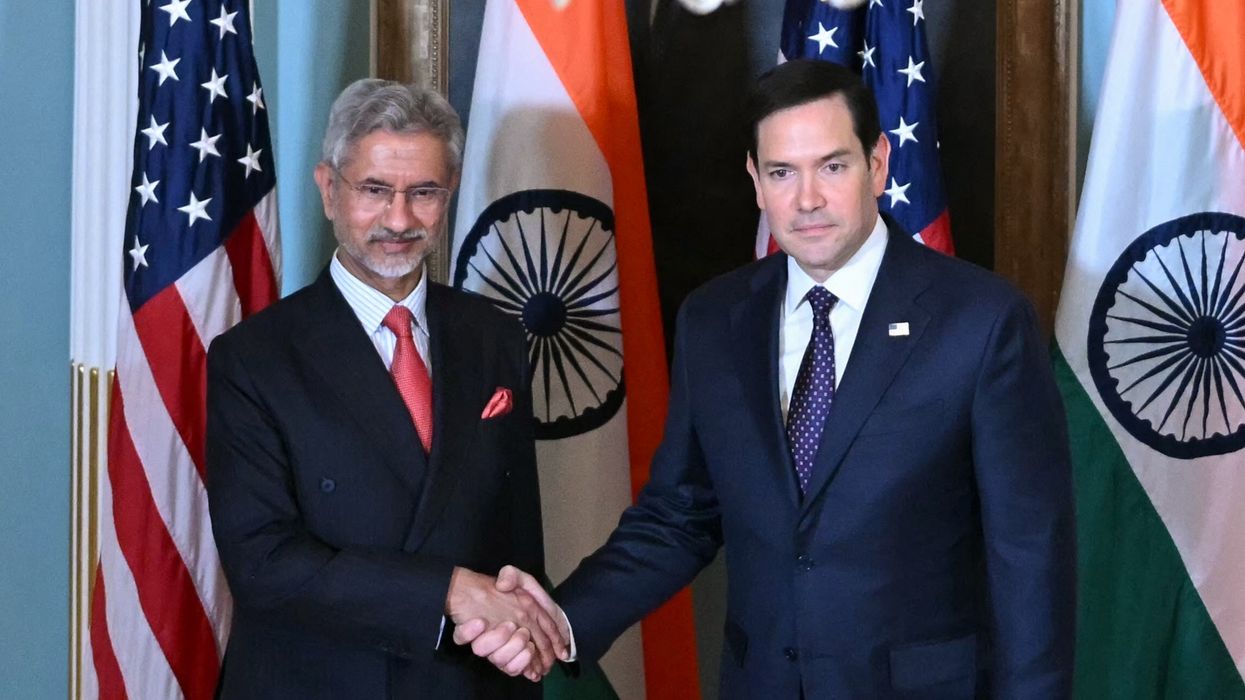
Meanwhile, US secretary of state Marco Rubio and India’s foreign minister Subrahmanyam Jaishankar held a call on Monday (7) to discuss US tariffs on India and how to make progress towards a “fair and balanced trade relationship,” the State Department said.
Jaishankar also said on social media earlier on Monday that he had spoken to Rubio about the early conclusion of a bilateral trade deal.
“Agreed on the importance of the early conclusion of the Bilateral Trade Agreement. Look forward to remaining in touch,” Jaishankar said in his social media post. “They also discussed US reciprocal tariffs on India and how to make progress toward a fair and balanced trade relationship,” the State Department said.
India does not plan to retaliate against Trump’s 26 per cent tariff on imports from the Asian nation, an Indian government official said last Sunday (6), citing ongoing talks for a deal between the countries.
Indian officials said the impact of the US tariffs on labour intensive sectors such as textiles, footwear and agriculture was the government’s biggest worry. The Indian government could increase support to exporters under its export promotion scheme announced in the budget, within fiscal constraints, sources said.
On Tuesday (8), the spokesperson of the Chinese Embassy in India said India and China should stand together to overcome difficulties in the face of tariffs imposed by Trump. “China-India economic and trade relationship is based on complimentarity and mutual benefit. Facing the U.S. abuse of tariffs... the two largest developing countries should stand together to overcome the difficulties,” spokesperson Yu Jing said in a post on X.