
Highlights
- The US Trade Representative has proposed an additional 12.5% tariff on Indian imports
- The move came on the second day of three days of trade talks in New Delhi
- India's commerce ministry said the proposed tariffs were not final
- India is among 54 economies singled out for lacking a forced-labour import ban
THE US has proposed an additional tariff of 12.5 per cent on imports from India, saying it is among 60 economies that failed to curb imports made with forced labour, a step that threatens to complicate two-way trade talks underway in New Delhi.
The proposal by the US Trade Representative's office came on the second of three days of talks between Indian trade officials and a US delegation led by assistant USTR Brendan Lynch.
India "has failed to impose and effectively enforce a forced labour import prohibition," the office said in a 92-page report on Tuesday (2) that called the aouth Asian nation's policies unreasonable and a burden on US commerce.
"The failure of our most important trading partners to address the importation of goods made with forced labour is unacceptable," US Trade Representative Jamieson Greer said. "This creates a dynamic where American workers are forced to compete globally on an unlevel playing field."
The proposed tariffs were not final, however, India's commerce ministry said on Wednesday (3), adding that the USTR would consider public opinion before deciding on the measures.
"India remains engaged with the US on the matter as a part of Section 301 proceedings," it said in a statement, adding that New Delhi was also engaged with Washington on finalising a framework agreement unveiled in February.
The proposal follows a Section 301 unfair trade practices investigation as the Trump administration seeks to rebuild emergency tariffs struck down by the Supreme Court in February.
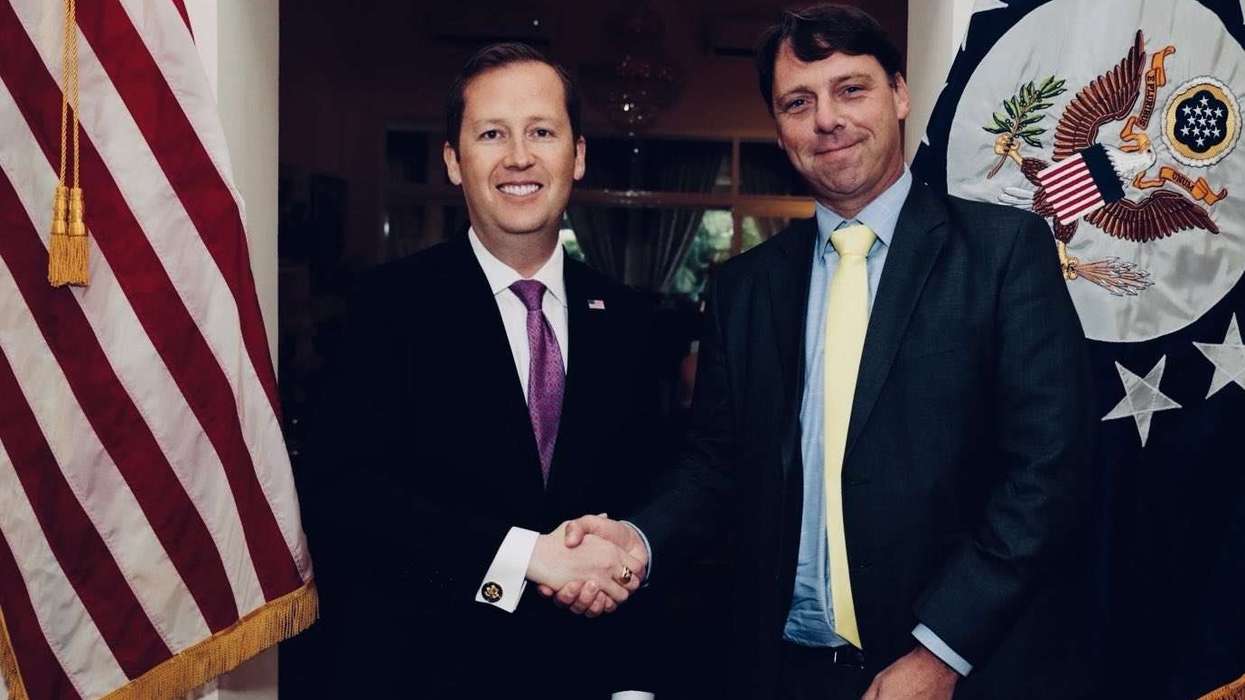 US ambassador to India Sergio Gor with assistant USTR Brendan Lynch Photo: X/@USAmbIndia
It placed India among 54 economies that lack a forced-labour import prohibition and therefore face the higher proposed duty.
Six other nations, from Canada, Ecuador and the European Union to Indonesia, Mexico and Pakistan, have such prohibitions but face a lower tariff of 10 per cent for failing to enforce them effectively.
Ajay Srivastava, founder of Global Trade Research Initiative, said the finding could be challenged, as the USTR investigation was not about forced labour in Indian exports but whether India blocked imports tied to forced labour elsewhere.
"The proposed tariffs are viewed as part of broader US pressure tactics, and India should treat Section 301 actions and the India–US bilateral trade agreement negotiations separately," he said.
An Indian government source said that New Delhi planned to raise the issue of the Section 301 investigation with Lynch's team and seek tariff relief as part of the broader two-way trade deal.
The USTR report also identified India as an intermediary in cotton supply chains linked to Chinese forced-labour inputs. The agency has sought public comments on the tariff plans by July 6, with a hearing set for July 7.
(Reuters)



 Vickrum DigwaEastern Eye
 Kiran KaurEastern Eye