
UK retail sales growth slowed in May as soaring food prices hit shoppers hard, official data showed on Friday (23).
Total retail sales by volume rose 0.3 per cent after climbing 0.5 per cent in April, the Office for National Statistics said in a statement.
Food stores sales volumes fell by 0.5 per cent in May, with retailers indicating "that increased cost-of-living and food prices continued to affect sales volumes", the ONS added.
Shops were impacted also by "some anecdotal evidence of increased spending on takeaways and fast food" owing to an extra public holiday last month for the coronation of King Charles III.
Overall sales climbed thanks to cheaper fuel and demand for summer clothing and outdoor goods, the ONS noted.
Annual food price inflation was close to a record-high of 18.4 per cent in May, official UK data showed this week.
Overall inflation stood at 8.7 per cent, unchanged from April, causing the Bank of England (BoE) on Thursday (22) to hike its key interest rate by a larger-than-expected amount.
The half-point lift to a 15-year peak of five per cent was the 13th increase in a row.
Millions of Britons who have home loans are particularly affected as commercial lenders pass on the BoE rate hike.
Chancellor of exchequer Jeremy Hunt was on Friday meeting major UK mortgage lenders to discuss possible support measures for struggling customers, including those in arrears.
On food, Prime Minister Rishi Sunak on Thursday acknowledged that households' weekly shopping bills had "gone up far too much in the past few months".
"We're looking at the supermarkets, making sure that they're behaving responsibly and fairly when it comes to pricing all those products, to make sure that we're easing the burdens," he added.
(AFP)
UK retail sales growth slows as food inflation bites
Total retail sales by volume rose 0.3 per cent after climbing 0.5 per cent in April













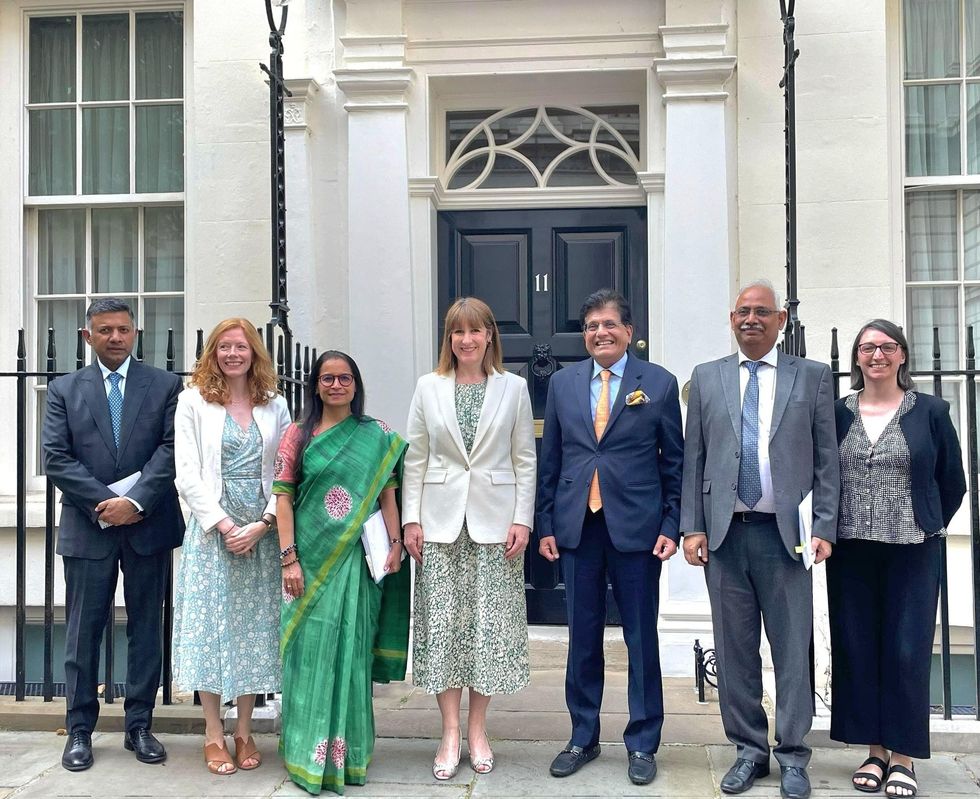 Piyush Goyal with shadow chancellor Rachel Reeves (centre), Vikram Doraiswami and other officials at the India Global Forum
 And , Goyal with Jonathan Reynolds