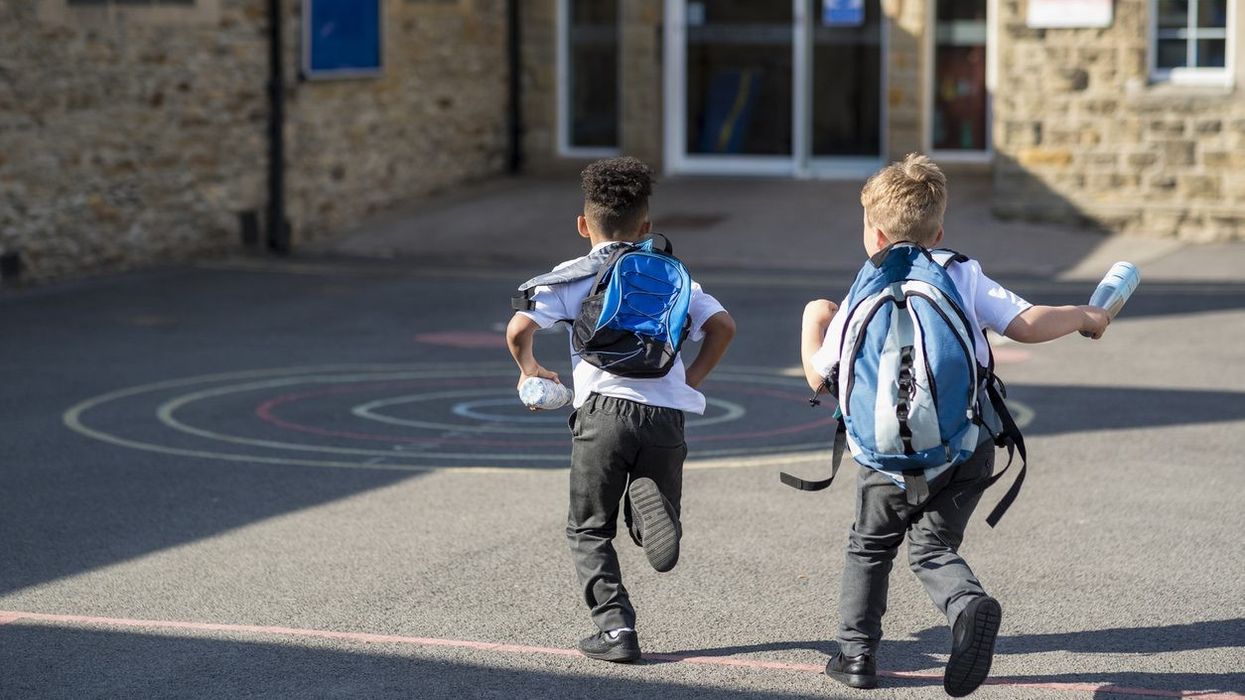

A World Health Organisation (WHO) study covering 44 countries has said that children in England and Wales are among the most inactive in the world.
The survey studied children aged 11, 13 and 15 living in Europe, Central Asia and Canada and found that those from England, Wales and Scotland fared poorly on markers such as moderate physical activity and eating healthy breakfast, The Telegraph reports.
The WHO study included more than 4,000 children in England, 4,000 in Scotland plus children in Welsh schools.
Thirty per cent of girls and 18 per cent of boys in England were inactive across all age groups surveyed, while in Wales it was 27 per cent for girls and 17 per cent for boys.
Scotland fared slightly better with 21 per cent of girls and 12 per cent boys being inactive.
By age 15, just 11 per cent of girls and 16 per cent of boys in England did at least 60 minutes a day of moderate to vigorous physical activity.
In Wales, the figure was 7 per cent of girls and 16 per cent of boys, and in Scotland, it was 12 per cent of girls and 21 per cent of boys.
England and Wales figure near the bottom of the global table, below Romania, Poland, Slovakia, Spain, Sweden, Norway and Croatia.
About 37 per cent of 13-year-old girls and 59 per cent of boys in England eat breakfast on weekdays.
In Wales, it is 33 per cent girls and 54 per cent boys, and in Scotland, it is 36 per cent girls and 61 per cent boys.
This is below other European countries including Portugal, Ireland, Denmark, Sweden, Italy and Norway.
Girls in England, Wales, and Scotland are less likely to eat breakfast than the average for all countries in the study.
By age 15, just 35 per cent of girls in England eat breakfast daily on weekdays (below average for all countries), as do 51 per cent of boys.
The international co-ordinator for the study, Dr Jo Inchley, said that UK has been consistently low on physical activity and breakfast consumption has declined over time.





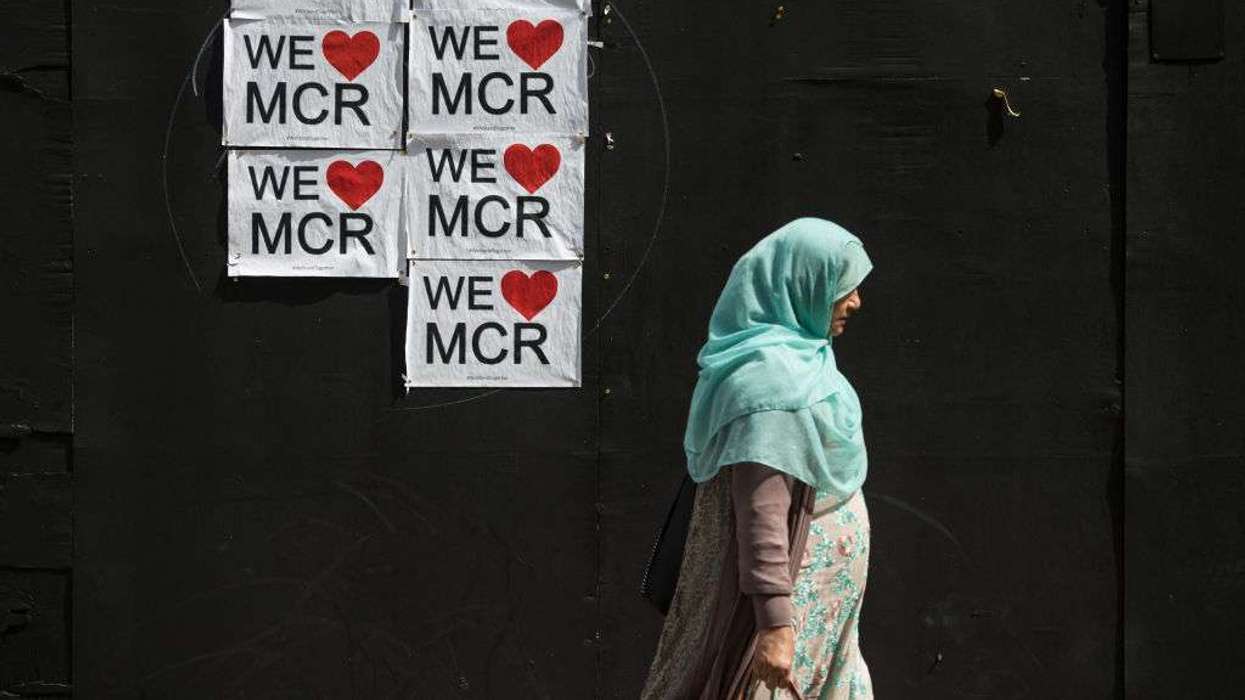 FILE PHOTO: A woman walks past a poster displaying a message of defiance to the terror attack of May 22 at the Manchester Arena, in Manchester, northwest England on May 31, 2017. (Photo by OLI SCARFF/AFP via Getty Images)