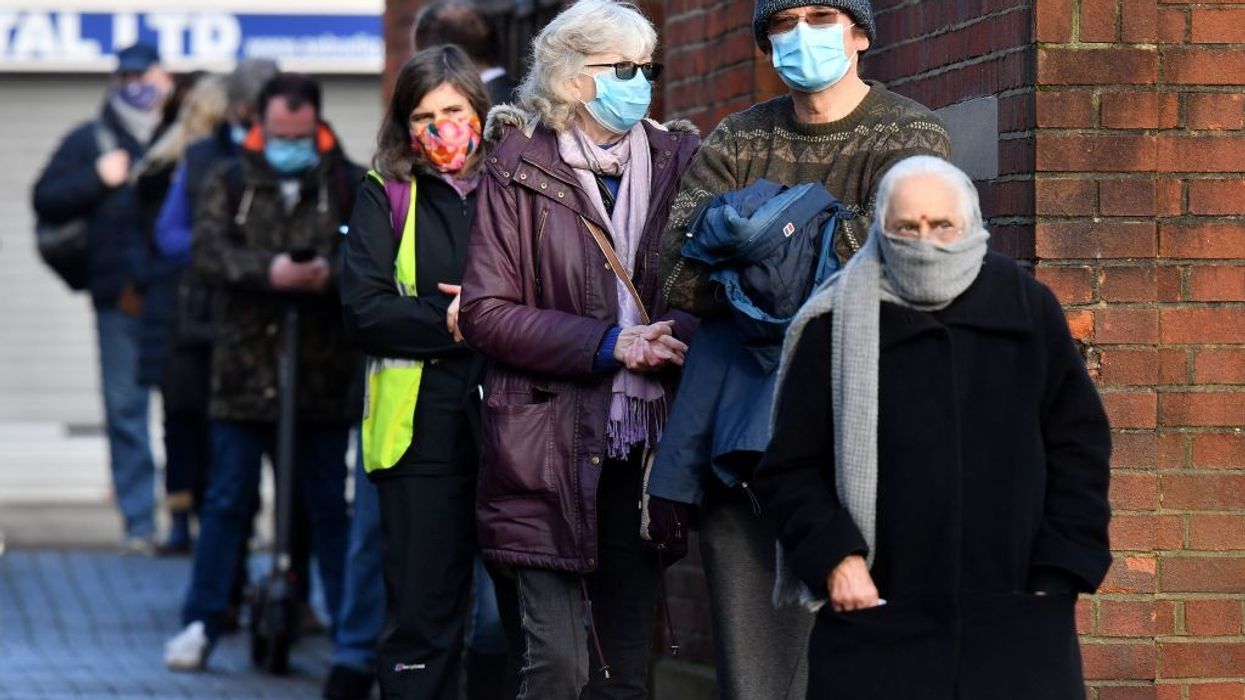

BRITAIN begins a door-to-door Covid-19 testing of 80,000 people on Tuesday(2) in a bid to stem the spread of a new highly infectious so called South African variant of the novel coronavirus.
Public Health England said it had identified a total of 105 cases of the South African variant since December 22, and to contain new outbreaks, residents in eight areas of the country will now be tested whether or not they are showing symptoms, a process known as "surge testing".
There are about 10,000 people in each area. Three are in London, two in the southeast, one in central England, one in the east and another in the northwest.
Those in the affected areas will be tested, even if they are asymptomatic, to break any chain of transmission in the community.
"It is concerning - it's deeply concerning," junior education minister Michelle Donelan told Sky. "It's still a very perilous stage of this virus and we've got these new variants spreading."
The number of new coronavirus cases in Britain is levelling out or falling after a surge in infections at the end of last year, fuelled by a more transmissible variant found in the southeast of England.
Britain is rolling out a mass vaccination programme, with nearly 9.3 million people having received the first shot, and the government and health officials are concerned new variants would undermine its efforts to bring the pandemic under control.
However, there has been criticism that ministers have been too slow to bring in measures to quarantine travellers arriving from overseas who might bring new strains of the virus with them.
The Times newspaper reported that the country's top scientific advisers had said Britain needed tougher border restrictions, but although travel to some at risk countries has been banned, a promised hotel quarantine programme has not yet started.
"I believe the home secretary will give an update on this shortly either this week or the beginning of next week," Donelan told Times radio. "I know the government is working to achieve this policy and implement it as quickly as possible."
Scientists have said the South African variant appears to be more transmissible, but there is no evidence that it causes more severe disease. However, several laboratory studies have found that it reduces vaccine and antibody therapy efficacy.