
Highlights
- Office for Product Safety and Standards issues urgent warning about animal-headed baby self-feeding pillows.
- Products enable babies to bottle feed without caregiver assistance, creating serious choking and pneumonia risks.
- All baby self-feeding products deemed inherently dangerous and can never be made safe, regardless of design changes.
Dangerous baby pillows
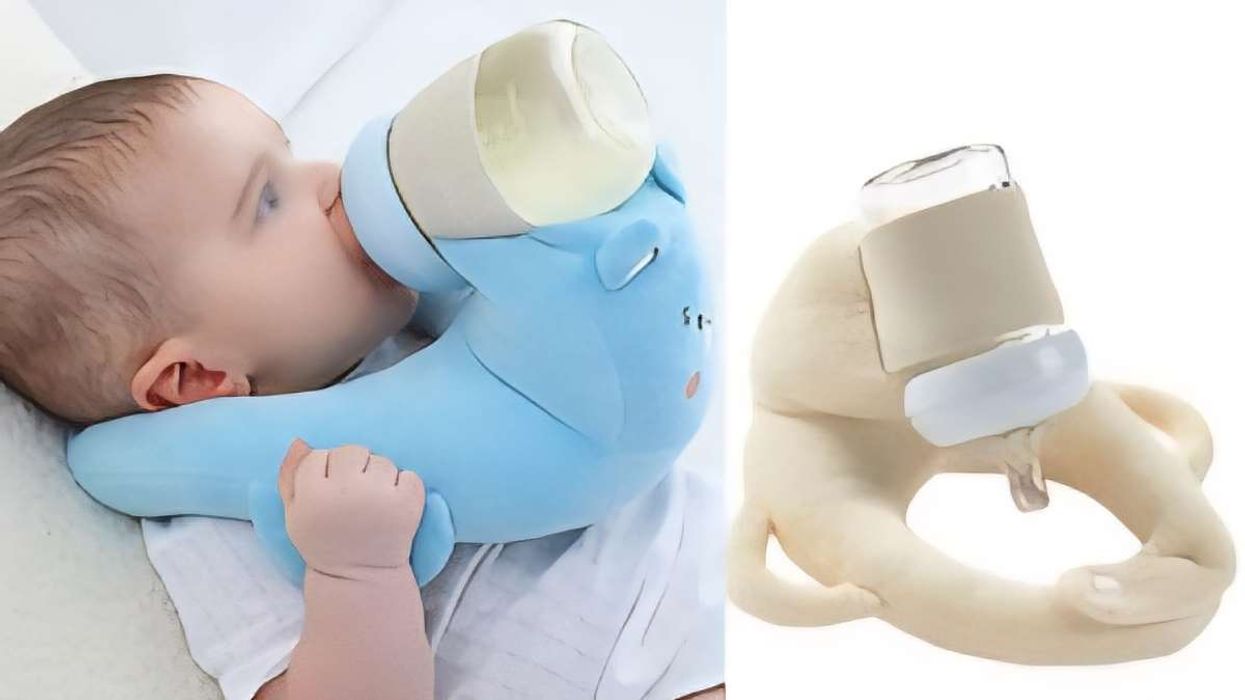
The Office for Product Safety and Standards (OPSS) has issued an urgent warning to parents and businesses about a new variant of dangerous baby self-feeding products that now feature animal head-shaped pillows.
These controversial devices are designed to allow babies to bottle feed with little or no assistance from a caregiver. The products present a risk of serious harm or death from choking on the feed or aspiration pneumonia, according to the government safety watchdog.
The latest alert published today, specifically targets a new design where the pillow portion takes the form of an animal head. However, authorities emphasise that all baby self-feeding products are inherently dangerous, regardless of their appearance or any modifications manufacturers might make.
The products are designed to enable a baby to be positioned on its back and attached to a bottle so that it may self-feed without the assistance of a caregiver holding the bottle and controlling the feed. This practice directly contradicts NHS guidance on safe bottle feeding, which recommends babies should always be held in a semi-upright position during feeding.
Immediate safety action
The danger stems from babies' physical and cognitive limitations. A baby does not have the dexterity or cognitive ability to control the flow of bottle feed, or to know when to stop feeding, or to take action if it gags or chokes.
Crucially, whilst gagging produces noise and coughing, choking is characterised by silence due to airway blockage, making it difficult for caregivers to detect an emergency.
The OPSS first issued a Product Safety Alert about baby self-feeding pillows in December 2022, but manufacturers have continued to produce variants. The products aren't widely available to buy in mainstream retailers in the UK, but several retailers selling these products ship to the UK, as well as listings on online marketplaces and some Instagram-based sellers.
Parents are urged to immediately stop using these products and dispose of them safely. Businesses must remove them from the market as they cannot comply with the General Product Safety Regulations 2005.
Local authority trading standards services have been instructed to identify and take appropriate action against businesses selling these items.