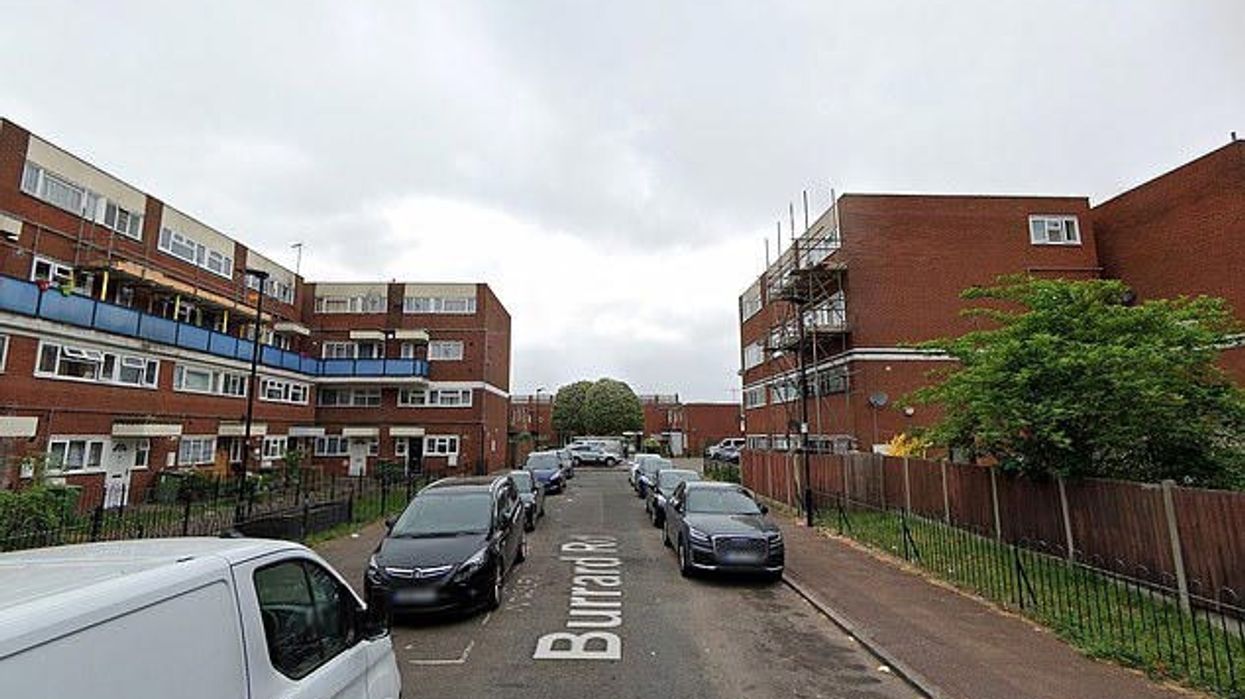

Asim Hasan, a 34-year-old traffic warden, has been sentenced to life imprisonment for the murder of his wife, Aisha Hasan, 32.
The Old Bailey heard that Asim stabbed Aisha 26 times with a large kitchen knife in their home on Burrard Road in Canning Town while their young children were present.
The attack was described as "ferocious and quite savage" by the prosecutor, resulting in severe injuries that ultimately led to Aisha's death.
Following the attack that occured on May 19, 2022, Asim dialled emergency services and admitted to stabbing his wife when the police arrived at the scene.
Despite his claims that he did not intend to harm her, the court found him guilty of murder.
A post-mortem examination revealed the extreme force used, which caused a piece of Aisha's skull to break off.
During the trial, it was revealed that Asim had joined a dating app because he believed he was entitled to have a second wife.
The judge emphasised that Asim had a history of violence towards his wife, and the prolonged attack would have caused her immense suffering.
As a result, he was sentenced to a minimum of 21 years before he is eligible for parole.
The trial provided further details of the deteriorating relationship between Asim and Aisha, including arguments and physical altercations.
Aisha had sent a distressing message to friends, expressing concerns for her children's well-being.
Asim claimed that he had been provoked and had acted in self-defense, stating that he did not intend to kill Aisha.
The trial continues as Asim maintains his denial of murder, but the court has rendered its verdict and handed down the life sentence on Thursday (06).






 Curator Emma Slocombe with ikat robes and arabachi coats in the Peter the Great Room in Blickling Hall Amit Roy
 View of the entrance to Blickling Hall on a rainy autumn dayAmit Roy
 Kente cloth from Ghana in the Long Gallery in Blickling Hall
 Decoration in the Great Hall at Blickling Hall Amit Roy
 Palampore fragment made in coastal south-east India in the Brown Room in Blickling Hall Amit Roy
 Bed valance dating from early 1700s in the Italian Print Room at Blickling Hall Amit Roy
 Indian inspired fabric draped on sofas in the South Drawing Room in Blickling Hall Amit Roy
 Indian inspired fabric draped on sofas in the South Drawing Room with Indian carpet in Blickling Hall Amit Roy
 Karun Thakar has picked out the geometric patterns in the bookcase and the Kente cloth in the Long Gallery in Blickling Hall Amit Roy
 Large tapestry depicting Peter the Great defeating the Swedish army at the Battle of Poltava in 1709 Amit Roy
 ikat robes and arabachi coats in the Peter the Great Room in Blickling Hall Amit Roy
 Baghs and kanthas made by women provide contrast to the men only portraits in the Great Hall at Blickling Hall Amit Roy
 Baghs and kanthas in the entrance Great Hall at Blickling Hall Amit Roy
 Baghs and Kanthas in the Great Hall in harmony with stained glass window at Blickling Hall Amit Roy
 Kimonos reflect Japanese influence in Upper Ante Room in Blickling Hall Amit Roy
 Kimono in Upper Ante Room in Blickling Hall
 A view of the Palace and fort at Agra shows romantic side of India Amit Roy
 Blickling Hall Amit Roy
 Table carpet, European 1670-1680 Amit Roy
 Unfinished 17th century Italian embroidery in the Print Room at Blickling Hall Amit Roy
 Picture of Kashmir shows a romantic view of India Amit Roy
 A panel of Ashburnham bed hangings made in Gujarat for sale in Europe in the Brown Room in Blickling Hall Amit Roy
 Colcha made in the 1600s by women in Bengal for the Portuguese market in the Long Gallery at Blickling Hall Amit Roy




