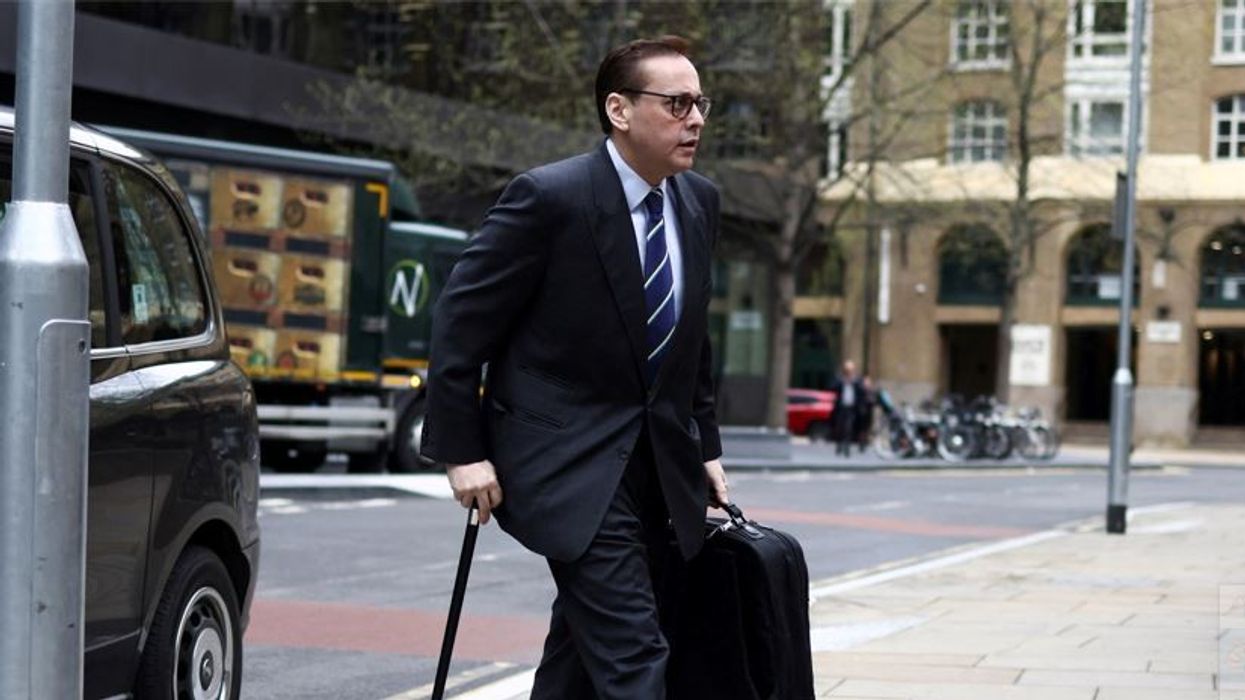

A Tory MP accused of sexually assaulting a 15-year-old boy at a party has explained his distress over the allegations during the trial and added that he was "simply trying to be kind" to a "troubled" young man.
Wakefield MP Imran Ahmad Khan, 48, is accused of groping the boy at a house in Staffordshire in January 2008. He had already denied the charge at Southwark Crown Court.
Khan explained that he had been engaged in a "philosophical" discussion about sexuality with the boy, and rejected any suggestion it was sexual.
"I was just trying to be kind and helpful to a young man who wanted to talk," the lawmaker was quoted as saying to the jury.
"He seemed very keen to want to talk about this [sexuality]. I think it would have been rude or perhaps a tad cruel to shut him down."
When asked by defence barrister Gudrun Young QC if he had felt the teenage boy's feet, up his legs or towards his groin area, Khan replied that he had not.
The MP, who is gay and a Muslim, has claimed that he only touched the Catholic teenager's elbow when the boy "became extremely upset" after a conversation about his confused sexuality.
According to Khan, the teenager became "very upset" and "bolted out" during the conversation.
He added that he was not drunk in the evening. When asked how he felt being in court, accused of sexual assault, he said: "It is hellish, it is a nightmare."
Meanwhile, another man also alleged that the MP sexually assaulted him in his sleep in Pakistan three years later. It is not part of the charge in the ongoing trial.
In an earlier statement, Khan said he denied the accusation "in the strongest terms".
In response to the charge, the Conservative Party suspended the whip pending the outcome of the prosecution. On 10 September 2021, he pleaded not guilty at the Old Bailey. Khan's trial started on 29 March 2022.
Khan defeated the incumbent Labour MP, Mary Creagh, to become the first Conservative MP for the constituency in 89 years.











English questioning rose from 20 per cent to 31 per cent, and racist jokes from 36 per cent to 41 per cent
Workplace violence against Black and ethnic minority employees rises to 26 per cent
Highlights
The Trades Union Congress surveyed 1,044 Black, Asian and ethnic minority employees. The results show clear increases in racist behaviour between 2020 and 2026.
Workers having their English questioned rose from 20 per cent to 31 per cent. Those hearing racist jokes went up from 36 per cent to 41 per cent.
Racist comments made to workers or around them increased from 31 per cent to 36 per cent.
Violence and threats
The most worrying finding involves physical threats and violence, which jumped from 19 per cent to 26 per cent.
Racist posts shared on workplace social media grew from 22 per cent to 28 per cent. Racist materials being passed around increased from 19 per cent to 25 per cent.
Beyond direct racism, many workers face unfair treatment. Nearly half (45 per cent) said they get harder or less popular jobs.
Over two in five (43 per cent) receive unfair criticism. The same number (41 per cent) stay stuck on temporary contracts.
Work conditions got worse too. Those not getting enough hours rose from 30 per cent to 40 per cent.
Workers denied overtime went from 30 per cent to 37 per cent. Being kept on short-term contracts increased from 33 per cent to 41 per cent.
Direct managers cause most unfair treatment (35 per cent), followed by other managers (19 per cent).
Bullying mainly comes from direct managers (30 per cent) and colleagues (28 per cent). Racist behaviour mostly comes from colleagues (33 per cent) and customers or clients (22 per cent).
Paul Nowak, TUC general secretary, said: "Black and ethnic minority workers are facing appalling and growing levels of racism and unfair treatment in Britain. This racism is plaguing the labour market – and it's getting worse."
The TUC is calling for urgent government action to tackle the problem. The union wants ring-fenced funding for the Equality and Human Rights Commission to enforce workplace protections.
It is pushing for mandatory ethnicity pay gap reporting for companies with over 50 employees.
The TUC says the Employment Rights Act, which makes employers responsible for protecting workers from harassment by customers and clients, will be an important step forward.
The union also wants employers to treat racial harassment as a health and safety issue and monitor ethnicity data across recruitment, pay and promotions.