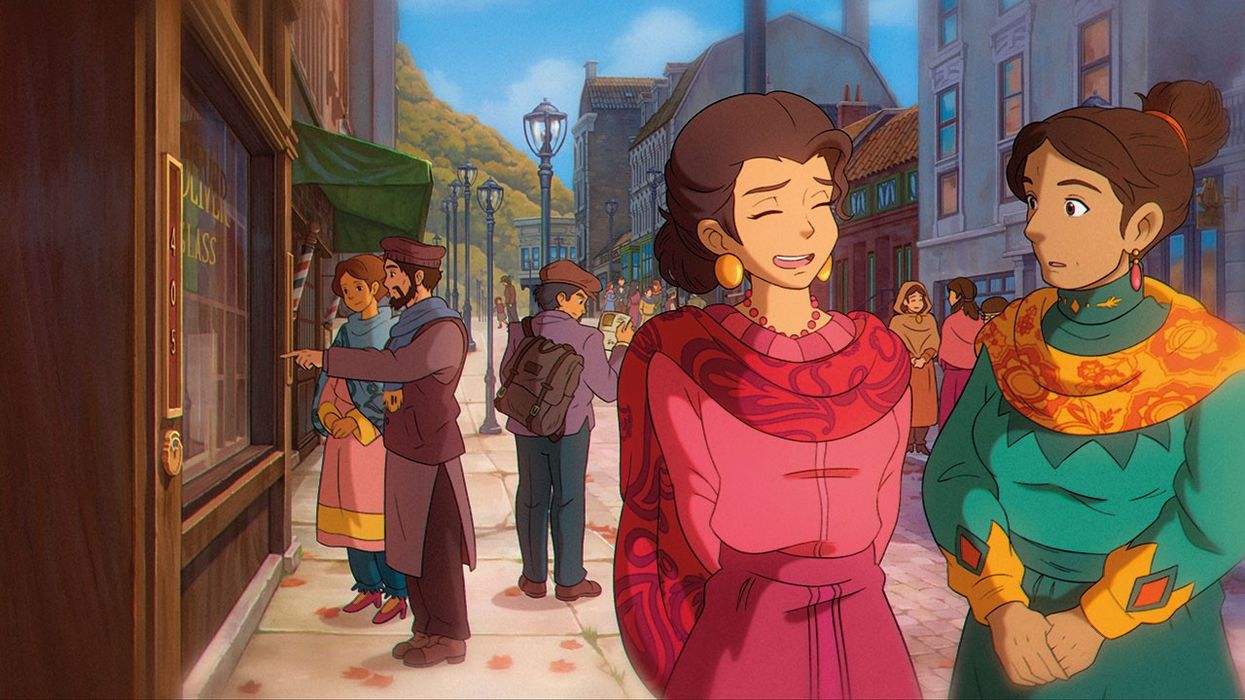

Path-breaking Pakistani film The Glassworker is the country’s first-ever hand-drawn animated feature and was selected as its official Oscar entry for 2025. The dubbed English version of debut director Usman Riaz’s contemplative Urdu-language original closed this year’s UK Asian Film Festival.
Clearly influenced by the works of Studio Ghibli and legendary Japanese animator Hayao Miyazaki, the lovingly crafted story is set in a fictional town and centres on Vincent, a gifted young glassblower who works for his pacifist father, and Alliz, the spirited violinist daughter of a fierce military officer. Their relationship blossoms just as the threat of war looms. What unfolds is a poignant tale of love, art, duty, patriotism and difficult choices during turbulent times.
The emotional sincerity and visual richness of the film are striking. It blends the romance of star-crossed lovers with a thoughtful exploration of human connection and an anti-war message. The warm, detailed animation – with its rich colours and fine textures – is beautifully accompanied by an evocative score. A standout moment features Alliz performing a solo violin piece, which is particularly moving.
While the film’s various elements come together with care, what prevents this meticulously crafted project from reaching masterpiece status is its uneven writing, which proves increasingly frustrating. The script’s flaws make parts of the narrative, especially the ending and a supernatural subplot, confusing and affect the pacing. As a result, some aspects feel underdeveloped.
Even so, this remains one of the most unique films ever produced in Pakistan. It is a testament to what can be achieved when creative vision and a desire to innovate are backed by hard work and conviction. As both director and composer, Usman Riaz has opened the door for a new generation of South Asian animators to dream bigger. With stronger writing, Pakistani animation could soon compete on the global stage.