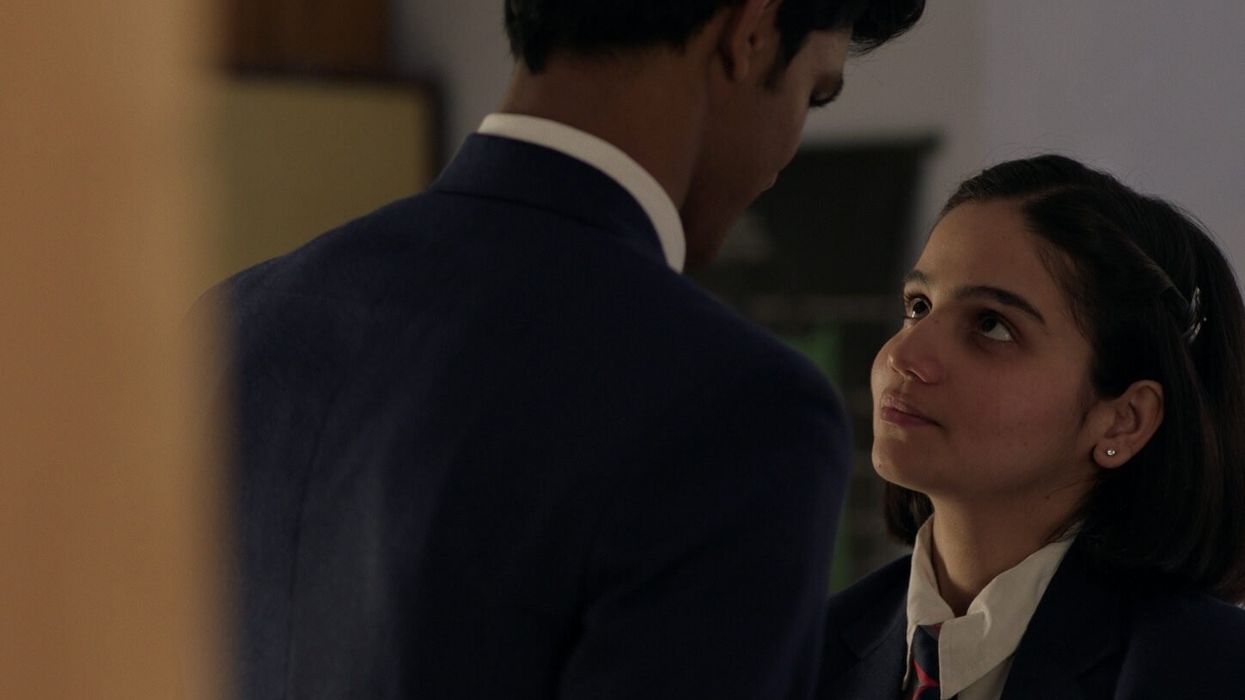

THE Indian coming-of-age drama, Girls Will Be Girls, is a story that will resonate with women and girls across all cultures, the film’s writer and director, Shuchi Talati told Eastern Eye.
Set in a strict boarding school in the Himalayas, the film explores 16-year-old Mira’s (Preeti Panigrahi) journey of teenage love through the lens of societal judgement of female desire.
Her rebellious streak intertwines with her mother’s unfulfilled coming-of-age experiences, leading to a relationship of affection, jealousy, and rivalry.
Talati said the film is deeply personal to her and deals with issues she faced growing up in Vadodara, Gujarat.
“I got the idea (for Girls Will Be Girls) from the school I went to, with all the feelings of anger and resentment I had about how I had to grow up and how, as teenage girls, we were so policed and made to feel ashamed of our sexuality, anything to do with desire, about our bodies – we were constantly policed for what we wore, how we behaved. That was really the seed to this story,” said Talati.
“I grew up having felt this struggle around having real desire and teenage Girls Will Be Girlsfeelings and hormones, and then also feeling somewhat ashamed of that. I remember when I had a boyfriend in high school, I hid him, but not just from my parents and my teachers, but I hid him from my best friend because I thought she might judge me, or think I was loose.
“It’s so sad, I wasn’t able to have a real intimate friendship because of this sea of shame around us.”
Though the film is set in the 1990s, Talati added that the themes of the story are still prevalent in society.
“These issues are very much still present,” she said. “When we see the news of the rapes (in India), I feel like they are the far end of this spectrum. And then we feel this patriarchy, the oppression, and the discrimination at various little levels.
“This daily surveillance, slut shaming, trying to put very strict boundaries around what girls and women are allowed to do, is very, very present, and it’s part of the reason why younger south Asian audiences relate to the film.”
Talati, 39, is a graduate of the American Film Institute (AFI) and has lived in New York for the past 15 years.
Girls Will Be Girls premiered at the Sundance Film Festival – the largest independent film festival in the US – where it won the Audience Award for World Cinema Dramatic Competition, and lead actress Panigrahi won the World Cinema Dramatic Special Jury Award for Acting.
“I was surprised to find that the film resonates very widely with everyone,” said Talati. “The awards at Sundance are an endorsement not just from the jury, but a wide group of people who have watched the film, most of whom are not south Asian. “I think it’s because, in what society is there full gender equity, equality? None. Most women have felt some degree of the issues in the film.”
Girls Will Be Girls posterMira’s relationship with her mother Anila (Kani Kusruti) is put to the test after sparks fly when Mira meets charismatic classmate Sri (Kesav Binoy Kiron).
Her sexual awakening is stifled by interference from Anila – a young mother who had no opportunity for her own adolescent awakening, and witnessing her daughter’s blossoming romance, stokes emotions that threaten to damage the pair’s relationship.
“The film is also a mother-daughter story. It’s a story about two generations where the older generation, the mother’s generation, is feeling proud about giving her daughter the freedoms that she didn’t have, and then also feeling envious about that. And that seems to resonate with people everywhere.
“This intergenerational joy and pride for the younger generation, but also sadness and an envy for having missed out on what your daughters are getting, seems to be true everywhere.”
She added: “Hopefully, if things are going right, each generation of women is slowly carving out more freedom. Occasionally, we seem to slide backwards, but in large, that is the trajectory of history.”
In Girls Will Be Girls, Mira is the top student at her elite school, and she’s been named head prefect for the year, which brings her power and responsibilities. Salati reveals that while the title of the film is a “cheeky reference” the phrase, boys will be boys, which is often used to excuse the bad behaviour of men, it has a deeper meaning of how women are often kept away from positions of power.
“There’s a sadness to it too (the title of the film) – no matter what, girls will be girls and they will not be allowed the freedom that boys will be allowed,” she said.
“Even though Mira becomes the first head prefect of her school – it’s fragile, it’s not real power. She can be given a title and a badge, but unless society shifts to give women that power, girls that power, she will not be able to hold on to it.”
Palati hopes the film will help people understand the difficulties women of all ages experience. “I want people to watch this film and really experience this from Mira’s point of view, from her mother’s point of view, and not watch it from a distance, but to experience it almost like physically and viscerally,” she said.
“I don’t think films are good for thesis statements or having a message, in my opinion. But a film can really put you in someone’s place, and if they (the audience) experience that, hopefully they have some degree of empathy and almost something closer to a lived experience.”
While watching the film with a live audience at the Sundance premiere, Palati said she got to experience first-hand the reactions of people seeing the film for the first time – which included the lead pair Panigrahi and Kiron as well as her parents.
“All through the film, I felt the audience was so responsive,” she said.
“It’s a quiet film, but I felt the audience laugh and gasp. I felt like they were having a full body experience watching this film, and they were so with it. And to me, I just felt so delighted.
“I remember at the end, the facilitator invited me up for a Q&A. I thought I was going to be so nervous, but I was not. I felt like I was in a room that had received this film with so much love and understanding. The awards were a recognition of what we had felt at the festival.”
Palati’s previous work includes A Period Piece, a short film that wanted to break the taboo of periods by looking at sex during menstruation as something natural, even mundane.
Another one of her short films, Mae and Ash, is the story of a young couple navigating the complexities of an open relationship and its impact.
Palati said her previous films gave her the confidence to make Girls Will Be Girls.
“Living in the US for so long, I feel like I’m a little bit inoculated from thinking about what my uncles and aunties might think about the film that I’m making. And my parents are supportive, which helps.
“I have also had some practice. I’ve made other films that deal with gender and sexuality, that I feel like I’ve worked through some of the worries of showing my work to people in my community.”
Girls Will Be Girls has a strong female presence throughout.
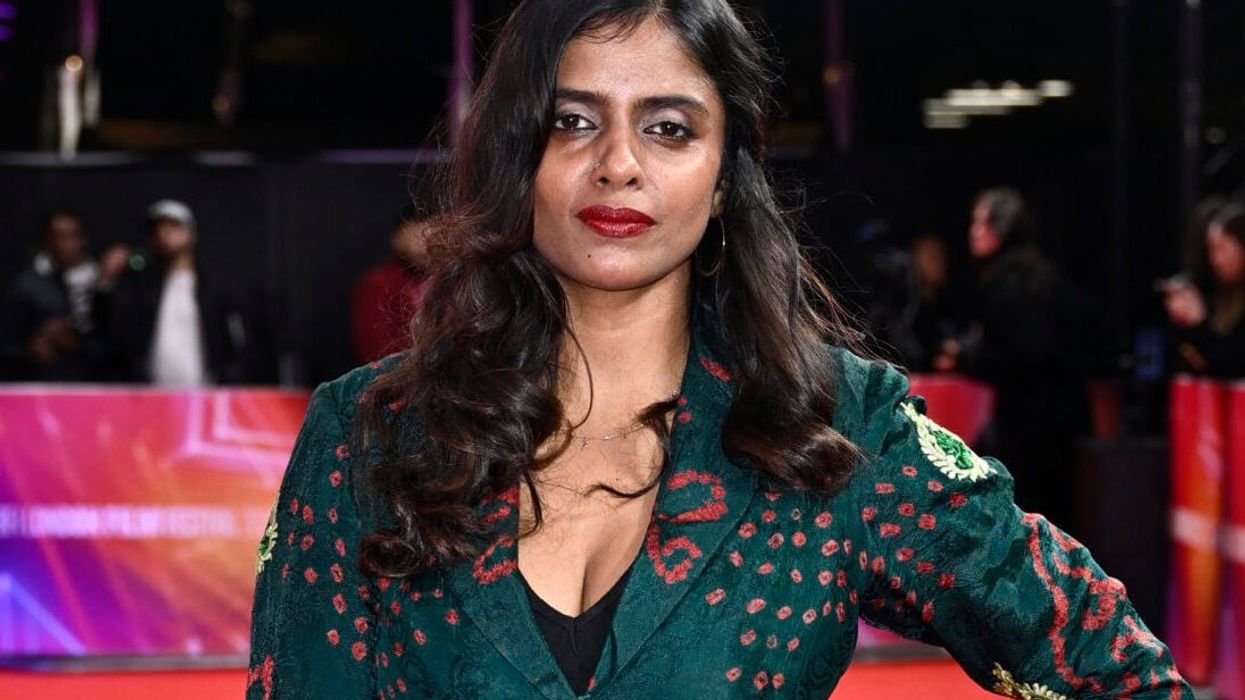
Shuchi TalatiAside from Talati writing and directing the film, and Panigrahi the lead actress, it has been produced by Talati, Richa Chadha and Claire Chassagne; cinematography by Jih-E Peng; edited by Amrita David; and Sneha Khanwalkar has provided the film’s music.
“It was essential for me to have women behind the camera to help realise this story and bring their lived experience to it at every stage,” said Talati.
“From Richa and my two producers who fought for the film, to the DP (director of photography) in the sensitivity she brought to the scenes that had intimacy, to the sound editors who were careful to create a soundscape for this film, which has very little score and is very quiet, that reflected Mira’s psyche.
“It was really important to create a safe environment for the young actors, to kind of cocoon them in this warm space where they could do vulnerable work.”
With the success of Girls will be Girls, more doors have opened up for Talati, but she insisted she will continue to tell the stories that resonate with her.
“There are more voices in my life than when I was making Girls will be Girls – I was all by myself writing that. And now there are more voices with suggestions of what I should do and new scripts and projects,” she said,
“I will still try and listen to my voice through all of this chatter, and at the same time, be open to opportunities that are now available to me that were not previously there.”
Girls will be Girls will be released in cinemas across the UK on Friday (20).