
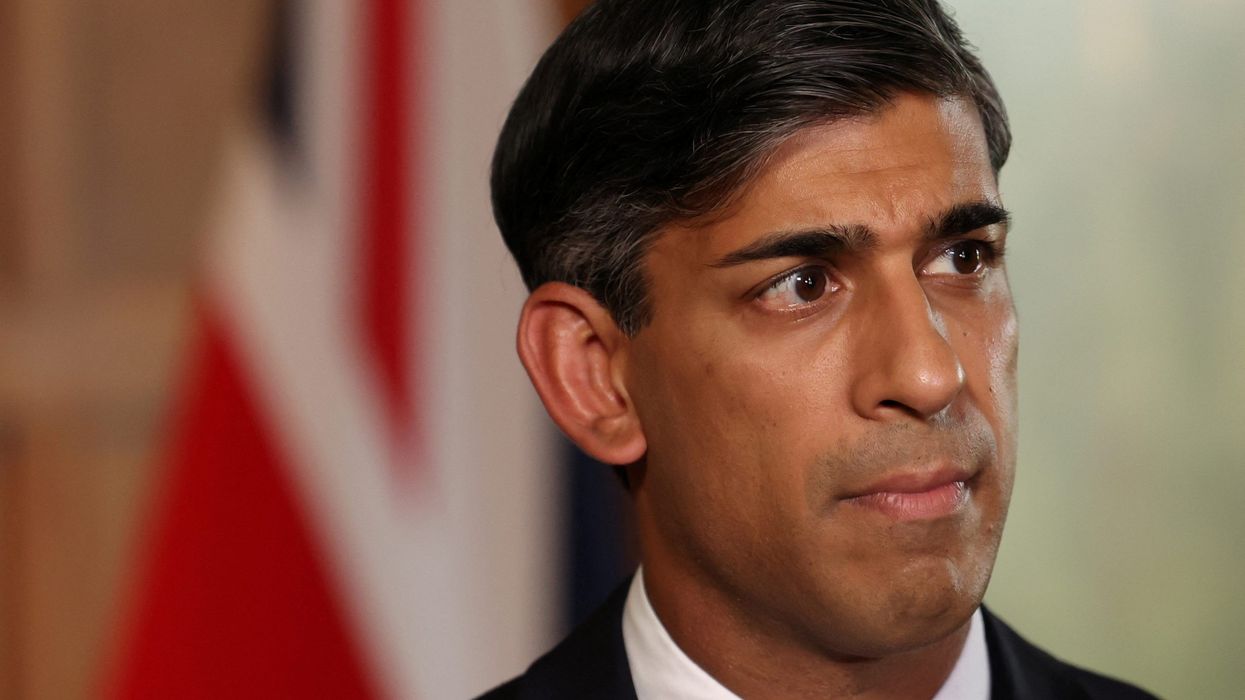
PRIME minister Rishi Sunak faces the biggest parliamentary test of his premiership on Tuesday (12) when MPs vote on his plan to send asylum seekers to live in Rwanda.
The Supreme Court ruled last month that Rwanda was an unsafe place to send those arriving in small boats on England's southern coast, and that the policy would breach British and international law.
In response, Sunak has agreed a new treaty with the east African country and brought forward emergency legislation to override domestic and international human rights law.
The move has deeply divided his party, alienating both moderates, who are worried about Britain breaching its human rights obligations, and right-wing politicians, who contend it does not go far enough.
"We believe the best solution here is we should pause the legislation today, we should come back with a new bill," Conservative MP, Simon Clarke, told BBC Radio.
MPs on the right of the party, who have not said whether they will abstain or vote against the government, believe the bill will still allow asylum seekers to appeal against deportation.
The government's legal advice said access to courts formed part of Britain's tradition of liberty and justice, available even in wartime.
Governments around the world are grappling with rising migration levels, and some are following the British plan to see if it will work. French lawmakers rejected their immigration bill last night, in a blow to president Emmanuel Macron.
The parliament will hold the first vote on the law on Tuesday evening. It would only take about 30 Conservative members of parliament to vote with opposition parties to defeat the bill.
Even if it passes, Sunak is likely to face attempts to toughen it up with amendments at later stages, as well as opposition in the House of Lords, the unelected upper chamber.
Defeat would be a huge embarrassment for Sunak - no government has lost a vote at this early stage in the parliamentary process since 1986 - and it would severely weaken his authority over his party.
The battle has echoes of parliamentary showdowns over Brexit from 2017-19, when former prime minister Theresa May suffered repeated defeats following rebellions by large numbers of Conservative politicians, eventually leading to her exit.
Sunak, who replaced Liz Truss as prime minister last year after she was forced out, has made stopping boat-arrivals one of his biggest priorities. About 29,000 asylum seekers have arrived this year, down around one-third compared with last year.
But they remain a highly visible symbol of the government's failure to control Britain's borders - a key promise of campaigners for Brexit.
The government has already paid £240 million to Rwanda even though it only has the capacity to settle hundreds of refugees a year from Britain and no one has yet been sent to the country.
In a day of political drama in Westminster on Monday (11), MPs from different factions of the governing Conservative Party held meetings throughout the day to decide how to vote.
In a boost late on Monday, a centrist group of lawmakers in the One Nation faction recommended that its members back the bill but warned that they would not accept any amendments that toughened the legislation at a later stage.
Sunak hosted some lawmakers on the party's right wing for breakfast on Tuesday in a last ditch attempt to convince them to back the bill.
(Reuters)
Sunak faces tense showdown over Rwanda plan
MPs on the right of the Conservative Party believe the bill will still allow asylum seekers to appeal against deportation






 Curator Emma Slocombe with ikat robes and arabachi coats in the Peter the Great Room in Blickling Hall Amit Roy
 View of the entrance to Blickling Hall on a rainy autumn dayAmit Roy
 Kente cloth from Ghana in the Long Gallery in Blickling Hall
 Decoration in the Great Hall at Blickling Hall Amit Roy
 Palampore fragment made in coastal south-east India in the Brown Room in Blickling Hall Amit Roy
 Bed valance dating from early 1700s in the Italian Print Room at Blickling Hall Amit Roy
 Indian inspired fabric draped on sofas in the South Drawing Room in Blickling Hall Amit Roy
 Indian inspired fabric draped on sofas in the South Drawing Room with Indian carpet in Blickling Hall Amit Roy
 Karun Thakar has picked out the geometric patterns in the bookcase and the Kente cloth in the Long Gallery in Blickling Hall Amit Roy
 Large tapestry depicting Peter the Great defeating the Swedish army at the Battle of Poltava in 1709 Amit Roy
 ikat robes and arabachi coats in the Peter the Great Room in Blickling Hall Amit Roy
 Baghs and kanthas made by women provide contrast to the men only portraits in the Great Hall at Blickling Hall Amit Roy
 Baghs and kanthas in the entrance Great Hall at Blickling Hall Amit Roy
 Baghs and Kanthas in the Great Hall in harmony with stained glass window at Blickling Hall Amit Roy
 Kimonos reflect Japanese influence in Upper Ante Room in Blickling Hall Amit Roy
 Kimono in Upper Ante Room in Blickling Hall
 A view of the Palace and fort at Agra shows romantic side of India Amit Roy
 Blickling Hall Amit Roy
 Table carpet, European 1670-1680 Amit Roy
 Unfinished 17th century Italian embroidery in the Print Room at Blickling Hall Amit Roy
 Picture of Kashmir shows a romantic view of India Amit Roy
 A panel of Ashburnham bed hangings made in Gujarat for sale in Europe in the Brown Room in Blickling Hall Amit Roy
 Colcha made in the 1600s by women in Bengal for the Portuguese market in the Long Gallery at Blickling Hall Amit Roy




