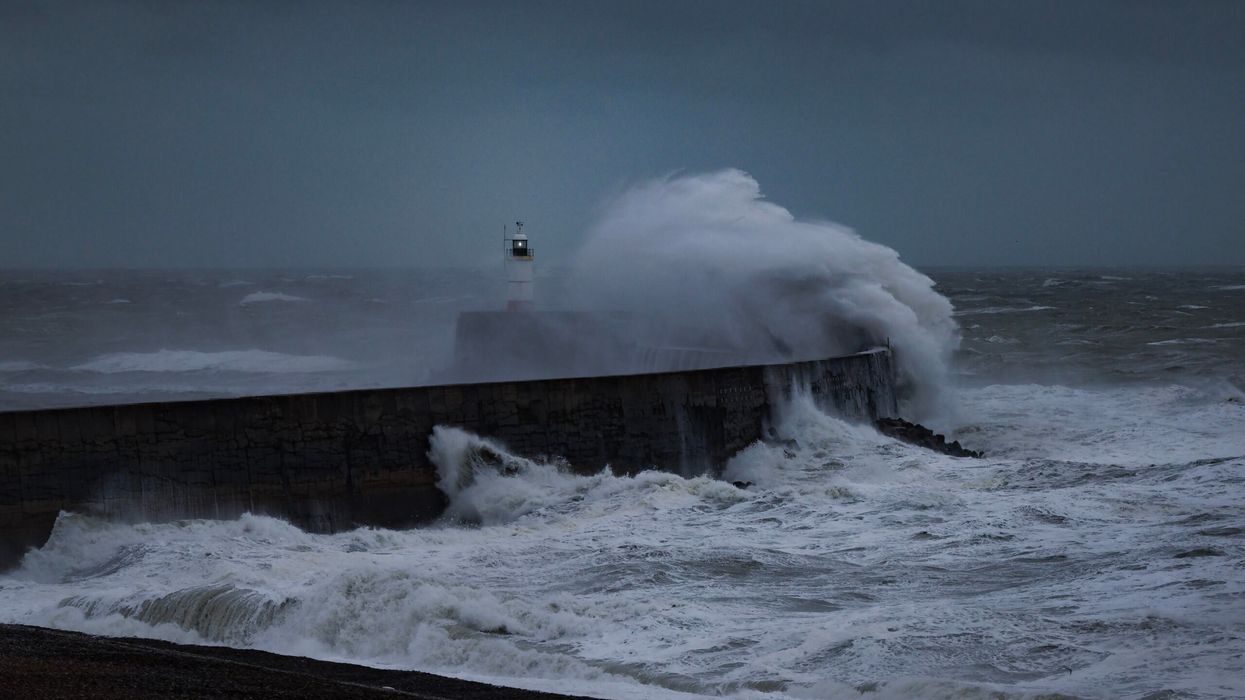

STORM Bert brought severe weather to the UK and Ireland on Saturday, causing travel disruptions, power outages, and at least one fatality.
The storm brought snow, heavy rain, and strong winds, closing railway lines, roads, and bridges in several areas.
In southern England, a man in his 60s died after a tree fell on a car on the A34 highway, local police reported.
In northeast England, flights at Newcastle Airport were briefly disrupted as snow covered the runway.
In Scotland, ScotRail announced that some train services were suspended due to the weather.
The Severn Bridge, connecting Wales and England, was also closed because of strong winds, according to the National Highways website.
Snow stranded vehicles and blocked roads in northern parts of the UK.
Met Office chief meteorologist Jason Kelly described Storm Bert as a "multi-hazard event," predicting snow, rain, and wind to affect Britain throughout the weekend.
In Ireland, heavy rainfall caused flooding in the west, with some roads becoming impassable.
The Irish Meteorological Service issued a "status red" rain warning, its highest alert level, for Cork and Galway counties on Friday night.
Floodwaters in the Donegal town of Killybegs rose to the tops of parked cars.
Power company ESB Networks reported that high winds caused outages affecting 60,000 homes, farms, and businesses, mainly in the west and northwest of Ireland.
(With inputs from Reuters)