
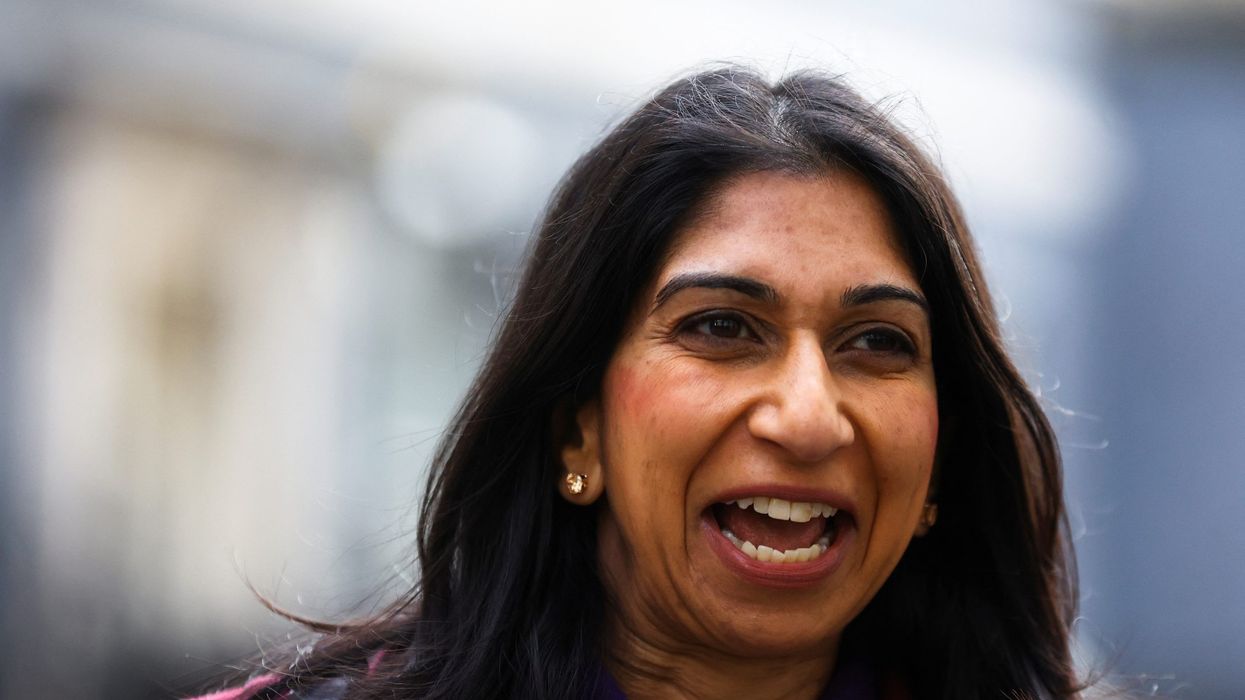
Home Secretary Suella Braverman has said many migrants who have illegally crossed the Channel to the UK’s shores are “at odds” with British values.
Her comment came after the House of Commons on Wednesday (26) passed the Illegal Immigration Bill which aims at barring the entry of asylum seekers arriving in small boats across the Channel.
Braverman said many people coming to the UK illegally were “getting quickly involved in the drugs trade, other exploitation, criminality and prostitution,”
“It is at odds with British values and unacceptable behaviour,” the home secretary told reporters.
She, however, did not single out any nationality of the criminals, although the police said many Albanians were heavily involved in cocaine trades in London and south-eastern England.
There are concerns in Britain that criminal gangs involving Albanians are into cannabis farming using agroponic techniques to grow the plants.
A total of 45,755 migrants crossed the Channel in 2022 and this was a record for a year since 2018 when the collection of figures began.
Nearly 16,000 Albanians sought asylum in the UK last year - this was the highest for any nationality - and figures show 67 per cent of them crossed the Channel illegally.
Braverman said her assessment of the involvement of migrants in crime was based on feedback from police chiefs rather than statistics.
According to the police, several people reported for drug supply had arrived in the UK on small boats.
“It is a notable feature of crime-fighting on the streets of England and Wales,” Braverman said.
She said the passage of the immigration bill in the lower house of Parliament was “another step on our way to delivering on the British people’s desire to stop the boats.”
The Conservative hardliner also slammed Labour for opposing the bill, saying the opposition lawmakers supported “uncontrolled migration.”
Small boat migrants ‘at odds’ with British values: Suella Braverman
The British Home Secretary’s comment came after the House of Commons passed the Illegal Immigration Bill which aims at barring the entry of asylum seekers arriving in small boats






 Curator Emma Slocombe with ikat robes and arabachi coats in the Peter the Great Room in Blickling Hall Amit Roy
 View of the entrance to Blickling Hall on a rainy autumn dayAmit Roy
 Kente cloth from Ghana in the Long Gallery in Blickling Hall
 Decoration in the Great Hall at Blickling Hall Amit Roy
 Palampore fragment made in coastal south-east India in the Brown Room in Blickling Hall Amit Roy
 Bed valance dating from early 1700s in the Italian Print Room at Blickling Hall Amit Roy
 Indian inspired fabric draped on sofas in the South Drawing Room in Blickling Hall Amit Roy
 Indian inspired fabric draped on sofas in the South Drawing Room with Indian carpet in Blickling Hall Amit Roy
 Karun Thakar has picked out the geometric patterns in the bookcase and the Kente cloth in the Long Gallery in Blickling Hall Amit Roy
 Large tapestry depicting Peter the Great defeating the Swedish army at the Battle of Poltava in 1709 Amit Roy
 ikat robes and arabachi coats in the Peter the Great Room in Blickling Hall Amit Roy
 Baghs and kanthas made by women provide contrast to the men only portraits in the Great Hall at Blickling Hall Amit Roy
 Baghs and kanthas in the entrance Great Hall at Blickling Hall Amit Roy
 Baghs and Kanthas in the Great Hall in harmony with stained glass window at Blickling Hall Amit Roy
 Kimonos reflect Japanese influence in Upper Ante Room in Blickling Hall Amit Roy
 Kimono in Upper Ante Room in Blickling Hall
 A view of the Palace and fort at Agra shows romantic side of India Amit Roy
 Blickling Hall Amit Roy
 Table carpet, European 1670-1680 Amit Roy
 Unfinished 17th century Italian embroidery in the Print Room at Blickling Hall Amit Roy
 Picture of Kashmir shows a romantic view of India Amit Roy
 A panel of Ashburnham bed hangings made in Gujarat for sale in Europe in the Brown Room in Blickling Hall Amit Roy
 Colcha made in the 1600s by women in Bengal for the Portuguese market in the Long Gallery at Blickling Hall Amit Roy




